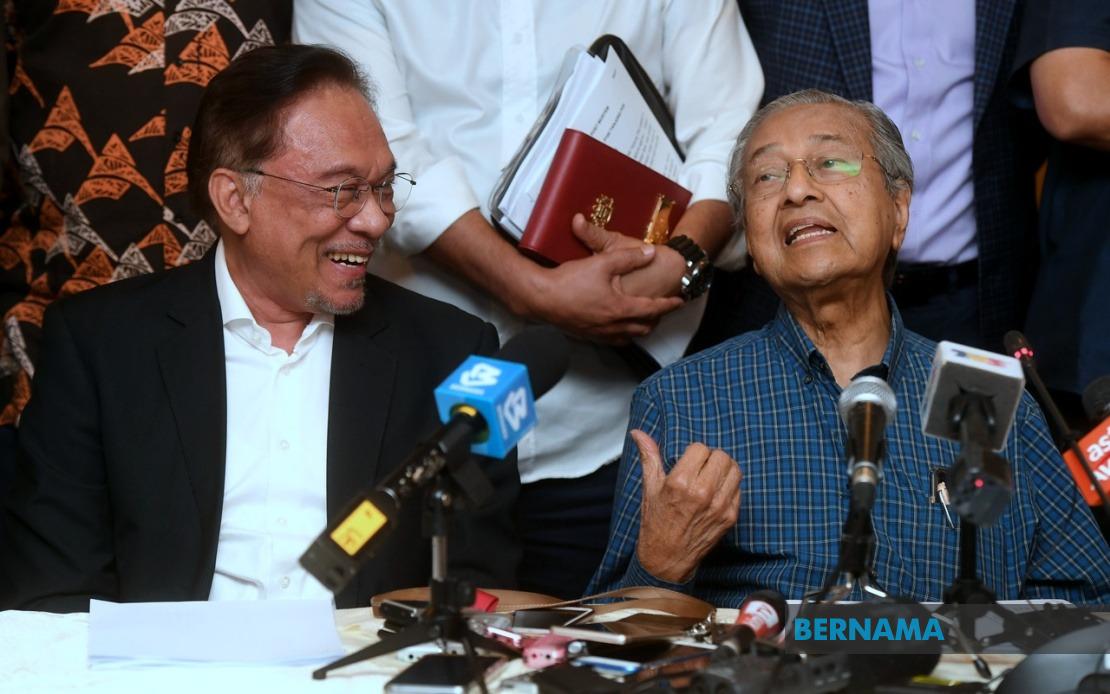
Prime Minister Datuk Seri Anwar Ibrahim has extended warm birthday greetings to former Prime Minister Tun Dr Mahathir Mohamad, who turned 101 on July 10. The gesture, shared publicly via Facebook, reflects the continuing significance of Malaysia's most storied political figure even as he has largely stepped back from the frontline of governance. Anwar's message expressed hopes that the elder statesman would "continue to be blessed with grace, good health and be under His blessings," framing the milestone as an occasion for reflection on the nation's political heritage.
Tun Dr Mahathir's longevity stands as a remarkable achievement in itself, both as a demonstration of personal resilience and as a testament to his enduring influence over Malaysian politics and society. Born on July 10, 1925 in Alor Setar, Kedah, he has witnessed and shaped seven decades of the nation's post-independence trajectory. His continued good health at this advanced age is noteworthy, particularly given the demanding nature of the responsibilities he carried throughout his career and the physical and mental toll typically associated with high office.
The former prime minister's dual tenure as leader distinguishes him from his predecessors and successors. He first assumed the premiership in 1981, holding the office for an uninterrupted 22 years until 2003, making him one of the world's longest-serving modern leaders during that period. His initial tenure was marked by the Vision 2020 development framework, significant infrastructure projects, and controversial decisions that fundamentally reshaped Malaysia's political and economic landscape. The 1997 Asian financial crisis and his handling of the subsequent domestic political crisis also defined much of this era, leaving legacies both celebrated and contested.
Mahathir's return to the prime ministerial office at the age of 92, following the 2018 general election, created international headlines and demonstrated an extraordinary political comeback. At that point, he achieved the distinction of becoming the world's oldest serving prime minister, a record that underscored both his political acumen and his continued relevance to Malaysian electoral politics. His second term, lasting from 2018 to 2020, occurred during a period of significant political turbulence, including the initial years of the COVID-19 pandemic and complex coalition negotiations that ultimately led to his departure from office.
The public acknowledgement of Mahathir's birthday by the current Prime Minister carries symbolic weight within Malaysia's political culture. Such gestures, while ostensibly routine expressions of courtesy, often reflect underlying relationships and respect between political rivals or successors. The relationship between Anwar and Mahathir has been historically complex, marked by periods of close collaboration as well as significant conflict, particularly during Mahathir's earlier administrations. The birthday greeting suggests a mature political environment where personal respect can coexist with substantive policy differences.
Mahathir's legacy remains subject to ongoing debate and reinterpretation as Malaysia continues to grapple with the long-term consequences of policies implemented during his two periods in office. His advocacy for strong state intervention in economic development, particularly through institutions like Petronas and various state-backed corporations, created foundations for contemporary Malaysian capitalism. However, his tenure also witnessed significant questions regarding governance, transparency, and institutional independence that continue to influence contemporary political discourse.
The centenarian milestone also provides occasion to consider the broader trajectory of Southeast Asian leadership. Few leaders in the region have exercised such prolonged influence or maintained such high visibility across multiple decades. Mahathir's international engagement, particularly his role in championing Asian values discourse and navigating Malaysia through various global transitions, positioned the nation as a significant player in regional affairs. His approach to managing religious and ethnic diversity, while contested, remains instructive for other multicultural nations in the region.
At 101, Mahathir continues to make occasional public statements on contemporary issues, demonstrating that his intellectual engagement with national affairs persists despite his formal retirement from executive office. This has occasionally placed him in the position of commenting on his successors' policies and decisions, a role that reflects both his enduring concern for Malaysia's trajectory and his confidence in the relevance of his perspective. The birthday acknowledgement by Anwar thus recognises not merely a personal milestone but the continuing presence of this towering historical figure in Malaysia's political consciousness.
For younger Malaysians who did not experience the full arc of Mahathir's premiership, the centenary celebration offers an opportunity to engage seriously with Malaysia's recent history and the institutional and policy foundations that contemporary governance rests upon. Educational and media discussions surrounding the milestone will inevitably revisit significant episodes of his tenure, from the Petronas Twin Towers to the 1998 Anwar Ibrahim crisis, ensuring that the historical record receives fresh scrutiny and interpretation. Such reconsideration of the past serves an important function in mature democracies, allowing new generations to form their own assessments rather than merely inheriting received narratives.

