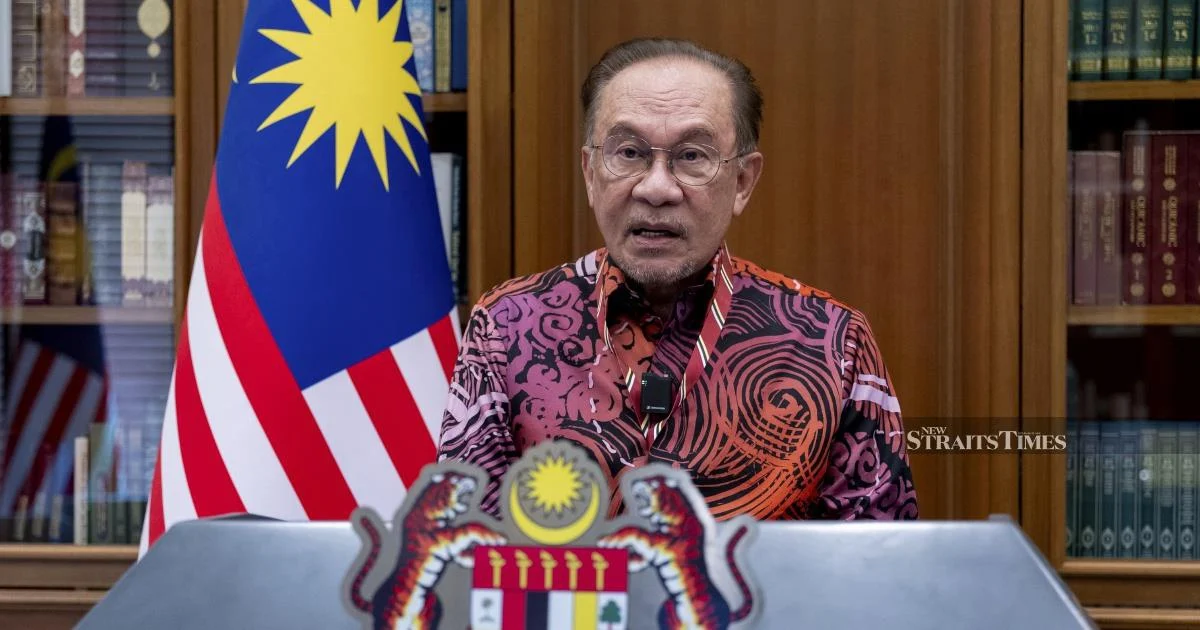
Prime Minister Datuk Seri Anwar Ibrahim has sent formal congratulations to China marking the 105th anniversary of the Chinese ruling Communist Party, reflecting Malaysia's commitment to maintaining warm bilateral relations with one of Southeast Asia's most influential powers. The gesture demonstrates the continued importance both nations place on diplomatic courtesies and the broader framework of their strategic partnership.
China's Communist Party, formally established on July 1, 1921, remains one of the world's oldest and most consequential governing bodies. The anniversary of its founding each year serves as an opportunity for regional and international leaders to reaffirm their commitment to bilateral cooperation and shared development objectives. Anwar's acknowledgment of this milestone reflects Malaysia's nuanced approach to great power relations in an increasingly complex geopolitical environment.
The congratulatory message carries particular significance given Malaysia's position as a crucial node in regional economic and diplomatic networks. As a major Southeast Asian economy with substantial Chinese diaspora communities and deep historical ties to China, Malaysia has long sought to balance multiple international relationships while maintaining pragmatic engagement with Beijing. Such formal gestures help sustain the institutional channels through which the two countries address trade, investment, and cultural matters.
Malaysia-China relations encompass a comprehensive spectrum of cooperation. The two nations maintain extensive economic linkages through bilateral trade arrangements, with China consistently ranking among Malaysia's top trading partners. Chinese investment in Malaysian infrastructure, manufacturing, and technology sectors has grown considerably over recent decades, contributing significantly to the country's economic development while creating employment opportunities for Malaysian workers.
Beyond economics, educational and cultural exchanges represent another pillar of the relationship. Thousands of Malaysian students pursue higher education in Chinese universities annually, fostering people-to-people connections that complement official diplomatic channels. These educational investments help build the professional networks and cross-cultural understanding essential for long-term stability in Southeast Asia.
Anwar's diplomatic outreach also reflects Malaysia's broader commitment to maintaining constructive engagement across its international relationships during a period of regional uncertainty. The Southeast Asian region faces mounting pressures from great power competition, with both established and emerging powers seeking influence over critical shipping lanes, trade routes, and resource-rich territories. Malaysia's strategy involves deepening ties with multiple partners while avoiding exclusionary alignments that might undermine regional stability.
China's significance to Malaysian strategic interests extends beyond bilateral dimensions. As the world's second-largest economy and a permanent UN Security Council member, China's policies shape regional development trajectories, investment flows, and security considerations affecting all Southeast Asian nations. Malaysian policymakers recognise that constructive relations with Beijing contribute to the broader stability architecture upon which regional prosperity depends.
The anniversary commemoration also underscores how Malaysia navigates the complex landscape of great power relations by extending appropriate recognition to major partners without compromising its commitment to ASEAN principles of non-alignment and genuine partnership. This balancing act has become increasingly challenging as regional divisions over issues ranging from South China Sea disputes to technology standards have deepened, yet Malaysia continues seeking pathways for inclusive regional cooperation.
Anwar's gesture arrives amid broader international reflection on China's governance trajectory and development model. While international perspectives on Chinese politics vary considerably, Malaysia's approach emphasises pragmatism and mutual benefit rather than ideological alignment. This orientation allows Malaysian governments to engage substantively with China across multiple domains while maintaining independent positions on matters of national interest.
Looking forward, Malaysia-China relations will likely continue evolving across economic, technological, and cultural dimensions. The country's participation in China-led initiatives such as the Belt and Road Initiative, combined with its membership in regional frameworks like RCEP, positions Malaysia as a beneficiary of Chinese economic engagement while maintaining its sovereignty and decision-making autonomy. Such structured partnerships require sustained diplomatic attention and regular affirmation of mutual commitment.
The congratulatory message also carries implications for Malaysia's standing within ASEAN, where navigating relations with major powers remains a central concern. As ASEAN seeks to maintain centrality in regional affairs amid intensifying great power competition, individual member states' approaches to bilateral relationships with major partners significantly influence the bloc's collective positioning. Malaysia's balanced engagement with China contributes to the understanding that constructive relations with Beijing remain compatible with ASEAN solidarity and the region's commitment to peaceful resolution of disputes.
Moving forward, such diplomatic courtesies serve not merely as ceremonial gestures but as substantive affirmations of institutional relationship frameworks. They provide occasions for both nations to reaffirm shared principles, highlight areas of successful cooperation, and signal commitment to addressing disagreements through dialogue rather than confrontation. For Malaysia, maintaining such channels with regional powers including China remains integral to pursuing its development objectives while contributing to broader regional stability in Southeast Asia.

