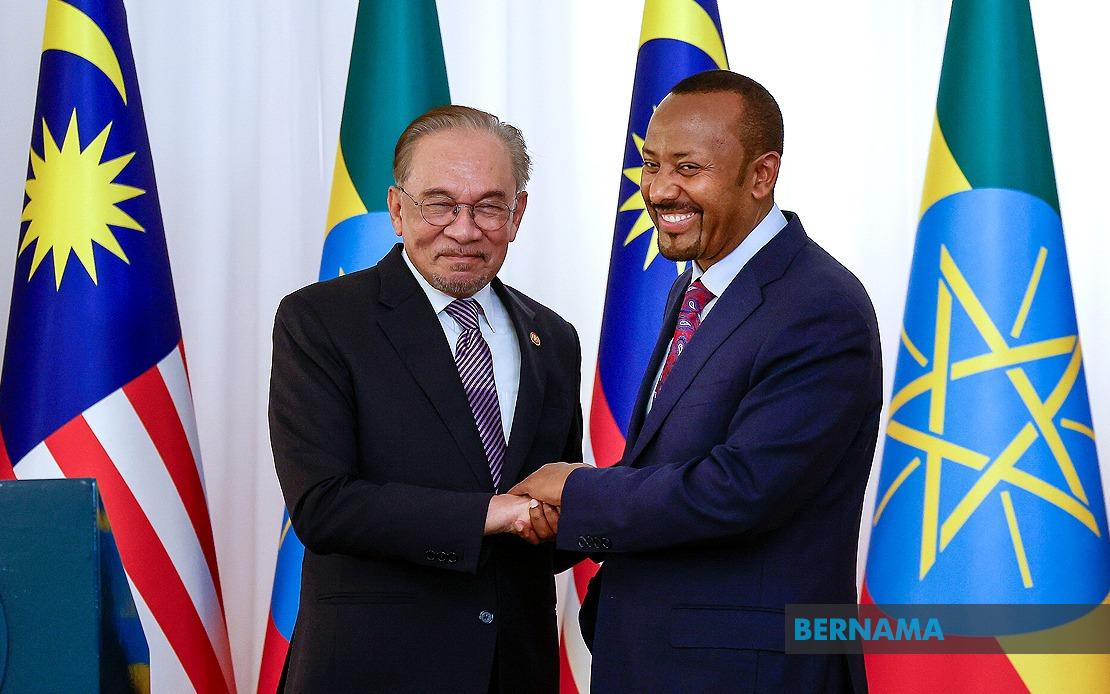
Prime Minister Datuk Seri Anwar Ibrahim has offered his formal congratulations to Ethiopian Prime Minister Abiy Ahmed Ali and the Prosperity Party following their success in Ethiopia's recent general election. The gesture, conveyed through a Facebook post on June 22, reflects the growing diplomatic warmth between Malaysia and the East African nation under Anwar's administration.
Anwar's message carried particular significance given his historic visit to Addis Ababa in 2023, which marked the first time a sitting Malaysian prime minister had journeyed to the Ethiopian capital. In reflecting on that groundbreaking trip, Anwar emphasised the cordial reception he received and the substantive nature of his discussions with Abiy, suggesting that the bilateral relationship has moved beyond ceremonial exchanges into areas of genuine strategic interest.
The Prime Minister's characterisation of his discussions with Abiy reveals an alignment of worldviews that extends beyond conventional diplomatic niceties. Anwar noted that he and his Ethiopian counterpart possessed comparable perspectives on how global affairs should be understood and navigated, a shared outlook that carries implications for how Malaysia positions itself within broader international conversations. This convergence of views appears to transcend regional boundaries, reflecting a growing tendency among leaders of developing nations to articulate common positions on global governance and economic frameworks.
Central to Anwar's message is his emphasis on the potential gains available to nations of the Global South through enhanced cooperation and mutual engagement as equals. This framing is particularly instructive for Malaysia's own foreign policy orientation, as it signals a commitment to South-South cooperation frameworks that prioritise peer-to-peer relationships rather than hierarchical arrangements. The language of equality in international relations carries weight in African capitals, where historical experiences with colonial and post-colonial asymmetries remain relevant to contemporary partnership discussions.
For Malaysia specifically, the relationship with Ethiopia holds strategic importance that extends beyond bilateral trade or cultural exchange. As the African Union maintains its headquarters in Addis Ababa, Ethiopia functions as a gateway to continental African affairs and a platform for engaging with broader African institutional frameworks. Malaysian business interests, particularly in sectors like construction, technology, and telecommunications, have long sought deeper footholds across Africa, and diplomatic strengthening at the prime ministerial level creates conditions for such economic engagement.
Anwar's recognition of Ethiopia as an important partner in Malaysia's broader African strategy indicates a deliberate and sustained approach to continental engagement rather than episodic contact. The framing suggests that Malaysian policymakers view Africa not as a distant continent of secondary importance but as a region with which Malaysia can develop mutually beneficial relationships aligned with shared developmental aspirations. This represents a notable evolution in how Malaysian governments have historically approached African engagement, which was often limited to Organisation of Islamic Cooperation channels or ad-hoc commercial missions.
The reference to work initiated during Anwar's 2023 visit and his intention to advance these efforts forward with the re-elected Abiy administration indicates an institutional continuity in bilateral relations that survives electoral cycles in either country. Such commitments typically encompass cooperation frameworks across sectors ranging from trade and investment to educational exchanges, technical assistance programmes, and diplomatic coordination within multilateral forums. The specific areas of collaboration remain undetailed in the public record, but the emphasis on forward momentum suggests active negotiations may be proceeding through diplomatic channels.
Abiy Ahmed's election victory carries regional significance beyond the bilateral Malaysia-Ethiopia context. Ethiopia's internal political dynamics have been volatile in recent years, marked by armed conflict and complex humanitarian challenges. The Prosperity Party's electoral success provides a measure of stability that regional actors, including Malaysia, would view as conducive to sustained diplomatic engagement and economic planning. For countries like Malaysia seeking to expand ties with African partners, political stability and continuity in leadership become important factors in assessing the reliability of partnership arrangements.
The significance of Anwar's public congratulatory gesture should not be underestimated within diplomatic protocol. In an era of multi-dimensional international relations where soft power and narrative framing matter considerably, prime ministerial acknowledgement of election outcomes functions both as recognition of democratic processes and as signalling of continued commitment to specific bilateral relationships. The deployment of social media for this communication also reflects contemporary diplomatic practice, wherein direct appeals to international audiences complement traditional government-to-government channels.
Looking forward, the consolidation of Malaysia-Ethiopia ties under Abiy's continued leadership offers potential dividends across multiple dimensions. Economic cooperation could expand as Malaysian firms gain confidence in the stability of the operating environment and as Ethiopian counterparts seek partnerships with Southeast Asian entities. Educational and cultural exchanges might deepen, potentially including diplomatic training programmes and scholar exchanges that build long-term networks between governmental and intellectual elites in both countries. Multilateral coordination, particularly within African Union forums and international organisations, may become more substantive as trust between leaderships solidifies through repeated high-level engagement.

