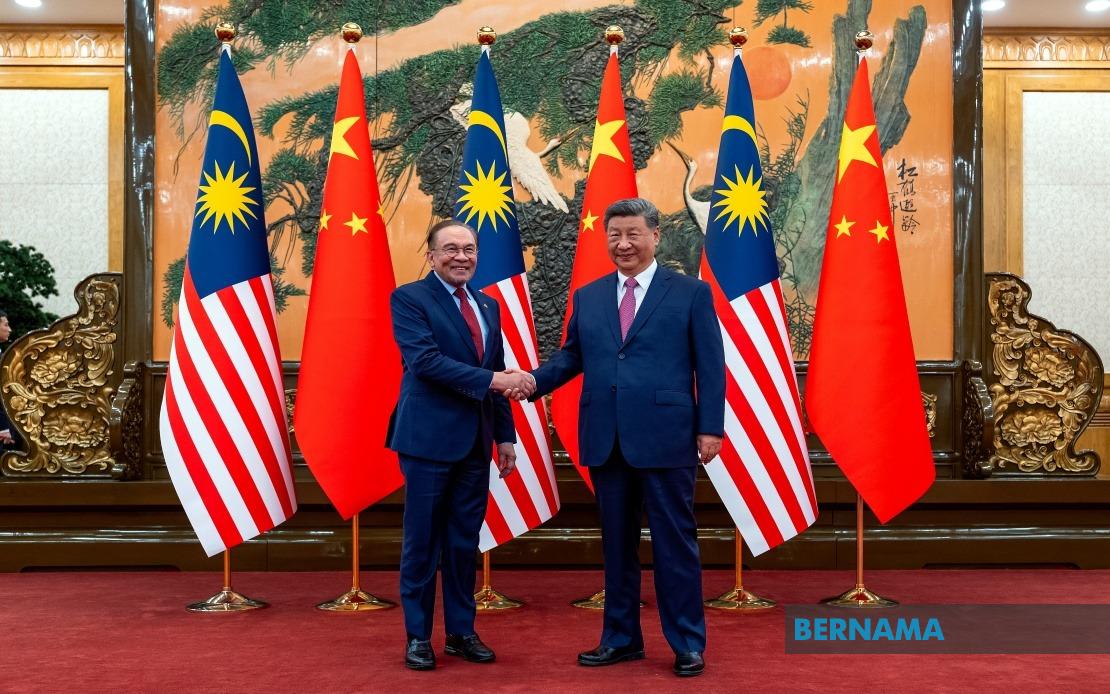
Prime Minister Datuk Seri Anwar Ibrahim has extended formal congratulations to Chinese President Xi Jinping marking the 105th anniversary of the Communist Party of China, reaffirming Malaysia's steadfast partnership with Beijing across diplomatic, economic and strategic domains. The gesture, communicated through an official letter and shared on the Prime Minister's social media platforms, represents a routine but symbolically significant diplomatic overture that underscores the warmth of bilateral relations between Kuala Lumpur and Beijing at the highest political levels.
In his message, Anwar acknowledged the ruling party's transformative role in shaping modern China's trajectory, recognising both its historical evolution and the civilisational values that have anchored the nation's development across generations. This framing reflects Malaysia's sophisticated diplomatic approach toward Beijing—one that balances official courtesies with substantive recognition of China's centrality to regional geopolitics and economic architecture. The Prime Minister's emphasis on the Communist Party of China's achievements and historical significance carries particular weight given Malaysia's own position as a multicultural, multi-religious nation navigating complex great-power dynamics in Southeast Asia.
Anwar seized the occasion to highlight a watershed moment in Malaysian-Chinese relations: the nation's diplomatic recognition of the People's Republic of China on May 31, 1974, a landmark decision that made Malaysia the first non-socialist country in Southeast Asia to formalise ties with Beijing. This historical reference carries enduring political resonance, as it established Malaysia as a pragmatic regional actor willing to pursue national interests regardless of ideological considerations—a positioning that remains relevant as Southeast Asian nations calibrate their approaches to China amid broader geopolitical tensions. The timing of this recognition, during the Cold War era when such moves carried considerable strategic risk and diplomatic consequences, underscores Malaysia's commitment to principled, forward-looking statecraft.
The Prime Minister's correspondence emphasises that five decades of sustained engagement have transformed Malaysia-China relations into a relationship anchored in mutual respect, institutional trust and asymmetric but reciprocal economic and strategic benefits. This framework has enabled both nations to deepen cooperation across multiple sectors—from manufacturing and trade to infrastructure development and defence collaboration—despite significant differences in political systems, governance models and regional interests. Malaysia's ability to maintain productive relations with Beijing while also cultivating partnerships with Western nations and regional powers reflects the delicate balancing act required of middle-power diplomacy in the contemporary Asia-Pacific context.
The congratulatory message reiterates Malaysia's strategic commitment to expanding cooperation with China on issues ranging from regional security and economic integration to technological advancement and climate action. This pledge carries particular significance given Malaysia's economic dependence on Chinese investment, its reliance on Chinese markets for manufactured exports, and the critical role Chinese capital plays in Malaysia's infrastructure development aspirations. The Belt and Road Initiative, while generating substantial domestic debate in Malaysia regarding debt sustainability and project viability, remains a defining feature of bilateral relations and a conduit through which Malaysia advances its development objectives.
Anwar's emphasis on "regional peace, stability and prosperity" as the guiding principle for Malaysia-China cooperation reflects the Prime Minister's broader foreign policy philosophy—one that prioritises multilateralism, inclusive regional architecture and economic cooperation as vehicles for managing geopolitical tensions. This framing is particularly significant in the context of South China Sea disputes, where Malaysia maintains competing territorial claims with China yet has managed to compartmentalise these disagreements from broader bilateral engagement. The diplomatic language employed suggests Anwar's desire to affirm Malaysia's commitment to Beijing while maintaining rhetorical consistency with ASEAN's official positions on regional disputes and freedom of navigation.
The diplomatic outreach occurs within a broader context of Malaysia's recalibration of external relations under Anwar's leadership, characterised by an emphasis on strengthening Southeast Asian unity, deepening engagement with traditional partners and pursuing strategic autonomy in the face of great-power competition. Malaysia's relationship with China occupies a central place in this broader architecture, representing both opportunity for economic advancement and risk should regional tensions escalate. The Prime Minister's messaging is carefully calibrated to acknowledge China's importance without appearing to subordinate Malaysian interests to Beijing's geopolitical ambitions or regional claims.
For Malaysian business interests and policymakers, the continued warmth in official bilateral relations carries direct implications for trade flows, investment patterns and sectoral opportunities. China's position as Malaysia's largest trading partner and a leading source of foreign direct investment means that diplomatic health at the leadership level translates into tangible economic benefits across manufacturing, technology, and infrastructure sectors. The renewal of high-level engagement through such ceremonial gestures helps maintain momentum for commercial negotiations and investment project approvals at bureaucratic levels.
The gesture also carries significance within Malaysia's domestic political context, signalling to different constituencies the government's approach to managing relations with major powers. For constituencies concerned about Malaysian sovereignty and economic vulnerabilities, such messaging attempts to project confidence in Malaysia's ability to engage Beijing from a position of strength and principled negotiation. The reference to Malaysia's historic 1974 recognition decision attempts to frame contemporary engagement as consistent with Malaysia's established tradition of pragmatic, interest-based foreign policy rather than ideological alignment or capitulation to external pressure.

