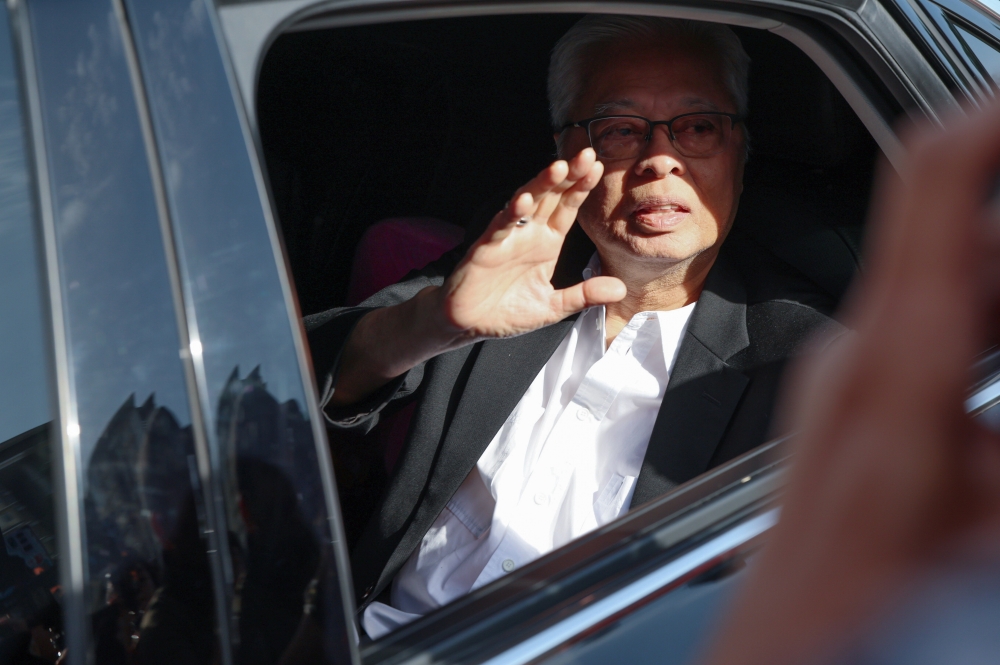
Prime Minister Datuk Seri Anwar Ibrahim made a courtesy visit to Institut Jantung Negara on Thursday to check on Deputy Prime Minister Datuk Amar Fadillah Yusof and former Prime Minister Datuk Seri Ismail Sabri Yaakob, both receiving treatment at the cardiac care facility. The visit underscored the government's commitment to maintaining cohesion within the ruling coalition as both figures navigate health challenges requiring specialist care.
The timing of Anwar's visit carries particular significance in Malaysia's political landscape, where the stability of cross-party coalitions remains crucial to governance. Fadillah, who leads the Sarawak-based Parti Pesaka Bumiputera Bersatu (PBB), represents a key coalition member, while Ismail Sabri, helming Umno, commands substantial parliamentary representation. Their simultaneous hospitalization could have raised concerns about operational continuity, making Anwar's prompt personal visit a symbolic gesture reassuring the broader political establishment.
Institut Jantung Negara, Malaysia's premier cardiac centre located in Kuala Lumpur, serves as the national referral hospital for complex heart conditions and procedures. The facility attracts patients from across Southeast Asia and regularly handles high-profile cases requiring discretion and specialized expertise. That both individuals sought treatment there reflects the institution's reputation and the gravity of their medical situations requiring hospitalization rather than outpatient management.
Anwar's visit strategy appears deliberately calibrated to demonstrate unity within government ranks during a period when coalition stability faces periodic scrutiny. In Malaysian politics, the perception of solidarity among senior leaders significantly influences parliamentary behaviour and public confidence in administration. By personally visiting both men, the Prime Minister sent clear signals that government business continues uninterrupted and that coalition partnerships remain intact regardless of temporary health setbacks affecting individual members.
The former Prime Minister Ismail Sabri, who led the country from 2021 to 2022, commands considerable respect within Umno and maintains influence over party machinery that forms the largest component of the Barisan Nasional coalition. His health status consequently matters beyond personal concerns, carrying implications for internal party dynamics and potential factional positioning within Umno's leadership structures. Anwar's acknowledgement of his wellbeing through a hospital visit thus serves diplomatic purposes within the coalition framework.
Fadillah's position as Deputy Prime Minister places him directly in Malaysia's constitutional succession chain and operational government hierarchy. His portfolio responsibilities and committee memberships mean absences due to medical treatment create administrative gaps requiring delegation or temporary restructuring. By visiting personally rather than delegating to a junior minister, Anwar demonstrated respect for Fadillah's seniority while also projecting confidence in the government's functional capacity during his colleague's recovery period.
The visit occurs within a broader context of Malaysian coalition politics where maintaining balance between different ethnic-based parties and regional powerhouses requires constant diplomatic engagement. Sarawak's representation through PBB and Peninsular Malay-majority Umno form complementary yet sometimes competing power bases. Anwar's equally attentive treatment of both men, regardless of their distinct geographical and communal constituencies, reinforces the message that coalition governance acknowledges diverse interests without hierarchical preference.
Health crises affecting top leadership have historically created political instability in several Southeast Asian democracies, with power vacuums leading to unexpected shifts in ministerial positioning or backbench realignment. Malaysia has navigated such periods with varying degrees of success, and Anwar's proactive approach to maintaining visible unity suggests lessons learned from previous transitions. His hospital visit functions as preventive diplomacy, foreclosing speculation about succession planning or temporary power redistributions during colleagues' medical absences.
The gesture also reflects evolving standards in Malaysian political culture, where acknowledgement of personal health challenges by senior figures no longer carries the stigma or political vulnerability it might have generated in earlier decades. Anwar's openness regarding his colleagues' hospitalization, and his willingness to be photographed or reported visiting them, normalizes medical treatment as ordinary rather than crisis-laden, potentially reducing unfounded speculation or rumour circulation that might otherwise complicate recovery processes.
For the Malaysian public and international observers, the visit represents continuity and institutional resilience. Coalition governments function most effectively when senior figures maintain personal relationships and demonstrate mutual respect transcending factional differences. Anwar's deliberate cultivation of such optics suggests sophisticated understanding of how symbolic leadership behaviour stabilizes complex multi-party governing arrangements typical in Malaysian politics.
Looking forward, the recovery timelines for both Fadillah and Ismail Sabri will merit monitoring given their policy portfolios and influence within respective party structures. However, Anwar's emphatic show of support and unity messaging establishes groundwork for smooth transitions back to full duties once both figures complete their medical treatment and rehabilitation. The Prime Minister's hospital visit thus functioned simultaneously as personal expression of concern and calculated political statement reinforcing coalition durability during inevitable periods when senior figures face health challenges.

