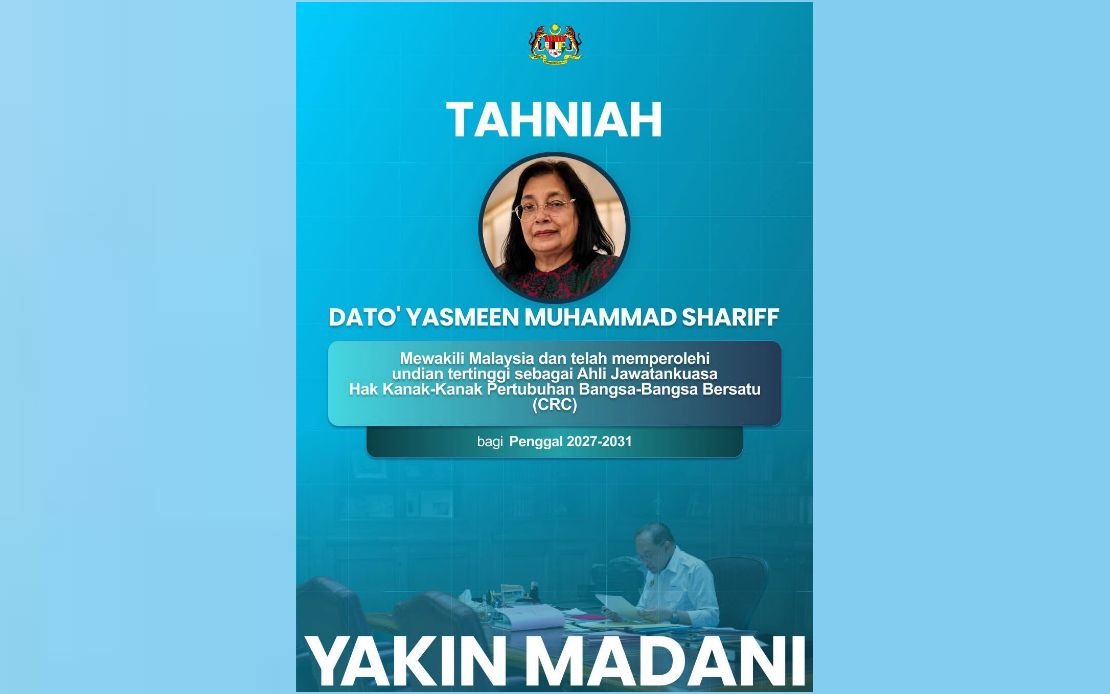
Prime Minister Datuk Seri Anwar Ibrahim has publicly commended Datuk Yasmeen Muhamad Shariff following her successful election to the United Nations Committee on the Rights of the Child, a prestigious international body overseeing child protection standards globally. The appointment comes after Yasmeen secured 136 votes from the 189 States Parties present during voting at the 21st Meeting of States Parties to the Convention on the Rights of the Child held at UN headquarters in New York on Tuesday.
Anwar's immediate response, shared through a Facebook announcement, underscores the political significance Malaysia attaches to such international recognition. He framed Yasmeen's election not merely as an individual achievement but as a reflection of the broader international community's confidence in Malaysia's capacity and dedication to advancing global governance issues. The Prime Minister's emphasis on this distinction reveals how Malaysia leverages such appointments to strengthen its diplomatic positioning within multilateral forums where influence on policy matters substantially.
Yasmeen will represent Malaysia on the committee for the 2027-2031 term, serving as an independent expert rather than as a formal government delegate. This distinction carries important implications for Malaysia's role in shaping global child protection standards. As an independent expert, she will participate in monitoring compliance with the Convention on the Rights of the Child, reviewing state reports, and issuing recommendations that influence international policy direction—all while carrying the credential of Malaysian expertise to the deliberative table.
The Ministry of Women, Family and Community Development (KPWKM) highlighted that this marks Yasmeen's second tenure on the committee, having previously served during the 2013-2017 term. Her reelection after a decade-long gap suggests sustained recognition of her expertise and contributions to child rights discourse. The ministry's emphasis on her previous service record demonstrates the value of institutional continuity and deep engagement with specialized UN mechanisms, aspects often underestimated in Malaysia's international engagement strategies.
For Malaysia specifically, Yasmeen's presence on this committee positions the country to shape discussions on child welfare standards affecting the Asia-Pacific region and beyond. The UN Committee on the Rights of the Child examines periodic reports from state parties, identifies implementation gaps, and issues general comments that inform how nations interpret and apply the Convention. Malaysian representation enables domestic policymakers to anticipate and influence international expectations regarding child protection standards, potentially informing KPWKM's own policy formulations.
Anwar's characterization of this achievement as a catalyst for Malaysia to elevate its international standing reflects a broader strategic vision. The administration appears committed to demonstrating Malaysia's capacity to compete for leadership positions in global governance structures, particularly those addressing social and humanitarian concerns. Such appointments, while often overlooked domestically, carry symbolic weight internationally and contribute to Malaysia's soft power projection within multilateral institutions.
The voting result—136 votes from 189 States Parties—indicates substantial international support, though not unanimous endorsement. The margin suggests that Yasmeen's candidacy enjoyed backing from a comfortable majority but faced competition from other candidates. This competitive selection process underscores that UN body membership remains genuinely contested, with countries actively lobbying for preferred candidates, making Yasmeen's success noteworthy within this competitive environment.
The timing of this appointment aligns with Malaysia's broader positioning on child welfare issues. KPWKM has increasingly elevated child protection on the domestic agenda, and having representation on an authoritative UN body provides institutional channels to access best practices, participate in standard-setting, and demonstrate national commitment to international conventions that Malaysia has ratified.
For regional context, Malaysia's participation in specialized UN committees contributes to the broader Southeast Asian voice in global governance. As developed economies and larger nations often dominate such positions, representation from Malaysian experts helps ensure that regional perspectives—particularly regarding how child protection operates within developing economies with different social structures—receive consideration in international standard-setting discussions.
The appointment also carries implications for Malaysia's civil society and human rights communities. International representation on UN bodies often translates into strengthened domestic credibility and resources for related policy work. International exposure and connections frequently enable experts to bring global best practices back to their home countries, facilitating policy improvements and institutional learning.
Looking forward, Yasmeen's four-year term coincides with evolving challenges in child protection globally, including addressing digital risks, migration impacts on vulnerable children, and mental health considerations for youth. Her participation positions Malaysia to both benefit from and contribute to how these emerging issues are addressed within the international framework governing child rights implementation across participating nations.

