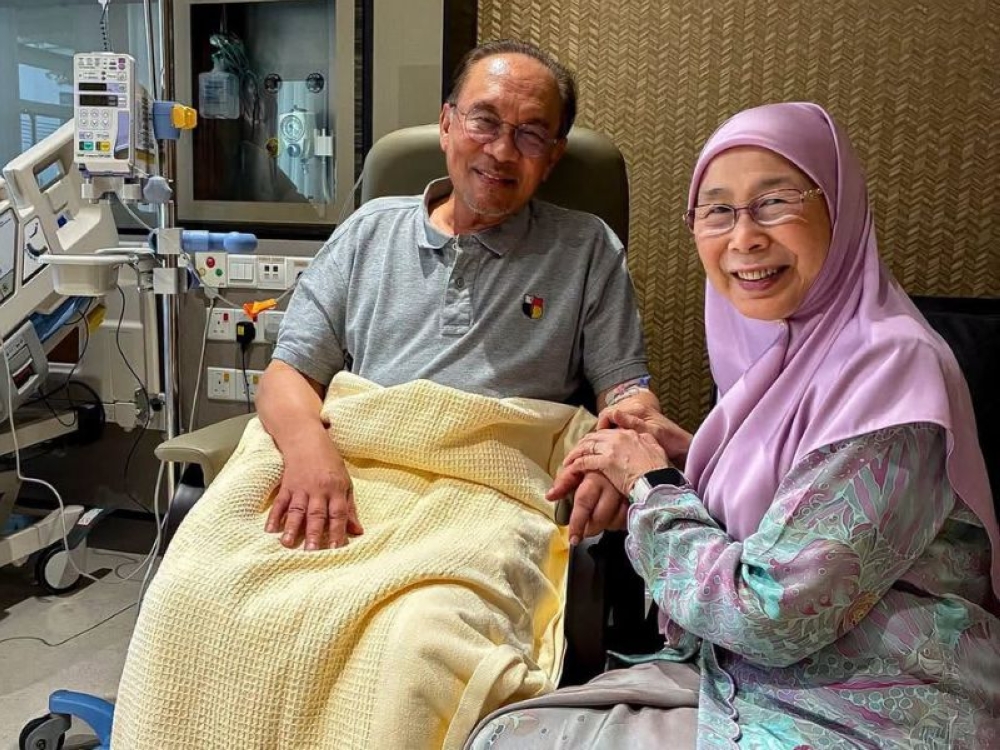
Prime Minister Datuk Seri Anwar Ibrahim is anticipated to leave the hospital and return home today following a hernia surgical procedure, his wife has confirmed. The brief hospitalization represents a routine medical intervention for the country's chief executive, who has maintained his responsibilities despite the procedure being scheduled.
The confirmation came from his spouse, indicating that recovery has progressed as expected and that discharge protocols are proceeding normally. Medical teams have cleared the Prime Minister for recovery at home, suggesting the procedure and immediate post-operative period have unfolded without complications requiring extended inpatient care. The timing of the announcement reflects the government's transparency regarding matters affecting the Prime Minister's availability and schedule.
Hernia procedures are relatively common surgical interventions that involve repairing weakened areas in abdominal muscle tissue. The condition can develop gradually and may require surgical correction to prevent complications or manage discomfort. For public figures holding high office, such procedures necessitate careful coordination to ensure continuity of government operations while allowing adequate time for medical treatment and recovery.
The Prime Minister's medical situation underscores considerations relevant to Malaysia's political leadership regarding health management and succession planning. While the procedure itself appears straightforward, the broader context touches on governance questions about how the nation's highest office ensures operational stability during periods when the executive undergoes medical attention. Malaysia's constitutional framework includes provisions for delegating authority during such instances, though routine procedures typically result in minimal disruption.
Anwar Ibrahim's return to his residence marks the conclusion of a brief but significant chapter in Malaysia's current political timeline. His leadership has been characterized by efforts to navigate the country through economic challenges and complex coalition dynamics within Parliament. The confirmation that he can recover at home suggests confidence in his continued capacity to manage state affairs, even as he undergoes the recuperation period following surgery.
The statement from his wife also reflects evolving standards of public communication regarding political leaders' health circumstances. Rather than leaving uncertainty about the Prime Minister's whereabouts or availability, the family's proactive disclosure demonstrates a commitment to maintaining public confidence in government continuity. This approach contrasts with historical patterns in Malaysian politics where medical leave has sometimes been shrouded in ambiguity, creating speculation and political complications.
From an operational standpoint, the brief hospitalization required coordination across multiple government departments and the Prime Minister's office to manage official duties and international commitments. Malaysia's government structures include mechanisms for vice-prime ministers and senior cabinet members to assume temporary responsibilities, ensuring that critical administrative functions continue uninterrupted. The seamless handling of such transitions reflects institutional maturity in how the nation's governance adapts to temporary absences of key leadership figures.
For the broader Malaysian public and regional observers, the development carries implications for government stability and the Prime Minister's fitness to continue his tenure. Successful management of health matters, coupled with swift recovery, generally strengthens public perception of a leader's resilience and competence. Conversely, any complications could have triggered broader political questions, particularly given Malaysia's recent history of leadership transitions and coalition dynamics.
The Southeast Asian context also matters here, as leadership changes or uncertainties can ripple across the region's intricate diplomatic and economic relationships. Malaysia holds important positions within ASEAN and engages in strategic partnerships with multiple powers. Any extended absence or health complications affecting the Prime Minister could influence the country's regional engagement and policy continuity, making transparent communication about such matters strategically significant.
Looking forward, Anwar Ibrahim's recovery period will require balancing the need for adequate rest with the substantial demands of his office. The Prime Minister's official schedule typically includes cabinet meetings, parliamentary sessions, international engagements, and routine administrative duties that cannot be indefinitely postponed. His medical team and family will need to calibrate his return to full responsibilities carefully, ensuring that premature resumption does not compromise healing while avoiding unnecessary gaps in leadership presence.
The episode also illustrates how modern political communication functions within Malaysia's media landscape. The wife's public statement, likely delivered through official channels or media interviews, serves multiple purposes: it reassures the public, prevents unfounded speculation, maintains institutional confidence, and demonstrates family involvement in supporting the nation's leader. Such statements have become standard practice in contemporary Malaysian politics, reflecting broader shifts toward greater transparency in how government addresses matters affecting top officials.
Ultimately, the successful resolution of this medical matter underscores the importance of robust institutional frameworks that can accommodate temporary absences of key figures without compromising governance. As Malaysia continues to develop its democratic institutions and navigate complex political terrain, the ability to manage such situations smoothly becomes increasingly valuable. The Prime Minister's expected discharge today signals not merely a personal health matter resolved, but also a demonstration of institutional resilience supporting Malaysia's governmental operations.

