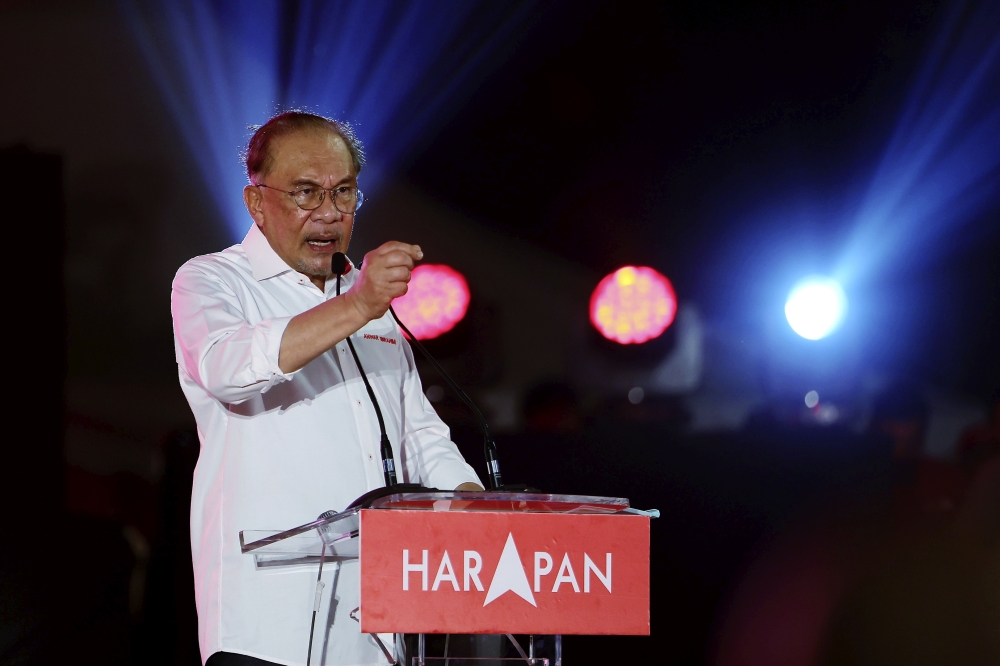
Prime Minister Datuk Seri Anwar Ibrahim is throwing his full political weight behind efforts in Negeri Sembilan through an intensive campaign schedule, marking the beginning of what is expected to be a sustained push to consolidate support in the state. The comprehensive tour, which kicked off with multiple events on a single day, underscores the importance the federal leadership places on securing strong performance in this traditionally competitive electoral territory.
The timing of Anwar's personal intervention reveals the strategic calculus within the ruling coalition. Negeri Sembilan has long represented a bellwether for national sentiment, with its mixed urban-rural composition and diverse demographic makeup reflecting broader patterns across Malaysia. By deploying the Prime Minister himself for an opening campaign salvo, federal leaders are signalling that they view the state as winnable but not assured, requiring direct executive attention and the symbolic authority of the nation's top elected official.
The four-event format deployed across the state reflects modern campaigning methodology, designed to maximise media coverage while reaching multiple constituency bases in a single day. Such concentrated scheduling allows candidates and party machinery to demonstrate organisational efficiency while creating newsworthy moments that ripple through both traditional and digital media ecosystems. The strategy also tests ground-level mobilisation capacity, revealing how effectively local party structures can execute coordinated operations.
Anwar's personal campaigning carries particular resonance in Negeri Sembilan given his historical connections to the state and his standing within the Pakatan Harapan coalition. His presence validates candidates standing in the state while reassuring supporters that federal-level attention will translate into policy priority and resource allocation post-election. This is especially significant in Malaysia's context, where voters often weigh their ballot choices against broader considerations about which coalition will best serve their state's development agenda.
The campaign tour also serves an internal coalition-management function. By distributing his appearance across multiple events, Anwar signals equitable treatment of different party components within Pakatan Harapan. This matters considerably in Malaysian electoral politics, where coalition partners constantly monitor whether resources and top-level visibility are being allocated fairly. Equal access to the Prime Minister's time conveys that all partners' candidates and constituencies merit serious support.
Negeri Sembilan's political landscape has shifted considerably over recent electoral cycles, making the state a genuine competitive arena. The state assembly comprises 36 seats spread across three districts—Seremban, Port Dickson, and Jelebu—creating a relatively fragmented electoral map where seat-by-seat campaigns matter enormously. Neither major coalition enjoys a commanding structural advantage, meaning that superior grassroots organisation and candidate quality can genuinely determine outcomes.
The economic dimension of Negeri Sembilan campaigning cannot be overlooked. The state's manufacturing sector, agricultural base, and growing service economy mean that bread-and-butter economic issues dominate voter concerns. Anwar's campaign messaging likely emphasised federal initiatives addressing cost-of-living pressures, infrastructure investment, and employment generation—themes that resonate across Negeri Sembilan's diverse voter base. His ability to articulate how Pakatan Harapan policies will tangibly improve household economics will substantially influence electoral momentum.
The intensive single-day schedule also suggests confidence in local party machinery. Successfully executing four major events requires seamless coordination across party structures, volunteer networks, and security arrangements. Any operational stumbles—delays, poor crowd turnout, logistical failures—become visible through media coverage and social media discourse, potentially dampening campaign narratives. The fact that federal leadership committed to this ambitious schedule indicates they received assurances from state-level organisers that execution would be flawless.
Looking ahead, Anwar's inaugural tour establishes a campaign baseline for measuring state-level momentum. Crowd sizes, media attendance, social media engagement metrics, and voter sentiment tracking from this opening salvo will be benchmarked against subsequent campaign events. If initial indicators prove positive, further high-profile federal visits can be scheduled strategically during the campaign period. Conversely, weak responses might prompt tactical adjustments, including different messaging angles or adjusted campaign geography.
For Opposition forces, Anwar's aggressive Negeri Sembilan campaign also signals challenge. The Opposition cannot afford to cede any state to Pakatan Harapan's momentum-building efforts, meaning they must rapidly escalate their own campaign activities and deploy their top-tier political talent. This accelerating campaign intensity benefits voters who receive increased political engagement and clearer articulation of competing visions, though it also risks campaign fatigue if activities become repetitively staged.
Regionally, the Negeri Sembilan campaign holds implications for Southeast Asian observers monitoring Malaysian electoral dynamics and coalition politics. How Pakatan Harapan performs in Negeri Sembilan will influence perceptions about federal government stability, coalition durability, and the likely outcome of future national balloting. Strong performance would validate the coalition's governance record, while disappointments might suggest voter fatigue or unresolved internal coalition tensions requiring recalibration.

