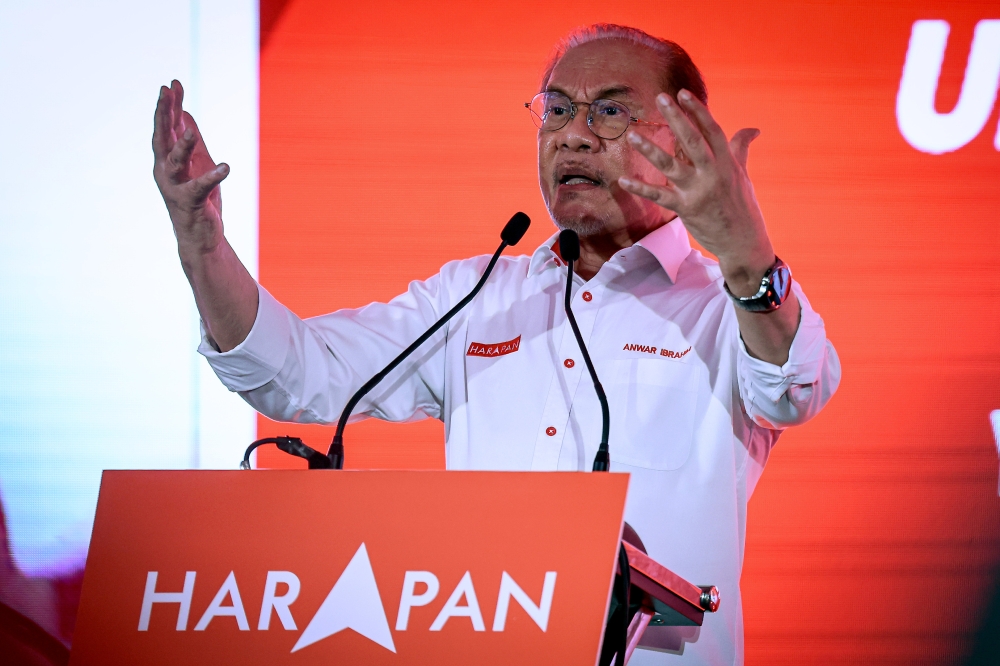
Prime Minister Datuk Seri Anwar Ibrahim is taking his campaign directly to Negeri Sembilan, signalling a coordinated push by the ruling Pakatan Rakyat coalition to secure electoral gains in a state where political allegiances have shown volatility in recent years. His entry into the campaign trail in the central state represents a calculated effort to energise party machinery and demonstrate commitment at the highest political level, underscoring the significance Kuala Lumpur places on maintaining influence in Negeri Sembilan.
The timing of Anwar's campaign appearance carries strategic weight. Negeri Sembilan, though geographically compact with a population of approximately 1.1 million, has historically punched above its weight in Malaysian electoral politics. The state's voters have demonstrated a willingness to shift allegiances between major political coalitions, making it neither a guaranteed stronghold nor entirely lost territory for any bloc. For Pakatan, maintaining or expanding its footprint here is essential to preventing the opposition from consolidating gains that might ripple across neighbouring Selangor and other Klang Valley constituencies.
Anwar's personal involvement in campaign events carries symbolic importance beyond mere vote-gathering. As Prime Minister, his presence at state-level campaign rallies sends a message that federal leadership is invested in local outcomes. This is particularly relevant in Malaysian politics, where voters frequently separate federal and state electoral calculations. By appearing on the ground in Seremban and other Negeri Sembilan locations, Anwar seeks to collapse this distinction and convince voters that supporting Pakatan at state level serves their federal interests.
The coalition's momentum heading into these elections has been a subject of intense debate among political analysts and party operatives alike. Pakatan has governed Malaysia at the federal level since 2018, though its hold on power has been contested and sometimes precarious. In Negeri Sembilan specifically, the coalition currently holds sway, but the margins are not overwhelming. Any significant swing towards the opposition Barisan Nasional or fragmentation within the Pakatan base could alter the state's political complexion substantially.
For Malaysian voters watching national politics, Anwar's Negeri Sembilan campaign signals that the government believes defending state governments is crucial to its long-term political viability. This reflects a broader pattern in Malaysian politics where state administrations serve as testing grounds for federal policy, constituencies for distributing patronage, and platforms for launching national political figures. Control of states affects not only local policy delivery but also the resource allocation decisions that ultimately impact ordinary Malaysians' access to public services and development funds.
The coalition's campaign strategy appears designed to mobilise existing Pakatan supporters whilst attempting to persuade swing voters that the coalition has delivered tangible benefits. Education, healthcare, and economic opportunity remain consistent voter concerns across Malaysia, and state governments, whilst limited in some spheres, directly influence how federal programmes are implemented locally. Anwar's messaging likely emphasizes infrastructure development, education initiatives, and economic growth that benefit Negeri Sembilan residents directly.
Opposition parties have countered with their own campaigns emphasizing governance record, fiscal management, and alternative visions for the state's development. The Barisan Nasional, which governed Malaysia federally for six decades until 2018, retains organisational capacity and support networks in Negeri Sembilan. Its challenge to Pakatan will force the coalition to work harder for electoral validation rather than assuming incumbency guarantees success.
For Southeast Asian observers, Malaysia's state-level elections offer insights into how competitive democracy functions within the region. Unlike some neighbouring nations where electoral outcomes are predetermined, Malaysian politics remains genuinely contested. Multiple coalitions compete, voter preferences shift, and campaign efforts demonstrably influence results. This genuine competitiveness, despite occasional controversies, reinforces Malaysia's position as a functioning electoral democracy where political transitions occur through ballot boxes rather than other means.
The broader implications for Malaysian governance extend beyond immediate electoral outcomes. How effectively Pakatan performs in Negeri Sembilan and other states will shape the political landscape heading into the next federal election cycle. Poor performance could embolden opposition voices arguing that Pakatan has failed to deliver effectively, whilst strong results would validate the coalition's continued stewardship. For Malaysian citizens concerned about governance quality, education standards, healthcare provision, and economic opportunities, these state elections provide opportunities to express preferences that directly affect their immediate living environments.
Anwar's campaign engagement also reflects generational shifts within Malaysian politics. His emphasis on inclusive governance, anti-corruption measures, and policy-driven politics represents a different political brand from earlier eras. Whether Negeri Sembilan voters validate or reject this approach will offer valuable indicators about Malaysian electorate preferences and the sustainability of political coalitions based on programmatic platforms versus traditional patronage networks.
The campaign in Negeri Sembilan ultimately represents one critical chapter in Malaysia's ongoing electoral narrative. How Pakatan performs will influence not only the state's political direction but also shape national political momentum, coalition confidence, and opposition strategies heading towards future contests. For Malaysians across the country, these state-level contests matter because they determine which parties control the administrative machinery, budget allocations, and policy directions that affect daily life in each state.

