%22%2F%3E%3C%2Fpattern%3E%3C%2Fdefs%3E%3Crect%20width%3D%22100%25%22%20height%3D%22100%25%22%20fill%3D%22url(%23phal7dg)%22%2F%3E%3Crect%20width%3D%22100%25%22%20height%3D%22100%25%22%20fill%3D%22url(%23phal7dp)%22%2F%3E%3Ctext%20x%3D%2250%25%22%20y%3D%2250%25%22%20text-anchor%3D%22middle%22%20dominant-baseline%3D%22central%22%20fill%3D%22rgba(255%2C255%2C255%2C0.95)%22%20font-family%3D%22Georgia%2C%20'Times%20New%20Roman'%2C%20serif%22%20font-weight%3D%22700%22%20font-size%3D%22272%22%20letter-spacing%3D%22-0.02em%22%3EAnwar%3C%2Ftext%3E%3C%2Fsvg%3E)
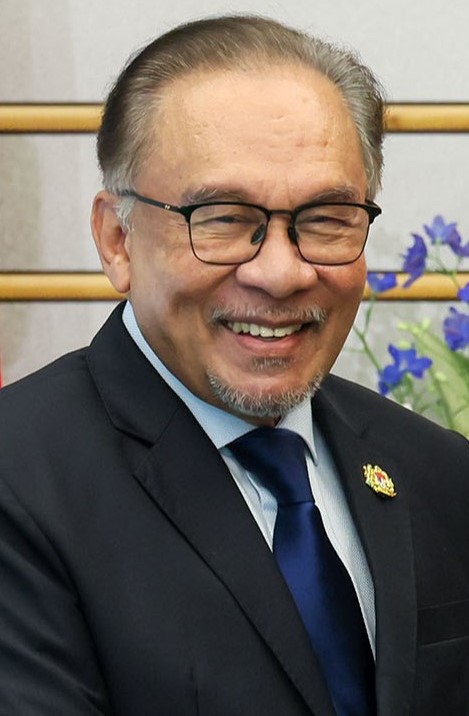
Prime Minister Anwar Ibrahim took centre stage at Padang Bukit Gambir Extreme Park on the evening of 22 June 2026 to unveil Pakatan Harapan's complete roster of candidates contesting the 16th Johor State Election. The high-profile event, branded as a "Night of Hope," functioned as both a formal announcement and a reaffirmation of the ruling coalition's commitment to transform governance in Malaysia's southern stronghold through values-driven leadership and transparent administration.
The gathering underscored a deliberate messaging strategy by Pakatan Harapan, positioning itself as fundamentally committed to principled governance in an electoral context where public trust and credibility remain contested terrain. By elevating the candidate announcement to prime ministerial level and orchestrating it as a substantial public event, the coalition sought to communicate that the Johor contest carries consequences for national direction. This approach reflects the coalition's broader strategy of framing state elections not merely as regional contests but as referendums on the Malaysia Madani vision—the government's overarching development framework promising equitable growth, institutional strengthening, and improved living standards for ordinary Malaysians.
Anwar's substantive remarks at the event crystallised the coalition's electoral positioning. His assertion that politics should fundamentally serve the people rather than narrow interests constitutes both a philosophical statement and an implicit critique of alternative governance models. The articulation of tangible policy priorities—strengthening communities, expanding economic opportunities for youth, enabling business growth, and lifting household living standards across Johor—reflects an understanding that electoral support hinges on demonstrable delivery against bread-and-butter concerns. For Malaysian voters, particularly younger demographics and small-business operators grappling with economic uncertainty, such messaging attempts to anchor political support to concrete improvements in daily life rather than abstract principles alone.
The theme of unity, integrity, compassion, and progress that anchored the event represents more than rhetorical packaging. These pillars align with the Malaysia Madani framework that Pakatan Harapan has positioned as the philosophical bedrock of its governance agenda. Unity addresses Malaysia's persistent challenges around social cohesion and intercommunal relations; integrity targets public scepticism toward institutional corruption; compassion acknowledges socioeconomic anxieties among vulnerable populations; and progress legitimises the government's developmental ambitions. For Johor specifically—a state with significant urban-rural divides, substantial Tamil and Chinese-speaking communities, and a manufacturing and port-dependent economy—this framing attempts to construct an inclusive political coalition spanning diverse constituencies and interests.
The decision to announce candidates for all Johor state seats simultaneously carries strategic implications. A comprehensive candidate slate presented in unified fashion suggests internal coalition cohesion and planning discipline, qualities voters associate with effective governance. It also eliminates the drip-feed announcement approach that might create perceptions of internal wrangling or last-minute improvisation. For observers tracking Pakatan Harapan's internal dynamics—particularly the balance of influence between component parties such as PKR, DAP, and Amanah—a coordinated, full-slate announcement suggests that inter-coalition negotiations around seat allocation and candidate selection have reached successful resolution.
Johor occupies distinctive significance within Malaysia's electoral map. As the nation's southernmost peninsula state bordering Singapore, Johor combines substantial urban centres, a large working-class population engaged in manufacturing and logistics, significant agricultural constituencies, and a historical demographic profile that differs from peninsular Malaysian averages. Pakatan Harapan's performance in Johor carries implications extending beyond state boundaries, affecting national narrative momentum and coalition confidence heading into future federal contests. A strong showing would affirm the coalition's capacity to govern effectively and retain popular mandate; conversely, setbacks would intensify internal pressures and embolden political opponents questioning the government's legitimacy and competence.
The invocation of youth opportunity and business support reflects Pakatan Harapan's recognition that electoral success in contemporary Malaysia requires addressing generational anxieties. Younger voters confronting graduate unemployment, housing unaffordability, and limited entrepreneurial pathways represent a swing demographic potentially responsive to programmes explicitly designed around their circumstances. Similarly, small-business operators facing inflationary pressures, credit constraints, and regulatory burdens constitute an economically significant constituency whose support depends on tangible government support rather than political rhetoric alone.
The campaign framing also implicitly acknowledges regional competition. Johor's incumbent administration and opposition parties will advance competing visions of governance and development priorities. By emphasising integrity and community-centred decision-making, Pakatan Harapan positions itself as offering distinct governance alternatives. This positioning becomes particularly relevant given Malaysian voters' demonstrated capacity to split their ballots across federal and state contests, voting for different coalitions at different governmental levels based on performance assessments and specific state concerns.
The "Night of Hope" branding itself carries communicative intent. Hope functions as emotional and aspirational anchor, distinguishing Pakatan Harapan's messaging from purely technical governance discussions. In electoral contexts, particularly in settings where voter cynicism around political promises runs high, hope represents a psychologically powerful mobilising concept capable of activating turnout among less engaged demographics. The metaphor of night transitioning to hope-filled daylight implies potential transformation and renewal, resonating with constituencies seeking change or meaningful policy recalibration.
Looking forward, the success of this candidate announcement event will be measured not through the immediate reactions it generates but through whether the slate of candidates subsequently translates campaign messaging into concrete electoral support. The coherence between announced commitments—youth employment, business support, community strengthening, institutional integrity—and actual governing performance in winning constituencies will determine whether "Night of Hope" becomes remembered as effective campaign theatre or as a missed opportunity to establish durable trust. For Malaysian voters, particularly those in Johor evaluating their electoral choices, the substantive question remains whether Pakatan Harapan's promises represent genuine commitments backed by implementable policies or aspirational messaging disconnected from governmental capacity and political will.