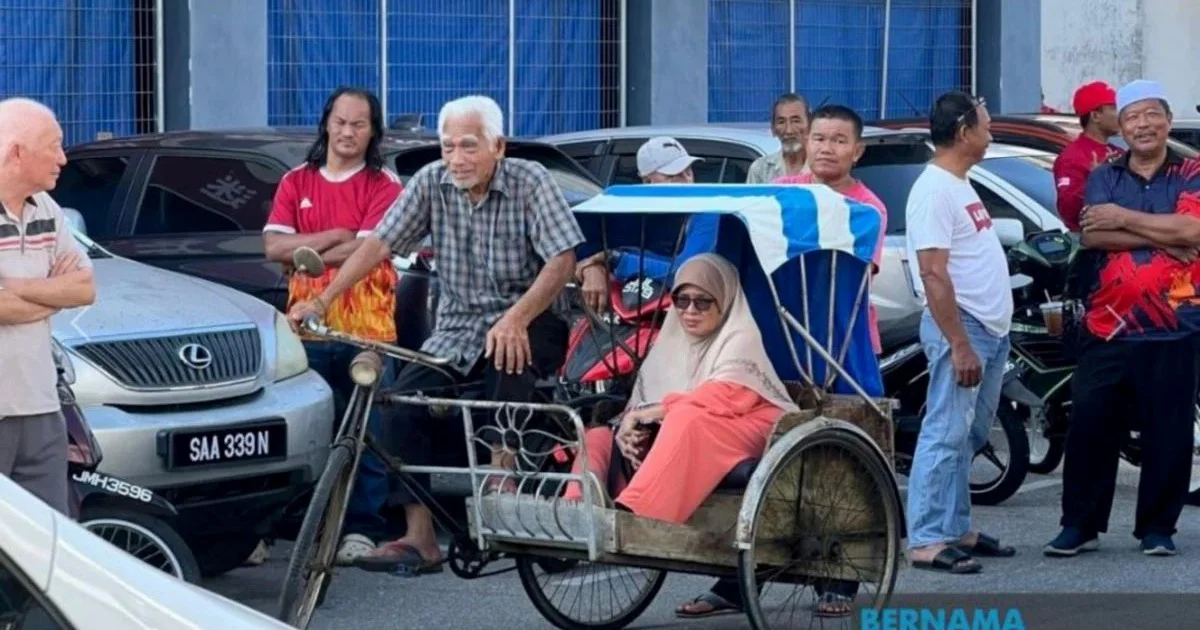
Prime Minister Datuk Seri Anwar Ibrahim has publicly acknowledged the remarkable determination of an 86-year-old trishaw rider who pedalled his vehicle nearly a kilometre through Kuala Lumpur's streets to fulfil his wife's heartfelt desire to see the nation's leader up close. The touching encounter has become a poignant reminder of the bonds that tie Malaysians to their elected officials, transcending the usual formalities of political life.
The elderly man's journey represents far more than a simple act of transportation. At an age when most would consider such physical exertion daunting, the octogenarian chose to invest his energy in honouring his wife's wishes, pedalling manually through urban traffic to reach a location where he believed he might encounter Anwar. This selfless gesture speaks volumes about the values of respect and family devotion that remain deeply embedded in Malaysian society, particularly among the older generation.
Anwar's public expression of gratitude underscores a broader theme in his political leadership—the importance of maintaining genuine connections with ordinary Malaysians. Rather than remaining distant or dismissive of such grassroots encounters, the Prime Minister took time to acknowledge the elderly man's effort, transforming what might have been a fleeting moment into a meaningful public exchange. This approach reflects his stated commitment to being accessible to citizens from all walks of life, regardless of their status or background.
The incident also highlights the enduring presence of trishaws in Malaysian urban landscapes. Despite decades of modernisation and the proliferation of motorised vehicles, these human-powered vehicles continue to serve as both a practical transport solution and a cultural symbol. For many elderly Malaysians, trishaws represent a tangible link to their past and a means of maintaining independence. The image of an 86-year-old man still actively pedalling his trishaw paints a vivid picture of resilience and vitality among Malaysia's senior citizens.
Familial relationships and the role of spousal support emerge as quiet heroes in this story. The wife's desire to meet Anwar Ibrahim—whether motivated by admiration, curiosity, or civic engagement—inspired her husband to undertake a physically demanding journey. This dynamic reveals how personal connections within families can drive individuals to accomplish things they might not otherwise attempt. The wife's wish became the catalyst, and the husband's determination provided the means.
From a broader perspective, stories like these help humanise political figures and reinforce the notion that Malaysia's leadership remains, in important ways, accessible to its people. In an era when political communication often flows through digital channels and carefully orchestrated public events, these unscripted moments carry particular weight. They suggest that the machinery of government has not completely insulated leaders from the everyday realities of their constituents.
The trishaw rider's gesture also carries symbolic significance in Malaysia's evolving narrative about respect for elderly citizens. Demographic shifts mean that Malaysia's population is ageing, and society increasingly grapples with questions about how to honour and engage with senior citizens. The 86-year-old man's visibility in this positive context—portrayed as active, determined, and capable—counters stereotypes about elderly Malaysians being passive or burdensome. Instead, he emerges as a figure of agency and purpose.
Anwar Ibrahim's response to the encounter suggests a political leadership style that values such human moments. By publicly thanking the elderly man, the Prime Minister signals to other Malaysians that their efforts to engage with government, however unconventional or humble the method, are noticed and appreciated. This creates an incentive structure that encourages civic participation and demonstrates that direct, personal appeals to leadership can yield recognition.
The story has particular resonance in a Malaysian context where oral traditions and personal narratives carry significant cultural weight. The tale of the elderly trishaw rider is precisely the kind of story that spreads through communities, shared in hawker stalls, at family gatherings, and increasingly, across social media platforms. It becomes part of the broader narrative that citizens construct about their leaders and their relationship to power.
Moving forward, such encounters between leaders and ordinary citizens should be understood not merely as heartwarming anecdotes but as important touchstones for democratic engagement. They remind political figures of the human motivations behind civic participation and the diverse ways Malaysians seek connection with their leaders. For the elderly trishaw rider and his wife, what began as a simple wish has evolved into a public moment of recognition and dignity.
The incident exemplifies how gratitude, when expressed genuinely by leaders, can affirm the value of ordinary citizens' efforts and aspirations. In this case, an 86-year-old man's determination to pedal nearly a kilometre resulted in more than just a fleeting encounter—it generated a meaningful acknowledgment of his worth and his wife's dreams. This stands as a modest but significant victory for human connection in an increasingly complex political landscape.

