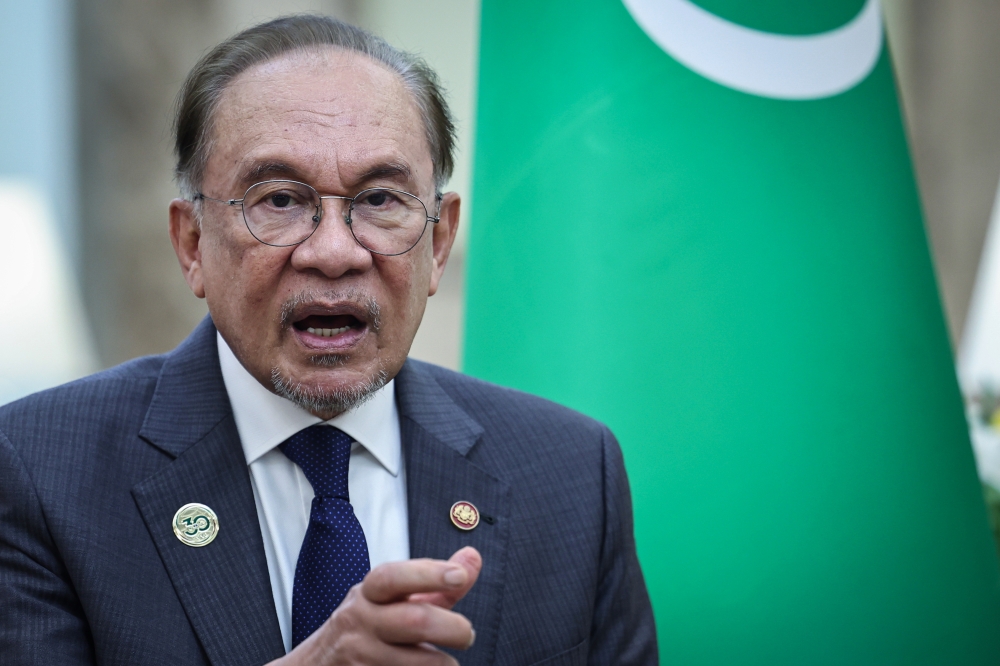
Prime Minister Datuk Seri Anwar Ibrahim has expressed profound sorrow at the death of Professor John L. Esposito, one of the most respected voices in Islamic scholarship from the United States. The Malaysian leader's tribute underscores the significance that senior regional figures place on Esposito's decades-long contribution to bridging understanding between Islamic civilisation and Western societies, a mission that resonates deeply across Southeast Asia where interfaith dialogue remains a critical policy priority.
Esposito, who spent much of his academic career at institutions including Georgetown University's Prince Alwaleed Bin Talal Center for Muslim-Christian Understanding, became widely recognised for his scholarly approach to Islam that rejected stereotypes and promoted nuanced discourse. His passing represents a substantial loss for academia and for those who have worked to counteract Islamophobia and religious prejudice in Western institutions. Through his extensive published works and public engagement, Esposito contributed substantially to shaping how millions of people in Europe and North America understand Islamic history, theology, and contemporary Muslim societies.
Anwar's personal acknowledgment of Esposito's legacy carries particular weight given Malaysia's own efforts to position itself as a centre for interfaith dialogue and Islamic moderation on the global stage. The Prime Minister's remarks reflect a broader regional appreciation for scholars who have used their platform to advocate fairness in academic representation of Islam and Muslims. Esposito's frameworks for understanding contemporary Islamic movements have influenced policymakers and intellectuals across Southeast Asia, where governments grapple with balancing religious identity, modernisation, and international relations.
Throughout his career spanning several decades, Esposito authored or edited more than fifty books that explored topics ranging from Islamic law and governance to the history of Muslim-Western relations. His work demonstrated that rigorous scholarship and sympathetic engagement with Islam as a lived faith were not mutually exclusive propositions. Instead of treating Islamic traditions purely as historical artefacts, he consistently examined how contemporary Muslims interpret and practise their religion within modern political and social contexts. This approach earned him respect even among critics who disagreed with his conclusions.
The Georgetown scholar's establishment of the Center for Muslim-Christian Understanding represented an institutional commitment to fostering serious dialogue and collaborative research. The centre became a hub where academics, diplomats, and religious leaders could engage substantively with questions about Islam's role in contemporary global affairs. By creating spaces for this conversation, Esposito helped normalise the discussion of Islam within mainstream Western academia in ways that had previously been limited or distorted.
For Malaysian policymakers and academics, Esposito's work provided valuable intellectual resources. His analyses of Islamic movements in Southeast Asia, including Malaysia itself, offered external perspectives that complemented local scholarship. His willingness to engage seriously with Islamic thought—treating it as a rich intellectual tradition rather than merely a security concern—provided legitimacy to moderate voices within Muslim-majority nations seeking to navigate between tradition and progress.
Anwar Ibrahim's tribute acknowledges that Esposito's contributions extended beyond academic papers and university lectures. The scholar's public commentary, media appearances, and engagement with policymakers gave him influence in shaping international narratives about Islam and Muslims. At a time when misinformation and reductive characterisations of Islam proliferated in Western media, Esposito consistently offered evidence-based alternatives grounded in historical understanding and contemporary research.
The scholar's approach proved particularly relevant in Southeast Asia, where religious diversity and interfaith coexistence have long characterised societies. Malaysia's own framework of Islam Hadhari, emphasising civilisational values and progressive Islam, found intellectual support in the kind of nuanced scholarship that Esposito championed. His work validated the notion that Islamic tradition and modern governance need not exist in perpetual tension, a message of particular importance for nations negotiating their identity in a globalised world.
Esposito's passing comes at a moment when Western perceptions of Islam face continued pressure from geopolitical events and polarisation. The absence of his measured, scholarly voice leaves a gap at a time when serious academic engagement with Islamic thought remains valuable for international relations. Malaysian officials and regional leaders who have engaged with his ideas recognise that scholarly integrity and careful analysis—Esposito's hallmarks—become increasingly rare and needed commodities in public discourse about Islam and the Muslim world.
The Georgetown professor's legacy will likely endure through the scholars he mentored, the institutions he helped establish, and the frameworks he developed for understanding Islam in contemporary contexts. For the Malaysian government and broader Southeast Asian region, his contributions stand as a reminder of how intellectual rigour and principled commitment to understanding across religious and civilisational lines can produce tangible benefits for international relations and mutual comprehension.

