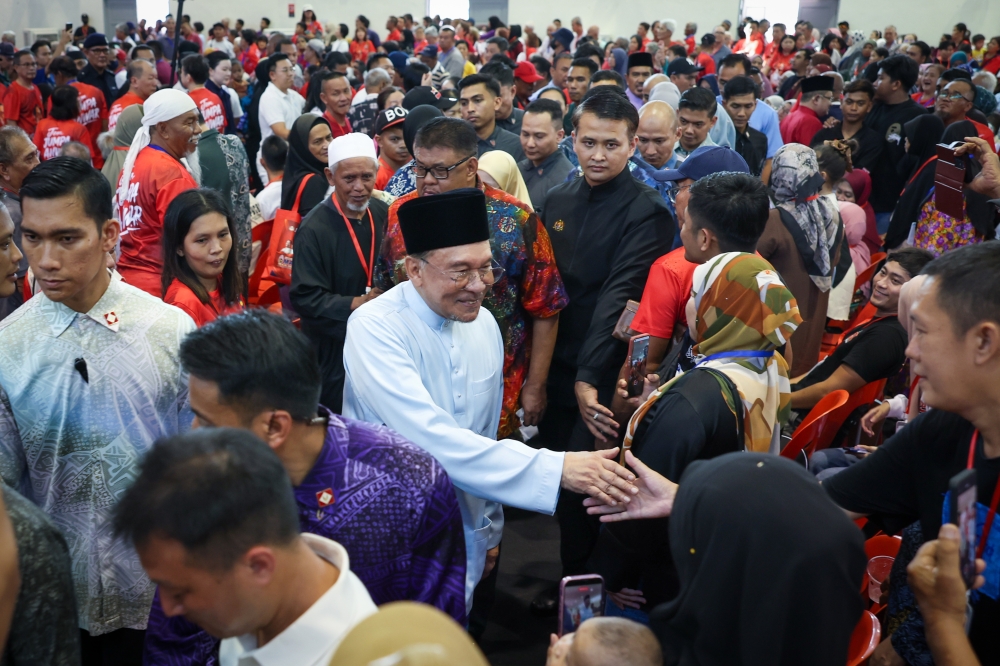
Prime Minister Datuk Seri Anwar Ibrahim has entered a private hospital in the Klang Valley region for a scheduled medical observation period spanning two days, according to a statement released by the Prime Minister's Office on August 10. The planned health assessment encompasses a series of medical examinations and specialist consultations aimed at maintaining the premier's health profile and ensuring he remains fit to discharge his demanding duties at the highest level of government.
The PMO's confirmation of the medical visit followed enquiries from journalists and came without advance public announcement, suggesting the appointment had been scheduled within the government's standard health maintenance protocols. Such routine medical check-ups are commonplace for senior government officials, particularly those holding the highest executive positions where the demands of office can be physically taxing. The timing and duration of the two-day observation period indicates a comprehensive rather than emergency-driven medical review.
The Prime Minister, who is 77 years old, has previously spoken publicly about his commitment to maintaining good health habits and regular medical assessments. His willingness to undergo specialist observation demonstrates an approach consistent with international best practices among senior political leaders, where transparent health maintenance routines help assure both the public and government institutions of continuity in executive leadership. The hospital environment allows medical professionals to conduct multiple tests and evaluations under controlled conditions, providing a more complete diagnostic picture than office-based consultations alone.
The PMO's measured communication style regarding the medical visit reflects a balance between transparency and protecting the Prime Minister's privacy during a period of intensive medical evaluation. In Malaysia's political context, where leadership stability remains significant for investor confidence and policy continuity, such health-related updates are typically handled with careful attention to tone and timing. The brief acknowledgement confirms that government operations continue normally during the observation period, with no indication of any urgent or serious health concerns necessitating the hospital visit.
For Malaysian citizens and regional observers, the medical check-up underscores the importance of succession planning and institutional resilience within the executive branch. The government has established systems to ensure that the Prime Minister's temporary absence from his usual office location does not disrupt the functioning of cabinet-level decision-making or routine governance. Such arrangements reflect the maturity of Malaysia's institutional frameworks, where protocols exist for managing periods when the prime minister may be unavailable for brief intervals.
The location of the medical facility—a private hospital in the Klang Valley—indicates that the Prime Minister has access to advanced diagnostic equipment and specialist expertise comparable to international standards. Malaysia's private healthcare sector has developed considerable capacity in recent years, with several institutions offering world-class diagnostic imaging, cardiology services, endocrinology, and other specialties relevant to comprehensive medical assessment for individuals in Anwar's age bracket.
Regional political analysts often monitor the health status of Southeast Asian leaders closely, given the outsized influence such figures exercise over policy direction and stability within their nations. Anwar Ibrahim's position as Prime Minister makes his health status not merely a personal matter but a question touching upon institutional continuity and the broader stability of Malaysia's government. The transparent acknowledgement of routine medical observation therefore serves a broader public assurance function, allowing stakeholders to understand that standard health maintenance procedures are in place.
The two-day timeframe suggests a level of medical scrutiny extending beyond a simple annual physical examination. Such observation periods typically include baseline cardiovascular assessments, laboratory work examining blood chemistry and organ function, imaging studies, and potentially specialist consultations in domains such as cardiology or gastroenterology. The comprehensive nature of such assessments allows medical teams to establish detailed baseline information and identify any emerging health concerns requiring monitoring or intervention.
From a governance perspective, the medical visit occurs against the backdrop of Anwar's ongoing work leading Malaysia through complex economic and political circumstances. His administration has navigated competing pressures from coalition politics, economic growth objectives, and international relations across a range of issues from trade to regional security. Maintaining optimal health becomes integral to sustaining the energy and focus required for such multifaceted executive responsibilities.
The PMO's confirmation of the medical observation period also reflects evolving standards in political communication within Malaysia, where routine disclosures about leadership health are increasingly handled through direct institutional channels rather than speculation or media investigation. This approach builds public confidence through transparency while respecting the boundary between legitimate public interest in leadership capacity and unwarranted intrusion into personal medical details.
Looking forward, the successful completion of the medical observation should provide reassurance to cabinet colleagues, parliament, and the broader business community regarding the Prime Minister's fitness for office. Such routine health maintenance, when conducted and communicated openly, strengthens rather than undermines confidence in institutional leadership, as it demonstrates that systematic protocols exist for ensuring that Malaysia's highest executive remains capable of discharging the considerable responsibilities attached to the office.

