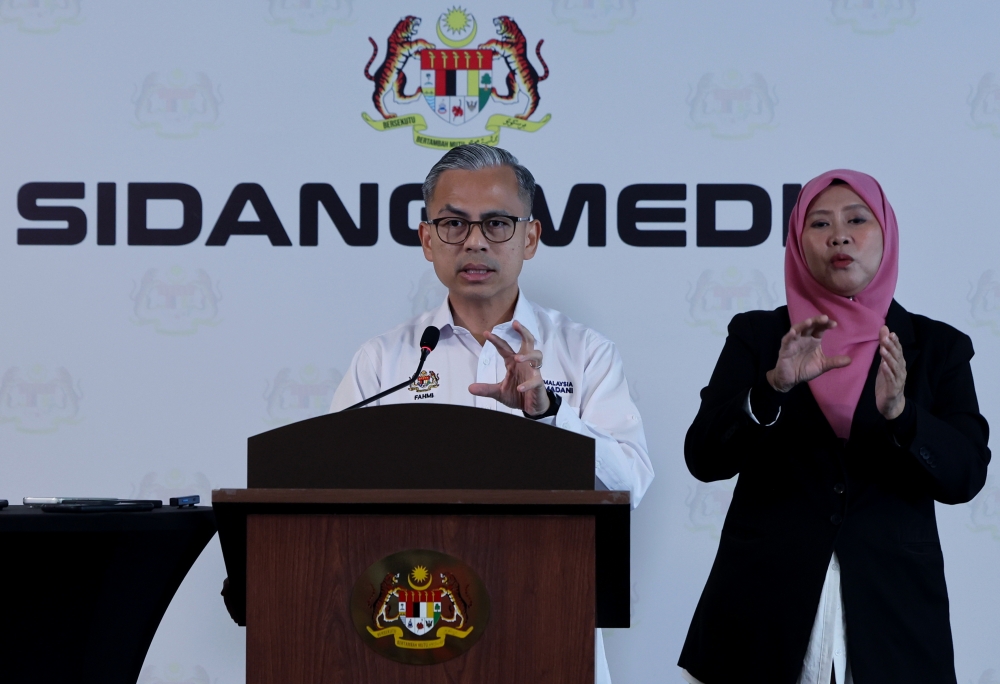
Prime Minister Datuk Seri Anwar Ibrahim has issued a direct instruction to the Ministry of Human Resources (Kesuma) to accelerate the approval of approximately 15,000 outstanding foreign worker applications currently in the pipeline. The directive underscores the government's recognition that processing delays are creating bottlenecks in labour-intensive sectors where domestic workforce availability remains insufficient to meet operational demands. Communications Minister Fahmi Fadzil disclosed the prime ministerial order during a media engagement in Putrajaya on August 5, framing the move as essential to maintaining Malaysia's economic momentum.
The accumulation of unprocessed applications reflects deeper structural challenges within Malaysia's labour market that have persisted despite various policy adjustments in recent years. Industries ranging from manufacturing to construction, hospitality to healthcare, have consistently reported difficulty in securing adequate personnel through domestic recruitment channels. Foreign workers have become integral to sustaining productivity in these sectors, yet the administrative machinery governing their entry and deployment has struggled to keep pace with operational requirements. By directing Kesuma to prioritise this backlog, Anwar is attempting to reduce the administrative friction that has forced employers to operate below optimal capacity or delay expansion plans.
The timing of this directive reflects broader economic considerations facing Malaysia as it navigates post-pandemic recovery and competition from neighbouring countries for regional investment. Multinational corporations and local enterprises increasingly compare labour costs and availability across Southeast Asia when making investment or relocation decisions. Delays in foreign worker approvals can tilt such calculations unfavourably, potentially causing businesses to consider alternatives in Thailand, Vietnam, or Indonesia where bureaucratic processes may be more streamlined. By expediting these applications, the government signals to the business community that it remains committed to removing regulatory obstacles to operational efficiency.
The 15,000 figure represents a substantial volume of pending cases, suggesting systemic capacity constraints within Kesuma's administrative apparatus. Processing foreign worker applications involves multiple verification steps, security checks, and coordination between various government agencies. The ministry must balance efficiency gains with maintaining appropriate oversight to prevent labour exploitation, undocumented employment, and other associated risks. The challenge facing the accelerated processing initiative lies in achieving faster turnaround times without compromising the integrity of screening procedures or creating vulnerabilities to fraudulent applications.
For Malaysian workers, the expansion of foreign worker permits carries mixed implications. While supplementing the labour force in sectors where domestic recruitment proves impossible, increased migrant employment can exert downward pressure on wages in vulnerable occupational segments. Policymakers must therefore calibrate foreign worker expansion carefully, ensuring that approval thresholds remain calibrated to genuine labour shortages rather than employer preferences for cheaper labour. The absence of clear sectoral quotas or skill-level specifications in Fahmi's announcement leaves ambiguity about whether this acceleration applies uniformly across all industries or targets specific shortage areas.
The directive also occurs within the context of Malaysia's competition for foreign investment amid regional economic volatility. Semiconductor manufacturing, electronics assembly, and other high-value sectors depend substantially on international supply chains and investment flows. Companies considering Malaysia as a manufacturing base scrutinise labour availability and administrative efficiency as key decision factors. A government that can demonstrate responsiveness to legitimate labour requirements through faster permit processing gains competitive advantage in pitching Malaysia to multinational investors evaluating sites across the ASEAN region.
Implementation effectiveness will determine whether this directive translates into meaningful acceleration or remains largely performative. Kesuma must allocate additional resources, streamline approval workflows, and potentially deploy digital systems to handle the increased processing volume. The ministry's track record suggests mixed capacity for such transformations, with previous initiatives to modernise permit systems delivering mixed results. Employers and industry associations will be watching closely whether the promised acceleration materialises within weeks or stretches into months.
The announcement also reflects evolving political economy considerations within the ruling coalition. Labour-intensive sectors employ millions of Malaysians and constitute significant voter blocs in key electoral regions. Positioning the government as responsive to employer concerns regarding operational constraints while simultaneously protecting domestic worker interests requires careful messaging. Fahmi's framing emphasised economic necessity rather than employer convenience, attempting to ground the decision in national development imperatives rather than sectional interests.
Looking forward, Malaysia may need to consider more fundamental reforms to its foreign worker management framework. The recurring accumulation of pending applications suggests that underlying procedures, not merely administrative resources, require examination. Countries including Singapore and South Korea have developed sophisticated points-based systems that prioritise workers by skill level, sector demand, and employer qualifications. Malaysia might benefit from similar systematic approaches that reduce discretionary bottlenecks and provide greater predictability for employers and workers alike.
The practical impact of expedited approvals will extend beyond processing times to influence wage setting, labour union negotiations, and workplace conditions across multiple sectors. How Kesuma executes this directive will therefore signal the government's broader philosophy regarding the foreign worker framework—whether it views migrants as temporary solutions to structural labour shortages or as permanent components of the Malaysian economy requiring integrated management approaches. The coming months will reveal whether this acceleration represents genuine administrative reform or tactical responsiveness to immediate business sector pressure.

