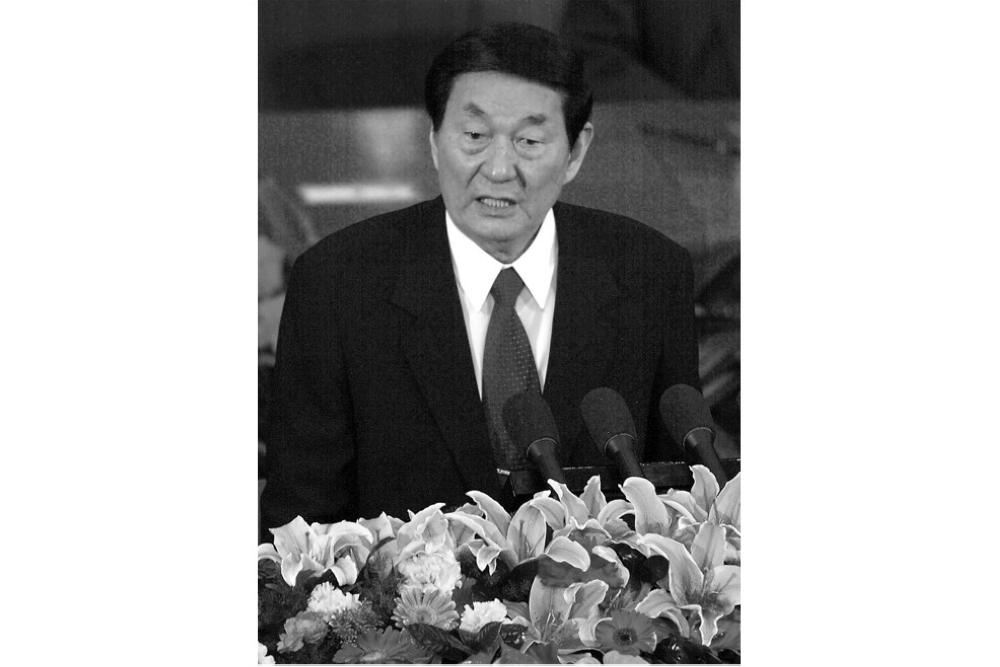
Prime Minister Datuk Seri Anwar Ibrahim has extended his sympathies to the family and government of China following the death of former Premier Zhu Rongji, describing the late statesman as a cherished ally who played a pivotal role in strengthening the longstanding friendship between Malaysia and China. The tribute underscores the enduring significance of Zhu's legacy in shaping the trajectory of bilateral relations during a formative period of economic and diplomatic engagement between the two nations.
Zhu Rongji, who served as China's Premier from 1998 to 2003 during a transformative era of Chinese economic reform and integration into global markets, maintained close working relationships with Malaysian leadership spanning nearly two decades. His tenure coincided with crucial negotiations and agreements that would lay the groundwork for deepened trade partnerships, investment flows, and people-to-people exchanges that continue to define the Malaysia-China relationship today. The timing of his leadership also positioned him as a key architect of China's outreach strategies to Southeast Asia during the early stages of Beijing's regional diplomatic expansion.
Anwar's remarks reflect the Malaysian government's appreciation for Zhu's contribution to fostering mutual understanding and constructive dialogue between Kuala Lumpur and Beijing. Beyond formal diplomacy, Zhu was known for his pragmatic approach to economic governance and his championing of market-oriented reforms that opened doors to international commercial partnerships. Malaysia, as a major trading partner and investment hub in Southeast Asia, benefited significantly from the cooperative frameworks established during his premiership, particularly in sectors such as finance, manufacturing, and infrastructure development.
The late Premier's influence extended beyond his official tenure, as retired Chinese leaders often maintain informal advisory roles and continue to shape perceptions of their nation's external relations. Zhu's personal relationships with Malaysian counterparts helped cultivate goodwill at moments when diplomatic channels required careful navigation. These interpersonal connections, often overshadowed in analyses focused purely on high-level government transactions, frequently prove decisive in resolving disputes and facilitating agreements that serve mutual interests.
From Malaysia's perspective, the passing of figures like Zhu represents a broader reflection on the continuity and evolution of Southeast Asian engagement with China. As Malaysia navigates complex regional dynamics and seeks to balance relationships with multiple great powers, the memory of constructive bilateral stewardship during Zhu's era carries symbolic weight. His approach to economic statecraft—emphasizing reciprocal benefit and long-term partnership—resonated with Malaysian policymakers who similarly prioritise pragmatism and mutual prosperity over ideological positioning.
The tribute also arrives at a moment when Malaysia-China relations face both opportunities and complexities. Trade volumes between the nations remain substantial, yet recent years have witnessed discussions about restructuring investment patterns, addressing trade imbalances, and managing regional security concerns. In this context, commemorating leaders who helped establish foundations of trust and institutional frameworks for dialogue carries particular relevance for contemporary policymakers seeking to maintain stable, productive engagement.
Zhu's legacy encompasses not merely diplomatic achievements but also his role as a reformer who modernised China's bureaucratic and financial systems. These internal transformations had external consequences, creating a more sophisticated and capable Chinese state actor that engaged with the world, including Malaysia, from a position of growing economic strength. Malaysian observers recognised that understanding internal Chinese policy dynamics—an area where Zhu's work was transformative—provided insights into Beijing's likely external behaviour and strategic intentions.
The expression of condolences by the Malaysian Premier also serves a domestic political function, signalling to the Malaysian Chinese community and the broader public that the government values historical relationships and respects figures who contributed to regional stability. In a country with significant Chinese demographic and cultural presence, gestures acknowledging important figures in China's modern history resonate beyond diplomatic protocol and carry genuine significance for community relations.
Looking forward, Anwar's remembrance of Zhu suggests that Malaysia remains committed to the cooperative frameworks and principles that governed engagement during the late Premier's time in office. Whether explicitly stated or understood implicitly, this continuity provides reassurance to Beijing that changes in Malaysian political leadership do not necessarily portend shifts in fundamental bilateral interests. For Malaysian observers monitoring cross-strait dynamics and China's evolving regional role, Zhu's death closes a chapter in the personal networks that historically facilitated high-level communication and understanding between Southeast Asian and Chinese elites.

