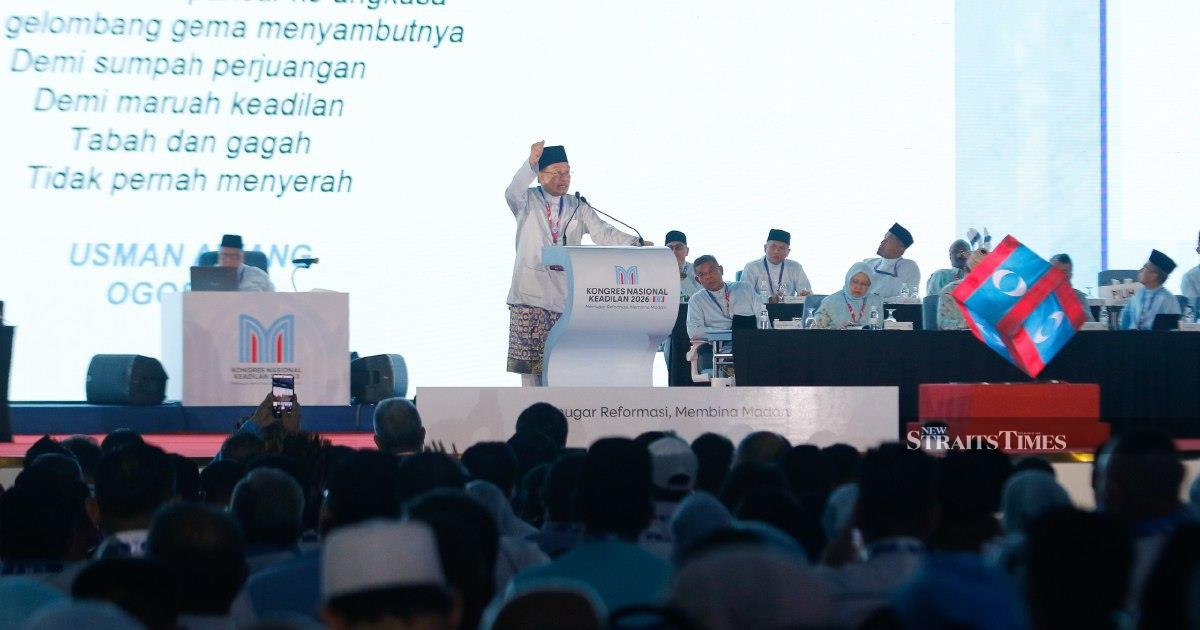
PKR president Datuk Seri Anwar Ibrahim has indicated that the government intends to pursue its reform agenda with considerably more vigour than previously demonstrated. Speaking in Ayer Keroh, Anwar underscored the administration's commitment to accelerating structural and institutional changes, suggesting a new phase of policy implementation after what observers perceive as a period of consolidation.
The statement carries significance for Malaysian political circles, where reform initiatives have long been subject to competing pressures and bureaucratic constraints. Anwar's emphasis on acceleration suggests recognition that the window for substantive change may be narrowing, particularly as the government navigates complex coalition dynamics and competing economic priorities. The timing of such declarations typically reflects both internal deliberation and strategic positioning ahead of critical legislative or budgetary moments.
For Malaysia's reform trajectory, aggressive pursuit of these agenda items would potentially address longstanding grievances around institutional accountability, administrative efficiency, and governance frameworks. The country has faced persistent questions about the pace of implementation across multiple reform domains, from judicial independence to civil service modernisation. An intensified approach would signal to both domestic stakeholders and international observers that the government remains committed to substantive rather than purely rhetorical change.
Anwar's statements must be contextualised within the broader political landscape, where different coalition components maintain varying reform priorities. The PKR leadership's public commitment to acceleration may serve multiple purposes: reassuring party members of progress on key pledges, signalling seriousness to international investors and development partners, and establishing political ground ahead of anticipated legislative initiatives. Such pronouncements often precede concrete policy announcements or parliamentary submissions.
The implications for Malaysian citizens extend across multiple sectors. Educational reform, healthcare system modernisation, environmental governance, and anti-corruption mechanisms all feature prominently in government reform discussions. An accelerated approach to these areas could materially affect service delivery, regulatory frameworks, and public administration efficiency. However, the gap between announcement and implementation remains a persistent challenge in Malaysian governance, regardless of political composition.
Regional observers have consistently noted that Malaysia's reform capacity depends heavily on institutional coordination and bureaucratic alignment. Acceleration requires not merely political will at the apex but sustained commitment throughout government machinery. The civil service, judiciary, and regulatory agencies must demonstrate parallel momentum for reform declarations to translate into tangible outcomes. Previous administration reform efforts have sometimes stalled due to resistance from entrenched interests or administrative inertia.
From an economic perspective, government reforms directly influence investor confidence and business climate assessments. International ratings agencies and foreign investors monitor reform progress as indicators of institutional modernisation and governance quality. An aggressive reform agenda could positively affect Malaysia's competitive positioning, particularly in attracting knowledge-intensive sectors and addressing structural economic challenges that constrain productivity growth.
The statement also occurs against a backdrop of mounting public expectations and civil society scrutiny. Malaysian citizens and advocacy organisations have articulated specific reform demands, and government officials face pressure to demonstrate progress on commitments made during electoral campaigns and coalition negotiations. Public accountability for reform promises has intensified through digital platforms and social media channels, creating additional impetus for visible implementation.
Within the coalition framework, Anwar's pronouncement may signal PKR's intention to drive the reform agenda forward, positioning the party as the substantive force within the partnership. This reflects broader coalition dynamics where different political parties compete for credit for policy achievements while collaborating on governance. Reform acceleration narratives frequently emerge as coalition members attempt to differentiate their contributions and strengthen support bases.
Implementing aggressive reform simultaneously with managing economic recovery and addressing immediate service delivery challenges presents complex trade-offs. Government resources, administrative capacity, and political capital are finite. Prioritising reform intensity requires strategic sequencing and careful management of competing demands. The government must balance demands for rapid change with the need for methodical institutional adaptation that ensures stability and effectiveness.
International experience demonstrates that reform acceleration succeeds when coupled with clear institutional mechanisms, transparent timelines, and measurable outcomes. Vague commitments to heightened reform activity, while politically valuable, lack the specificity necessary to guide implementation or facilitate accountability. Malaysian observers will likely scrutinise forthcoming government announcements for concrete timelines, resource allocations, and institutional arrangements that operationalise Anwar's acceleration pledge.
Looking forward, the substantive test of such commitments will emerge through legislative submissions, budget allocations, and observable changes in institutional practice. Citizens, businesses, and development partners will assess whether accelerated reform rhetoric translates into demonstrable policy outcomes, regulatory changes, and improved administrative performance. The credibility of government reform claims ultimately rests on consistent, measurable implementation rather than periodic pronouncements.

