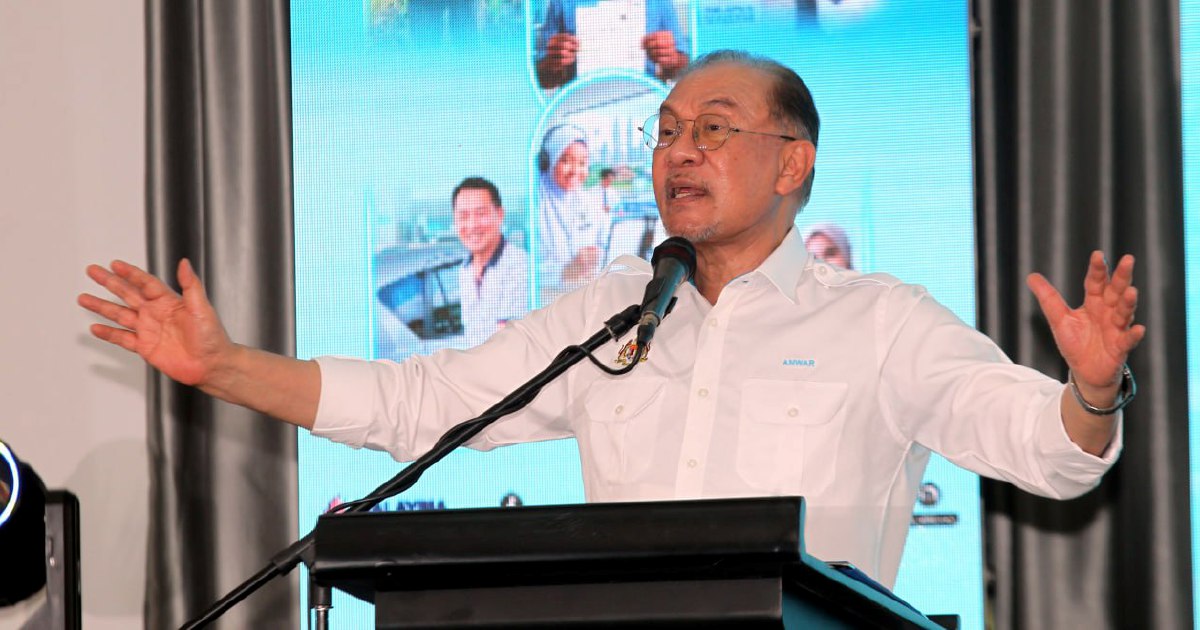
Prime Minister Datuk Seri Anwar Ibrahim has unveiled plans to inject RM15.3 million into upgrading religious and Islamic boarding schools across Perak, signalling the Madani government's sustained focus on bolstering Islamic education as a national development priority. The commitment underscores a broader policy direction that recognises the important role these institutions play in Malaysia's education ecosystem, particularly in rural and underserved communities where such schools often serve as anchors for cultural and religious learning.
The investment reflects ongoing recognition within federal leadership circles that Islamic boarding schools, known locally as pondok, represent a critical educational pathway for thousands of Malaysian students. These institutions have operated for centuries as repositories of Islamic scholarship and character development, attracting families across socioeconomic backgrounds who value their distinctive pedagogical approach combining traditional Islamic studies with modern curricula. The funding allocation demonstrates governmental intent to preserve and modernise these institutions simultaneously, ensuring they remain relevant and adequately resourced for contemporary educational delivery.
During his remarks in Ipoh, Anwar framed the initiative within the broader Madani governance philosophy, emphasising continuity in the government's commitment to religious education even as it pursues economic modernisation and technological advancement. This positioning reflects a deliberate strategy to reassure faith-based communities and education stakeholders that development priorities are not skewed exclusively toward secular or technical education at the expense of Islamic knowledge transmission. The messaging proves particularly significant in Perak, a state with substantial rural populations where pondok schools command considerable social influence and parental trust.
Peculiar to Malaysia's educational landscape is the dual-track system accommodating both secular national schools and religiously-oriented alternatives. While national schools follow federal curricula and standardised examinations, pondok schools maintain greater autonomy in curriculum design, typically embedding classical Islamic texts alongside modern subjects. This structural diversity reflects the constitutional recognition of Islam's special position in Malaysia, while accommodating pluralistic educational philosophies. The RM15.3 million allocation represents targeted federal support for one component of this multifaceted system.
The funding injection acquires additional significance against Southeast Asian regional trends. Several neighbouring nations have grappled with how to integrate Islamic education provision with contemporary skills development, sometimes generating friction between traditionalist educators and modernisation advocates. Malaysia's approach of maintaining parallel systems while offering incremental resource enhancements suggests an attempt to navigate these tensions through pragmatic accommodation rather than zero-sum competition between educational philosophies.
Practically, the RM15.3 million commitment in Perak likely addresses infrastructure constraints that many pondok schools face chronically. Typical deficiencies include aging dormitory facilities, inadequate laboratory equipment, limited library resources, and unreliable connectivity infrastructure disadvantaging students' exposure to digital learning tools. Enhanced infrastructure investment can substantially improve learning outcomes and operational efficiency without necessitating fundamental pedagogical restructuring, allowing these institutions to maintain their distinct educational character whilst achieving contemporary standards in physical plant and technological enablement.
The announcement also positions federal government engagement directly with religious education stakeholders, reinforcing consultation channels between Putrajaya and Islamic education administrators. This relational dimension extends beyond mere financial transaction, implying ongoing dialogue regarding sector-wide challenges such as teacher recruitment and retention, curriculum standardisation across disparate pondok networks, and institutional compliance with educational quality benchmarks. Effective partnership frameworks between government and religious education providers depend critically on regular engagement and demonstrated commitment through resource allocation.
For Malaysian families considering educational pathways for their children, such funding signals government confidence in pondok schools as legitimate alternatives warranting investment and institutional support. Parents weighing decisions between national schools and religious boarding options often factor government commitment levels into their deliberations. A RM15.3 million Perak-specific commitment suggests sustained rather than incidental governmental interest, potentially influencing enrolment decisions and parental expectations regarding institutional development trajectories.
Looking forward, the allocation raises broader questions about whether RM15.3 million adequately addresses Perak's pondok school infrastructure needs across the state's numerous institutions, or whether this represents initial tranche funding for a multi-year programme. The specificity of the figure suggests detailed assessment of particular projects rather than broad capacity-building, though official documentation would clarify precise expenditure breakdowns and implementation timelines. Subsequent funding announcements will indicate whether this represents a one-off initiative or component of sustained sector investment.
The Madani government's emphasis on religious education uplift also reflects calculations about maintaining political legitimacy and social cohesion within Malaysia's religiously diverse polity. Prioritising Islamic education strengthens connections with Bumiputera constituencies, particularly in states like Perak where Malay-Muslim voters constitute significant electoral blocs. Simultaneously, such investments project inclusive governance, suggesting that plural educational traditions receive official sanction and material support rather than marginalisation.
Ultimately, Anwar's pledge encapsulates a governing philosophy that reconciles Malaysia's identity as an Islamic nation with pluralistic social realities and contemporary education imperatives. By committing resources to pondok schools whilst maintaining parallel secular systems, the Madani administration attempts to satisfy diverse stakeholder constituencies. Whether RM15.3 million proves sufficient to achieve meaningful infrastructural and qualitative improvements across Perak's religious education sector, and whether similar allocations extend to other states, will substantially determine the programme's practical impact on student learning experiences and institutional sustainability in Malaysia's religious education landscape.

