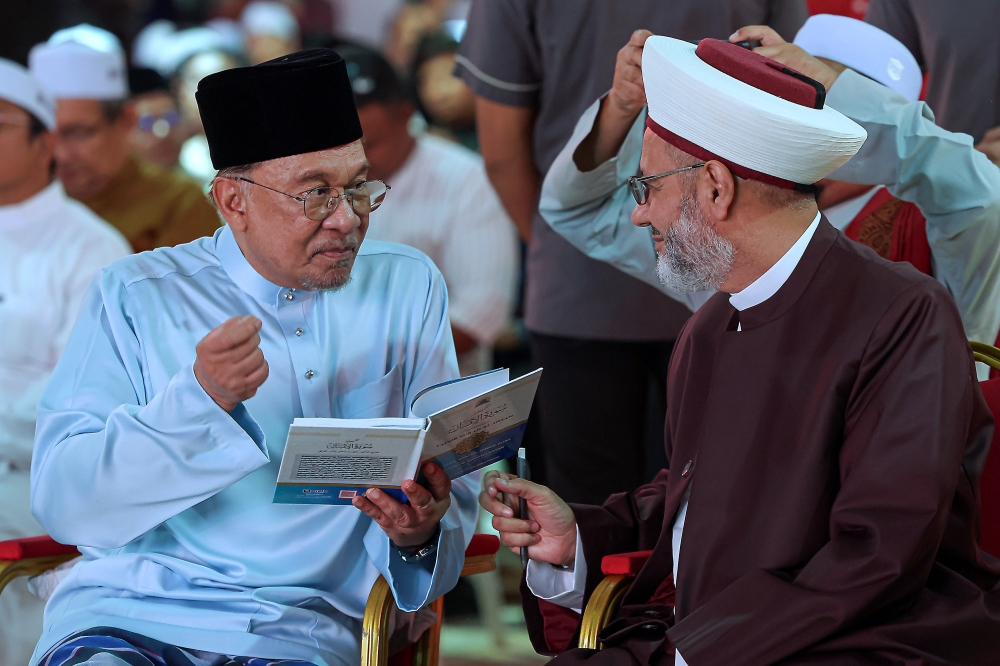
Prime Minister Datuk Seri Anwar Ibrahim has publicly recognised Grand Imam of Al-Azhar Ahmed Al-Tayyeb as one of the world's most influential advocates for measured and progressive interpretations of Islam. Speaking during a formal engagement in Kuala Lumpur on July 31, Anwar underscored the importance of Al-Tayyeb's intellectual contributions to contemporary religious discourse, particularly in bridging divides between Muslim-majority and Western nations.
The recognition reflects Malaysia's strategic positioning within global Islamic leadership circles. As a Muslim-majority democracy that has sought to project itself as a beacon of religious pluralism and tolerance, Malaysia under Anwar's administration continues to align with international figures who share similar visions of Islam as compatible with modern democratic governance. Al-Azhar, as one of Sunni Islam's most prestigious theological institutions, wields considerable influence across the Muslim world, and its leader's advocacy for interfaith dialogue resonates with Kuala Lumpur's diplomatic objectives.
Al-Tayyeb's tenure at Al-Azhar has been characterised by efforts to combat extremist interpretations of Islamic teachings. His public statements consistently emphasise the faith's emphasis on compassion, coexistence, and intellectual freedom. For Malaysia, which has navigated its own complexities around religious identity and social cohesion, the Grand Imam's messages hold particular relevance. Anwar's praise can be understood partly as validation of Malaysia's own domestic approach to managing religious affairs through moderation and institutional authority.
The timing of Anwar's comments carries significance within Malaysia's current political landscape. Since assuming office in late 2022, the Prime Minister has worked to reposition Malaysia's international image, moving away from periods marked by political instability and religious polarisation. Associating Malaysia's leadership with respected Islamic scholars who champion tolerance serves both domestic and international audiences—reassuring Muslim constituencies at home while signalling to global partners that Malaysia represents a responsible, enlightened voice within the Islamic world.
Al-Azhar's institutional role extends beyond theological scholarship. The institution operates schools, universities, and outreach programmes that reach millions of Muslims internationally. Its Grand Imam therefore functions as a de facto ambassador for moderate Islamic thought, and his influence on Islamic education curricula worldwide cannot be overstated. By recognising Al-Tayyeb, Anwar implicitly endorses the model of Islamic leadership that prioritises scholarly depth and institutional legitimacy over populist appeals or sectarian narrow-mindedness.
Regional dynamics also underpin this diplomatic move. Southeast Asia hosts significant Muslim populations and has historically maintained distinct Islamic traditions that emphasise cultural accommodation and peaceful coexistence. Malaysia, Indonesia, and Brunei represent forms of Islam often characterised by pluralistic social structures and secular legal frameworks governing certain domains. Building connections with international Islamic leaders who support these approaches strengthens Southeast Asia's collective position in global religious debates and provides intellectual reinforcement for regional Islamic models that Western commentators sometimes view with scepticism.
The relationship between Malaysia and Al-Azhar extends beyond recent statements. The institution has long maintained educational exchanges with Malaysian universities and religious organisations. Al-Azhar graduates have taught in Malaysian Islamic schools, and Malaysian students have pursued advanced theological studies at the Cairo-based academy. These institutional ties create a natural alliance based on shared educational traditions and complementary religious perspectives.
Anwar's commendation also reflects broader trends in Islamic thought where scholars increasingly grapple with questions of religious authenticity in an interconnected world. Al-Tayyeb has publicly engaged with critics of Islam, participated in interfaith initiatives, and written extensively about Islam's intellectual heritage. Rather than defensive posturing, he advocates confident engagement with modernity based on deep theological resources. This intellectual confidence appeals to leaders like Anwar who believe Islam need not retreat from public life to achieve compatibility with democratic pluralism.
For Malaysia specifically, the symbolic value of such statements extends to domestic religious minorities. When the Prime Minister elevates voices within Islamic leadership that preach tolerance, he signals to non-Muslim citizens and international observers that Malaysia's approach to religious governance seeks common ground rather than sectarian dominance. This has implications for investor confidence, civil stability, and Malaysia's standing as a destination for talent and commerce.
Moving forward, Malaysia may deepen institutional cooperation with Al-Azhar in educational and scholarly domains. Such partnerships could include collaborative research on Islamic jurisprudence relevant to contemporary governance, exchange programmes for religious scholars, and joint initiatives promoting interfaith understanding. These would align with both Anwar's personal intellectual trajectory and Malaysia's perceived national interests in positioning itself as a moderate Islamic nation.
The underlying message of Anwar's remarks is that Malaysia sees its future intertwined with Islamic scholarship that embraces intellectual rigor, historical consciousness, and ethical commitment to human dignity. By championing figures like Al-Tayyeb, Anwar attempts to influence the global Islamic conversation toward outcomes that benefit not only Muslims but humanity broadly.

