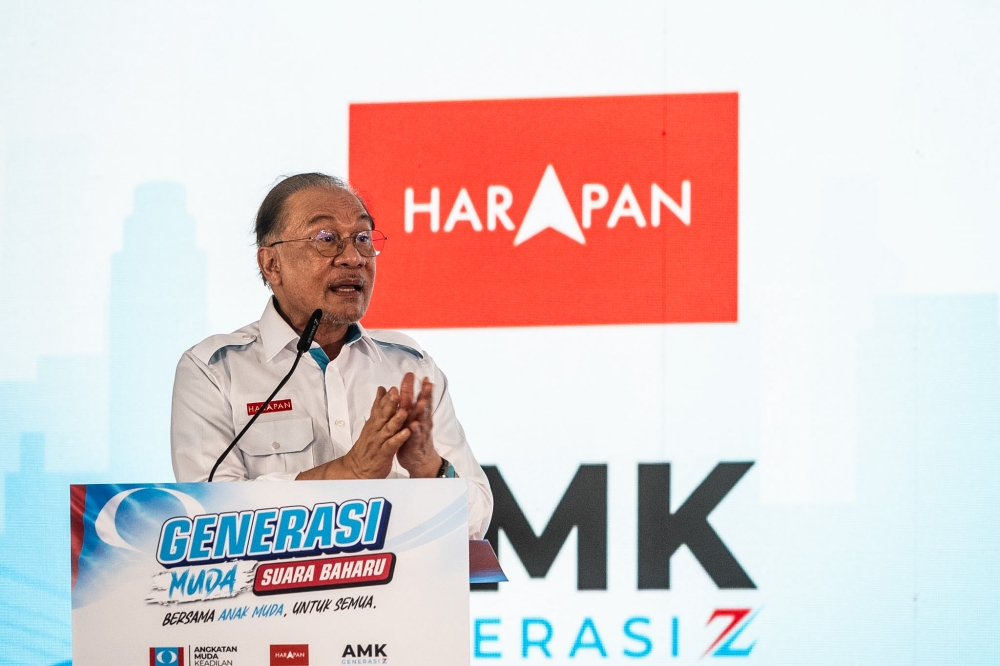
Prime Minister Datuk Seri Anwar Ibrahim has clarified that substantial development allocations for Petaling Jaya and Subang remain available to their constituents, though access will flow exclusively through MPs who align with the federal government's policy direction. Speaking in Petaling Jaya on July 24, Anwar addressed concerns that development projects and funding mechanisms might be curtailed for constituencies represented by opposition lawmakers or those maintaining critical distance from the administration.
The statement comes amid ongoing tensions within Malaysia's fractured political landscape, where coalition dynamics continue to shift following the 2022 general election. While the Prime Minister emphasized that development work will not cease entirely in these constituencies, his remarks underscore a fundamental principle now shaping federal fund distribution: political alignment determines the speed and scope of resource allocation. This approach reflects broader patterns observable across Southeast Asia, where governments frequently leverage infrastructure spending as an incentive for political cooperation.
Petaling Jaya and Subang, both located in Selangor and representing economically significant urban areas, have historically received considerable federal investment. The constituencies encompass dense commercial zones, residential developments, and substantial populations dependent on government services. Anwar's clarification suggests these areas will continue receiving attention, but the conduit for such investments will shift to alternative channels—potentially through state governments, federal agencies, or development corporations rather than directly through opposition-held parliamentary offices.
The Prime Minister's position reflects a long-standing practice within Malaysian governance where the ruling coalition has historically maintained greater influence over resource allocation mechanisms. However, the explicit nature of Anwar's statement marks a departure from more subtle approaches to fund distribution. By publicly tying development access to political support, the administration has effectively signaled that development aid operates within a quid pro quo framework, raising questions about the consistency of federal resource distribution principles across constituencies of different political complexions.
For Malaysian readers accustomed to viewing infrastructure development as a fundamental governmental obligation regardless of electoral outcomes, Anwar's remarks represent a stark recalibration of expectations. Constituents in opposition-held areas traditionally anticipate at least baseline developmental services—road repairs, public facility maintenance, and essential infrastructure upgrades—as core functions of government rather than rewards for political loyalty. The suggestion that such allocations could be redirected elsewhere based on MP allegiance challenges conventional understandings of citizenship entitlements and equal resource distribution.
The statement also carries implications for Selangor's broader development trajectory. As Malaysia's most economically dynamic state and home to the federal capital's extended metropolitan region, both Petaling Jaya and Subang require continuous infrastructure investment to manage rapid urbanization, traffic congestion, and aging utility systems. Development delays caused by political considerations could compound existing challenges facing these constituencies, affecting residential property values, business operations, and quality of life for millions of residents whose daily needs transcend electoral considerations.
From a Southeast Asian perspective, Malaysia's approach to development financing reflects broader regional trends where ruling administrations increasingly weaponize infrastructure spending as political leverage. Thailand, the Philippines, and Indonesia have all witnessed similar dynamics where opposition-held constituencies face systematic disadvantages in accessing development funds. This pattern raises concerns among international observers regarding democratic resilience and the principle of equal citizenship within majoritarian systems where electoral outcomes determine not merely policy direction but fundamental access to public resources.
Anwar's clarification, while presented as a pragmatic statement about available funding mechanisms, effectively creates a two-tier development system. Those represented by government-aligned MPs access funds through streamlined processes and parliamentary advocacy channels. Opposition constituencies must navigate alternative routes—requiring greater bureaucratic complexity and potentially extended timelines. Over successive budget cycles, this differential treatment accumulates into significant resource disparities, transforming temporary electoral defeats into long-term developmental disadvantages.
The statement also raises questions about federal-state relations, particularly given Selangor's status as a state government controlled by Pakatan Harapan, nominally aligned with the federal administration despite periodic disagreements on resource-sharing and administrative jurisdiction. State governments technically retain authority over certain development matters, yet federal funding remains essential for large-scale projects. Anwar's remarks blur the distinction between federal and state development responsibilities, potentially creating confusion about which level of government bears accountability for constituency development standards.
Political economists observing Malaysian governance note that development fund distribution has always contained political dimensions. However, transparency about these calculations remains unusual. By publicly articulating the linkage between political support and development access, Anwar has essentially formalized what previously operated as implicit understanding. This transparency paradoxically exposes the system to greater scrutiny while simultaneously signaling confidence that the administration's political dominance remains unshaken despite coalition instability.
For constituents in Petaling Jaya and Subang, the practical implications depend entirely on their MP's political positioning. Those in government-aligned constituencies can anticipate enhanced responsiveness to development requests. Opposition-held constituencies face the challenge of advocating for essential services through unconventional channels while their MPs navigate a system explicitly structured to disadvantage their advocacy. The outcome suggests that in contemporary Malaysian politics, geography alone no longer determines development access—political alignment has become equally decisive.

