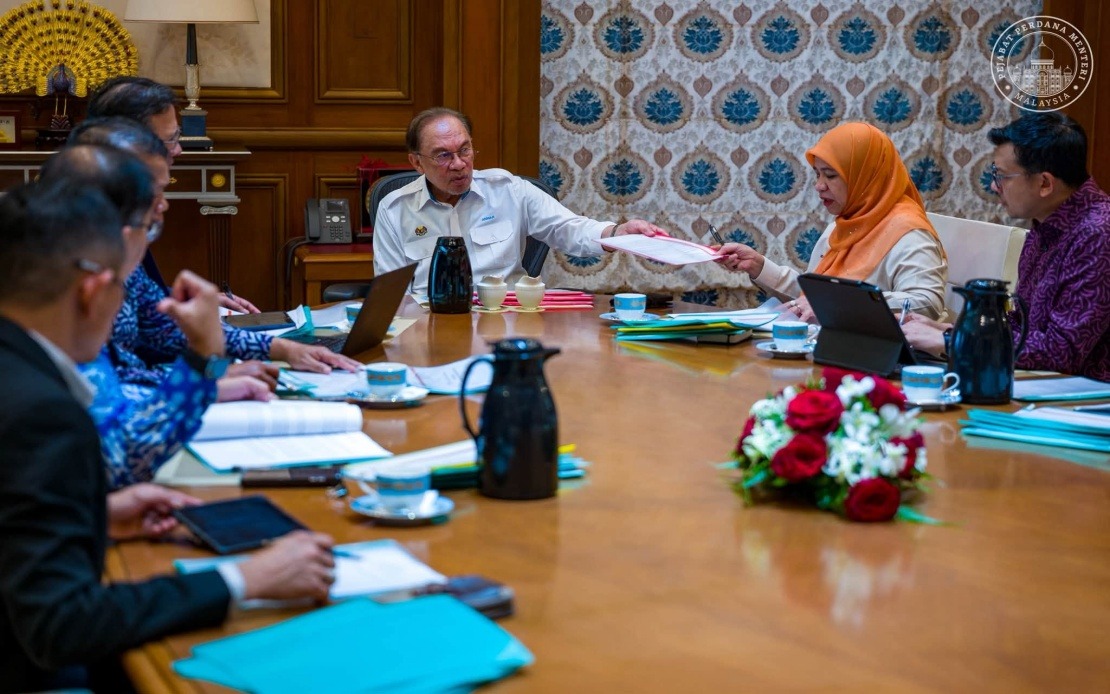
Prime Minister Datuk Seri Anwar Ibrahim has directed the Federal Land Development Authority to accelerate its efforts in tackling entrenched problems affecting FELDA settlers, with particular emphasis on second-generation housing provisions and land ownership clarifications. In a statement shared on social media, he stressed that these matters require urgent intervention and cannot remain unresolved indefinitely, signalling the Government's determination to prioritise the welfare of agricultural communities under FELDA's purview.
The FELDA scheme, established decades ago as a pathway for rural Malaysians to participate in agricultural development, has evolved into a complex ecosystem affecting hundreds of thousands of families across the country. However, successive generations of settlers and their descendants have encountered persistent difficulties navigating the scheme's framework, particularly regarding inheritance rights, residential development allocations, and formal title transfers to heirs. These administrative and structural challenges have created uncertainty within FELDA communities, with many second-generation beneficiaries uncertain about their entitlements and prospects for economic advancement through the scheme.
Anwar's intervention reflects growing recognition within Government that FELDA's institutional architecture requires modernisation to serve contemporary settler needs. The Prime Minister emphasised that each outstanding issue demands rigorous assessment followed by transparent, implementable solutions grounded in the practical realities of FELDA residents' circumstances. This approach suggests a departure from piecemeal interventions towards a more comprehensive reform agenda designed to address root causes rather than symptoms of settler grievances.
The housing dimension of FELDA's challenges particularly affects younger generations who inherited settler status but find themselves unable to secure adequate residential properties or establish independent lives within the scheme's framework. Many second-generation beneficiaries lack clarity on whether they can subdivide inherited land, construct new dwellings, or transfer holdings to their own descendants. These uncertainties have discouraged investment in FELDA communities and contributed to demographic shifts as younger people migrate to urban centres seeking clearer economic opportunities.
Land ownership classification within FELDA also remains contested, with disputes persisting over whether settlers possess genuine proprietary rights or merely usufruct arrangements. This ambiguity undermines settlers' ability to leverage land as collateral for business development or agricultural modernisation loans. The distinction carries profound implications for generational wealth accumulation and community economic resilience, particularly as agricultural modernisation requires substantial capital investment that many smallholder farmers cannot access without formalised land security.
The MADANI Government's commitment to strengthening FELDA, as articulated by Anwar, appears to encompass both institutional capacity-building and policy reform. Officials must balance historical FELDA principles—designed to democratise agricultural participation among ordinary Malaysians—with contemporary economic realities and settler expectations. Failure to modernise the scheme risks further marginalisation of FELDA communities as demographic change and urbanisation reshape rural Malaysia's social landscape.
For Malaysian policymakers, FELDA's predicament illustrates broader governance challenges affecting legacy development schemes inherited from earlier administrations. These institutions often retain outdated regulatory frameworks that impede contemporary operations yet resist reform due to political sensitivity surrounding settler populations and vested interests within bureaucratic structures. Resolving such institutional rigidity requires sustained political will and interdepartmental coordination extending beyond symbolic pronouncements.
The implications for Southeast Asia's broader agricultural development model deserve consideration. Many regional governments implement comparable settlement schemes attempting to balance rural development, smallholder farmer empowerment, and national development objectives. FELDA's experiences—both successes and accumulated problems—offer instructive lessons for policymakers elsewhere contemplating agricultural colonisation or smallholder formalisation initiatives. The scheme demonstrates that institutional design choices made during establishment phases reverberate across generations, making comprehensive early planning essential.
Second-generation FELDA beneficiaries represent a crucial demographic bridging agricultural heritage with contemporary aspirations. Their circumstances determine whether FELDA evolves into a sustainable vehicle for agricultural entrepreneurship or gradually transforms into a legacy institution of diminishing relevance. Government intervention must therefore address not merely administrative bottlenecks but fundamental questions about FELDA's role within Malaysia's evolving economy and whether the scheme offers viable pathways for younger generations seeking to build prosperous rural livelihoods.
Anwar's directive carries political significance extending beyond FELDA administration. Rural constituencies have historically formed important electoral bases for Malaysian political coalitions, and settler communities' satisfaction significantly influences voting patterns. The Government's demonstrated urgency in addressing FELDA grievances signals awareness that rural communities expect substantive policy delivery rather than ritualistic acknowledgements of their concerns. Translating this political commitment into concrete institutional reforms will test the MADANI Government's capacity for effective governance during its early phase.

