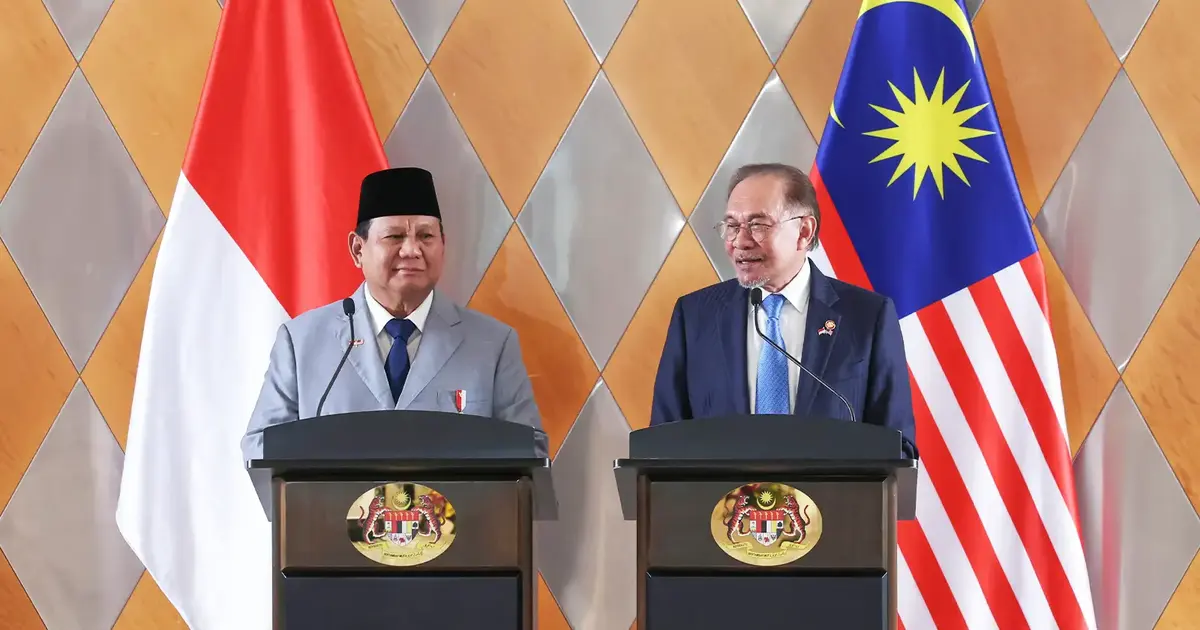
Prime Minister Anwar Ibrahim has escalated concerns about Felda's embattled Eagle High venture to the highest levels of government, penning a direct correspondence to Indonesian President Prabowo Subianto regarding the RM2 billion cross-border investment that has become increasingly problematic for Malaysia's largest land settlement agency.
The communication underscores the gravity of the situation facing Felda, which stands to lose more than RM2 billion of its capital should the matter remain unresolved or mishandled. According to Anwar's assessment, the agency would recover only RM200 million should the venture conclude unfavourably—a stark arithmetic that exposes the magnitude of the financial vulnerability at stake. This represents a potential loss of over 90 percent of the original investment, a scenario that would have ramifications extending far beyond Felda's balance sheet.
The Eagle High project represents one of Southeast Asia's more visible cross-border investment entanglements between Malaysia and Indonesia. Felda's involvement in the venture reflects the agency's strategic pivot towards higher-yielding international ventures, yet the troubled trajectory of this particular investment illustrates the elevated risks accompanying such diversification efforts. For Malaysian stakeholders, particularly smallholder farmers and their descendants who form Felda's beneficiary base, the potential loss carries deeply personal implications beyond mere financial metrics.
Anwar's decision to engage Prabowo directly signals recognition that resolving the Eagle High impasse requires diplomatic intervention at the presidential level rather than remaining confined to standard bureaucratic or corporate channels. This elevation of the matter reflects both the scale of the exposure and the political sensitivity surrounding Felda's operations. The federal agency, with roots stretching back to Malaysia's post-independence nation-building efforts, carries symbolic weight in the national consciousness, making its financial struggles matters of broader public concern.
The correspondence comes amid growing scrutiny of Felda's investment decisions and governance structures. Over the past decade, the agency has faced recurring criticism regarding portfolio management, particularly concerning ventures undertaken in pursuit of enhanced returns. The Eagle High situation exemplifies how ambitious international investment strategies, while potentially lucrative, can expose Malaysia-linked entities to substantial downside risks when conducted in complex operating environments.
For regional observers, the Felda-Eagle High episode provides instructive lessons about the challenges inherent in large-scale cross-border investment ventures involving developing economies. The transaction likely involved multiple stakeholders, intricate contractual arrangements, and exposure to various political and operational uncertainties that materialised adversely over the investment's lifecycle. Understanding how such ventures deteriorate offers valuable context for Malaysian investors contemplating similar undertakings across Southeast Asia and beyond.
The RM2 billion exposure represents a significant portion of Felda's investable capital and constitutes the kind of concentrated bet that can fundamentally alter an organisation's financial trajectory. For a government-linked entity responsible for managing assets and resources on behalf of beneficiaries, such substantial losses require accountable explanations and demonstrable corrective action. The fact that recovery scenarios estimate recoupment of only RM200 million suggests either severely diminished asset values or complex restructuring scenarios with limited upside potential.
Anwar's intervention also reflects Malaysia's diplomatic approach to resolving contentious bilateral business matters. Rather than allowing the issue to fester through corporate channels or proceed through adversarial legal mechanisms, engaging Indonesia's president demonstrates Malaysia's preference for high-level political resolution. This approach acknowledges that major investment disputes often involve governmental interests and require corresponding governmental attention, particularly when substantial sums and bilateral relationships intersect.
The broader context reveals how state-owned enterprises in Southeast Asia navigate investment challenges differently depending on whether they involve fellow ASEAN members. The Felda-Eagle High situation highlights the tension between commercial imperatives driving investment decisions and the political realities affecting how disputes ultimately resolve. Indonesian governmental response to Anwar's correspondence will likely indicate the seriousness with which Jakarta views the matter and its willingness to facilitate constructive resolution.
Looking forward, the Eagle High outcome will influence how Malaysian institutional investors calibrate their risk appetites for regional ventures. Felda's experience, whatever the final resolution, will inform future governance discussions about appropriate oversight mechanisms, due diligence protocols, and investment approval thresholds. For Malaysian stakeholders concerned about Felda's stewardship of their interests, the government's proactive diplomatic engagement provides some reassurance that addressing this crisis remains an executive priority.
The correspondence between Anwar and Prabowo represents more than routine diplomatic communication; it reflects Malaysia's determined effort to mitigate a significant financial exposure affecting one of its most historically important institutions. How Indonesia responds to Malaysia's formally escalated concerns will substantially influence whether Felda ultimately minimises its losses or faces the devastating prospect of absorbing a multibillion-ringgit hit to its consolidated accounts.

