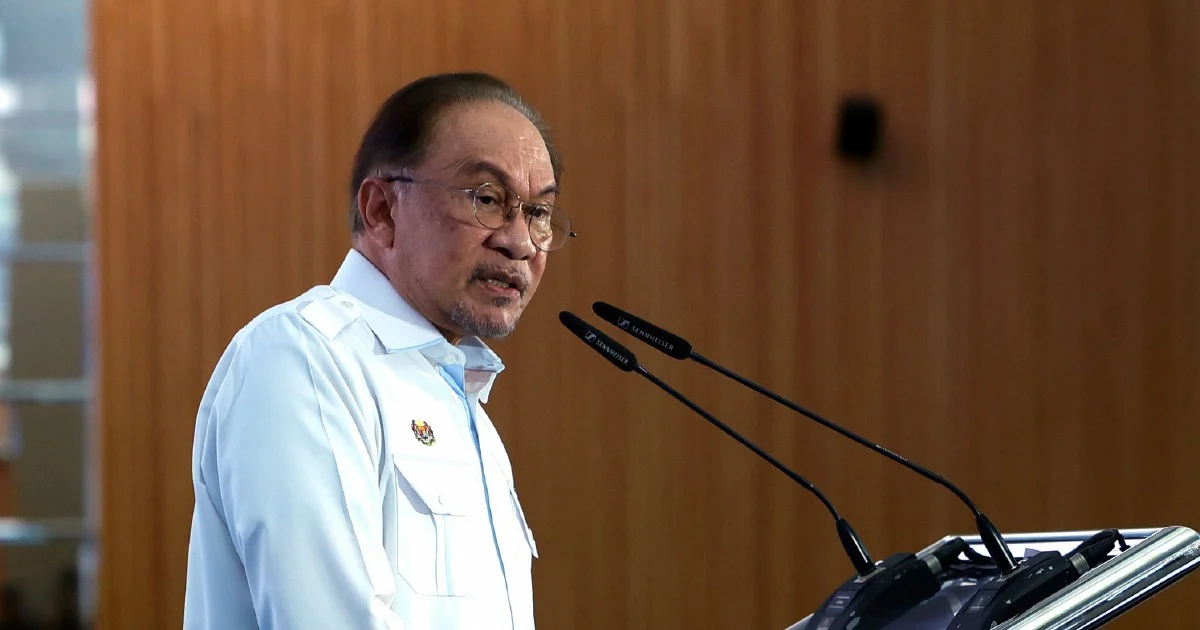
Prime Minister Datuk Seri Anwar Ibrahim has moved to counter mounting accusations that his administration distributes development allocations unequally across Malaysia's states, asserting that the federal government's spending framework operates according to established merit-based criteria rather than political favouritism.
The Prime Minister's rebuttal comes at a sensitive moment for the federal administration, which has faced persistent questions from both opposition lawmakers and state governments regarding the transparency and equity of development fund disbursement. The controversy reflects deeper tensions within Malaysia's federal structure, where states governed by different political coalitions sometimes allege discriminatory treatment in receiving infrastructure and development resources.
Anwar's defence of the current allocation system represents an attempt to quash suggestions that federal funds flow preferentially to ruling coalition-aligned state administrations while bypassing non-aligned jurisdictions. This concern has become particularly acute in a political landscape characterised by coalition fragmentation, where several state governments operate independently from the federal administration's direct sphere of influence.
The issue of development fund distribution has emerged as a flashpoint for interstate grievances and federal-state relations in recent years. State governments have occasionally publicised complaints about insufficient allocations for critical infrastructure projects, from water treatment facilities to road networks, attributing gaps in funding to political calculations rather than genuine need assessment. Such disputes undermine confidence in the federal system's impartiality and generate questions about resource prioritisation across the federation.
The Prime Minister's response signals the government's intention to defend its approach rather than acknowledge systemic bias. Officials have typically justified allocations by referencing demographic factors, existing infrastructure gaps, strategic development priorities, and cost considerations unique to different regions. Yet these justifications have not fully satisfied critics who question whether political alignment genuinely plays no role in budgetary decisions.
For Malaysian readers, this controversy reflects enduring questions about federal governance fairness at a time when the country pursues economic recovery and balanced national development. Development allocations determine whether communities gain access to improved transportation networks, utilities, healthcare facilities, and educational institutions—outcomes that directly affect living standards and competitive positioning between regions.
Regional observers from across Southeast Asia watch these patterns with interest, as Malaysia's experiences with federal-state funding tensions parallel challenges faced by other multinational Asian democracies managing resource distribution across geographically and demographically diverse territories. The effectiveness of Malaysia's response may influence how other federal systems approach similar equity concerns.
The government's framework for development allocation reportedly incorporates multiple criteria designed to ensure rational distribution. Population density, poverty indicators, existing development levels, infrastructure deficits, and strategic national priorities ostensibly shape how funds are apportioned. However, critics contend that these supposedly objective metrics may mask discretionary choices or permit hidden weighting that advantages certain jurisdictions.
Anwar's dismissal of unfairness allegations also addresses anxieties among coalition members and supporters regarding the government's evenhandedness. Demonstrating commitment to equitable distribution becomes crucial for maintaining unity within a political alliance composed of diverse components with separate state interests and expectations regarding federal resource allocation.
The tension between federal development planning and state-level aspirations represents a recurring theme in Malaysian governance. States seek maximum resources for locally-identified priorities, while federal authorities balance competing claims against national strategic objectives and budgetary constraints. These inherent conflicts require continuous negotiation and transparency to maintain legitimacy.
As Malaysia progresses with post-pandemic economic rehabilitation and infrastructure modernisation, perceptions of fair development spending become increasingly important. Citizens in underserved regions scrutinise whether federal allocations genuinely reflect their communities' needs or whether political considerations override objective assessment. Public confidence in the allocation system's neutrality directly impacts social cohesion and regional competitiveness.
The Prime Minister's position appears designed to reinforce confidence in the administration's commitment to principled, systematic distribution of development resources. However, sustained allegations suggest that additional efforts toward transparency, independent oversight, or modified consultation mechanisms might help address lingering skepticism among affected states and communities regarding the equity and objectivity of federal development spending decisions.

