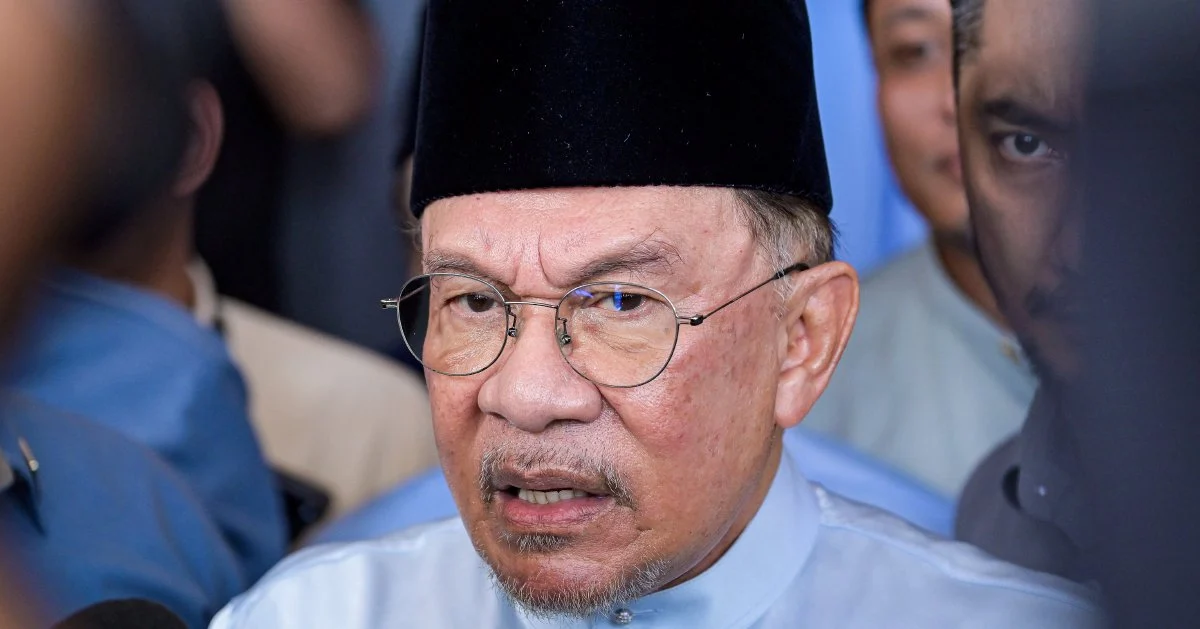
Prime Minister Datuk Seri Anwar Ibrahim has flatly rejected suggestions that he or his administration issued instructions to prevent Johor's caretaker Menteri Besar Datuk Onn Hafiz Ghazi from attending activities at Felda settlements. Speaking in Dengkil, Anwar dismissed the allegations as baseless, asserting that no such formal directive existed or was communicated to any relevant parties.
The controversy centres on whether Onn Hafiz, who continues serving as caretaker head of Johor's state government following recent elections, faced official barriers to his participation in what appears to have been a federally-linked Felda event. The timing of such allegations during Malaysia's ongoing political transition has intensified scrutiny of inter-party dynamics and the conduct of interim administrations in the lead-up to formal government formation.
Felda, or the Federal Land Development Authority, represents a significant stakeholder in Malaysian agriculture and land settlement schemes, particularly influential in rural constituencies across multiple states including Johor. The organization's events typically draw substantial political attention, as they provide platforms for government representatives to engage directly with settler communities and demonstrate commitment to agricultural constituencies.
Onn Hafiz's position as caretaker Menteri Besar places him in a constitutionally delicate status. While retaining formal authority over day-to-day state administration, caretaker leaders operate under increasing constraints once electoral verdicts are clear, with their legitimacy perpetually questioned by opposition figures and incoming administrations. This liminal political status has historically generated disputes over appropriate access to state resources, events, and facilities.
Anwar's emphatic denial carries weight given his position as Prime Minister and the federal government's influence over Felda's operational decisions and event organization. However, his statement alone may not fully resolve the dispute if competing accounts exist from event organizers, Felda officials, or observers who were present at the relevant function. The lack of corroborating documentation makes verification difficult without access to internal communications.
The incident reflects broader tensions within Malaysia's political landscape, where caretaker administrations frequently encounter resistance or marginalization from federal authorities or incoming state governments. These dynamics are particularly pronounced in states where federal and state-level governments are controlled by different coalitions, creating jurisdictional ambiguities and opportunities for political maneuvering.
Johor holds particular significance in Malaysian politics given its size, economic importance, and historical influence in federal decision-making. Disputes involving senior Johor politicians therefore attract disproportionate media attention and can influence perceptions of governmental fairness and political conduct among both voters and party cadres across the nation.
The specific claim regarding Felda settlements carries implications beyond administrative protocol. If proven true, such action would suggest deliberate political exclusion of a sitting caretaker Menteri Besar from public functions in his own state, raising questions about the limits of acceptable political conduct during transition periods. Conversely, if unsubstantiated, the allegations themselves represent attempts to weaponize administrative processes for political advantage.
Onn Hafiz, who has maintained a substantial political presence despite his caretaker status, may have strategic reasons for raising or amplifying such claims, particularly if they resonate with constituencies that view the transition process as unfairly orchestrated. The narrative of political exclusion can galvanize supporter bases and influence public perception of administration legitimacy.
Anwar's categorical rejection suggests the Prime Minister views the allegations as sufficiently damaging to warrant direct public contradiction. Such defensive postures are typically employed when claims threaten to undermine broader narratives about institutional fairness or inter-party relations that the government wishes to maintain.
The broader implications for Malaysian governance rest on how such disputes are ultimately resolved and communicated to the public. Persistent allegations of politically-motivated exclusion, whether substantiated or not, erode public confidence in institutional neutrality and suggest that administrative resources are being deployed along partisan lines rather than according to merit or procedure.
Moving forward, clarification through documentation or testimony from Felda officials and event organizers would provide definitive resolution. Until such evidence emerges, the dispute remains in the realm of accusation and denial, characteristic of Malaysia's often-opaque political communication environments where competing actors lack strong incentives for transparent disclosure.

