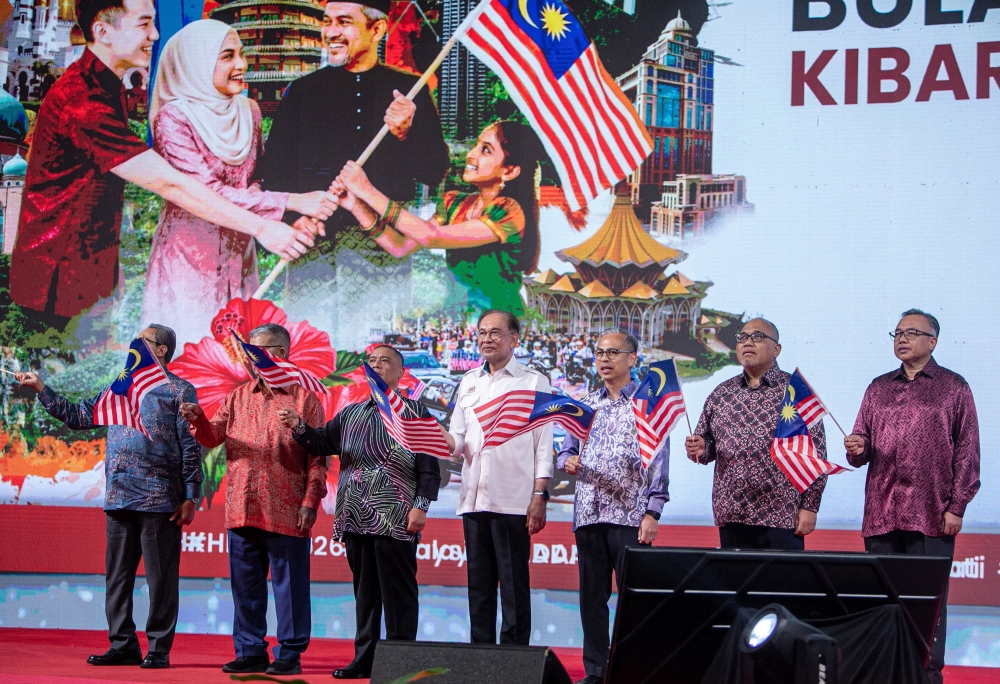
Prime Minister Datuk Seri Anwar Ibrahim has called upon Malaysia's youth to maintain a living connection with the nation's independence movement, warning against allowing historical memory to fade from public consciousness. Speaking in Ipoh on July 19, Anwar stressed that the struggles endured by previous generations remain profoundly relevant to contemporary Malaysians navigating their own challenges and opportunities in a rapidly changing world.
The PM's intervention reflects a broader concern among Malaysian leadership that younger citizens, who did not witness the colonial period or the intense political campaigns of the 1950s, may lack visceral appreciation for the freedoms and institutional structures that independence secured. This generational distance creates particular urgency in the current moment, when Malaysia faces economic pressures, political fragmentation, and social tensions that some analysts argue could benefit from renewed reference to foundational national narratives.
Anwar's remarks carry particular weight given his own extensive history as an activist and opposition figure before becoming Prime Minister in November 2022. His trajectory from student protest leader through imprisonment and eventual political rehabilitation positions him as a figure who embodies both the sacrificial principle he was invoking and the possibility of political renewal through democratic processes. This personal credibility lends force to his exhortation that younger Malaysians should study and internalize the independence era's central lessons.
The independence struggle that culminated in Merdeka on August 31, 1957 involved sustained political organizing, negotiation, and compromise among diverse ethnic and religious communities. That multiethnic coalition—comprising Malays, Chinese, Indians, and other groups—achieved something that many contemporary analysts regard as remarkable: a relatively peaceful transition to independence accompanied by constitutional agreements on sensitive issues including Islam's constitutional position, Malay-Muslim special rights, and citizenship provisions. Understanding how that consensus emerged and was maintained offers instructive lessons for a nation currently grappling with questions of social cohesion and interethnic relations.
Beyond mere historical commemoration, Anwar appears to be signaling that the principles underlying the independence movement—sacrifice for collective good, willingness to negotiate across communal lines, and commitment to democratic institutions—remain essential to Malaysia's continued development. The economic challenges Malaysia faces, including persistent productivity questions, educational disparities, and regional competitiveness concerns, arguably require the same spirit of shared purpose that animated the independence movement. Young Malaysians who understand that historical context may be more inclined to approach contemporary policy debates with the cooperative spirit Anwar is advocating.
The timing of Anwar's address in Ipoh, a city with significant historical importance in Malaysia's political development, was unlikely to be accidental. Perak state, of which Ipoh is the capital, played crucial roles in pre-independence negotiations and in subsequent constitutional development. The location therefore provided a concrete geographic anchor for the historical lessons Anwar sought to convey, allowing him to reference specific events and personalities that regional audiences would recognize while also signaling to national audiences the distributed nature of the independence struggle across Malaysia's diverse regions.
For Malaysian youth, the challenge of maintaining connection with independence-era narratives intersects with their own preoccupations regarding economic opportunity, education quality, and personal autonomy. Anwar's framing attempts to bridge this gap by suggesting that the work of building and sustaining national institutions remains ongoing, and that current and future generations will inherit both the accomplishments and the responsibilities of the independence generation. This approach avoids the trap of treating independence as a closed historical chapter and instead positions it as foundational to contemporary nation-building.
The emphasis on remembrance also carries implicit commentary on Malaysia's political landscape. The nation has experienced significant political turbulence over the past five years, including the collapse of the Pakatan Harapan government in 2020, the subsequent Perikatan Nasional administration, and the eventual return to multi-coalition governance. These disruptions may have created an impression among some Malaysians, particularly younger voters, that political institutions are fragile or that established constitutional frameworks offer limited protection against factional disputes. Anwar's invocation of independence-era lessons about constitutional consensus and multiethnic cooperation can be read as an attempt to reinforce faith in institutional stability and democratic processes.
International context also illuminates Anwar's message. Malaysia exists within a Southeast Asian region where several neighbors have experienced democratic breakdowns, military interventions, or constitutional crises in recent decades. By contrast, Malaysia has maintained continuous constitutional democracy since independence, albeit with significant stresses and strains. This comparative stability derives substantially from the consensus-based approach embedded in the 1957 Constitution and the independence settlement. Reminding Malaysians of these origins serves to reinforce understanding of why Malaysia's constitutional democracy, despite its imperfections, represents a valuable achievement worth protecting and improving.
Educational institutions face particular responsibility in this project of historical transmission. Malaysian schools incorporate independence history into curricula, but engagement with that material often remains superficial or instrumentalized for examination purposes rather than fostering genuine understanding of historical causation and consequence. Anwar's public call for remembrance creates space for educators to deepen and enrich instruction, potentially moving beyond rote memorization toward critical engagement with how historical actors navigated complex political, social, and economic challenges.
The broader question underlying Anwar's exhortation concerns what forms of national identity and civic commitment younger Malaysians will develop as they inherit responsibility for the nation's future. A generation disconnected from independence history risks losing touch with the constitutional and institutional principles that have enabled Malaysia's relative stability and multiethnic coexistence. Conversely, young Malaysians who deeply understand that struggle's significance and its continuing relevance are more likely to approach contemporary policy challenges with the constructive, consensus-seeking approach that the independence generation modeled. Anwar's intervention, therefore, represents an investment in the nation's long-term political and social health.

