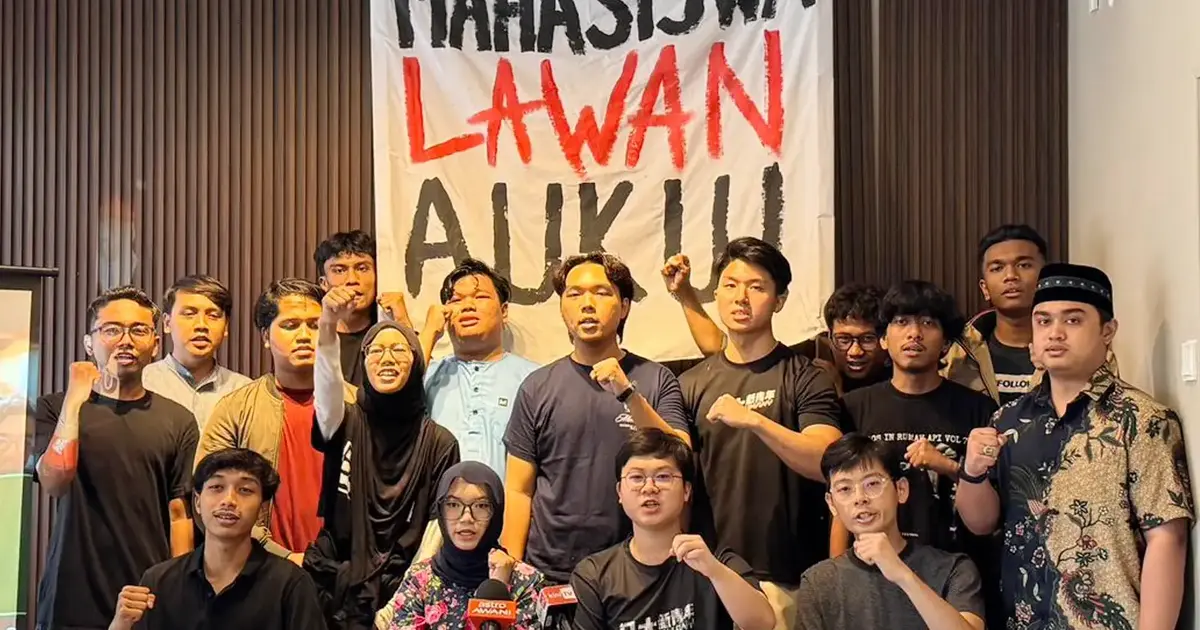
Prime Minister Anwar Ibrahim has declared his opposition to enacting fresh legislation designed to restrict student conduct, marking a significant statement of principle following the repeal of the Universities and University Colleges Act. The commitment reflects evolving government thinking on tertiary education policy and the balance between institutional autonomy and regulatory oversight in Malaysia's higher learning sector.
The abolition of Auku, which had governed university conduct for decades, represented a watershed moment in Malaysian education governance. That legislation contained provisions that student advocates and civil liberties groups had long criticised as overly prescriptive, limiting campus political activity and curtailing student union operations. The decision to rescind it altogether rather than replace it with modified regulations suggests a deliberate policy choice to move away from restrictive frameworks.
Anwar's position carries particular weight given his own historical experiences with student activism and his subsequent detention under security laws. His evolution from youth activist to national leader has informed his perspective on generational freedoms and institutional constraints. The statement therefore represents not merely administrative policy but reflects deeper convictions about the appropriate relationship between government, universities, and the student body.
The removal of Auku creates a regulatory vacuum that universities must now navigate independently. Rather than imposing top-down restrictions through fresh legislation, the government's approach signals trust in institutional self-governance and the capacity of universities themselves to establish appropriate codes of conduct. This represents a departure from the centralised control model that characterised the Auku era, when federal oversight of campus political expression was comprehensive and strictly enforced.
For Malaysian universities, this development opens possibilities for expanded student participation in campus governance and greater latitude for student organisations to function without the detailed restrictions previously embedded in law. Student unions can now operate with broader autonomy in organising activities, holding events, and engaging in legitimate advocacy. However, this freedom comes with corresponding responsibility for universities to establish clear internal policies that balance student rights with institutional functioning.
The practical implications extend beyond Malaysia's borders. Southeast Asian universities often look to Malaysian precedent when developing their own governance frameworks. Thailand, Indonesia, and the Philippines all manage tensions between student activism and institutional order, and Malaysia's move towards deregulation may influence regional thinking about higher education governance. The approach suggests that student freedoms and academic integrity need not be mutually exclusive.
Campus leaders now face the challenge of establishing their own behavioural guidelines without statutory backing. Universities must craft regulations that protect academic freedom, ensure campus safety, and facilitate legitimate student expression while maintaining institutional coherence. This requires sophisticated policy-making at institutional level, as universities transition from implementing federally mandated restrictions to creating their own governance frameworks.
The commitment against new restrictive legislation also addresses concerns among student advocates who feared the government might introduce alternative laws with similar limiting effects. By foreswearing such measures, Anwar has provided reassurance that the liberalisation represented by Auku's repeal reflects genuine policy shift rather than mere administrative restructuring. This clarity reduces uncertainty for student organisations planning campus activities and advocacy campaigns.
Education observers note that Anwar's stance aligns with broader international trends towards greater student autonomy in higher education. Leading universities globally have moved away from paternalistic regulation towards frameworks emphasising student responsibility and institutional trust. Malaysia's trajectory, if sustained, would bring local practice closer to international standards while respecting local cultural and institutional contexts.
However, the success of this hands-off approach depends substantially on how universities themselves exercise their newfound autonomy. If institutions establish overly restrictive internal policies that mirror Auku's constraints, the spirit of the repeal could be undermined. Conversely, if universities grant students genuine freedom with appropriate safeguards, the model could demonstrate that deregulation strengthens rather than weakens institutional stability.
The statement also carries implications for Malaysia's international reputation. Restrictions on student expression have previously drawn criticism from international human rights organisations and affected Malaysia's standing in global education rankings. Removing statutory restrictions enhances the country's appeal to international academics and students seeking campus environments with robust freedoms.
Looking ahead, the practical working relationship between government and universities will prove crucial. While Anwar has pledged against new restrictive laws, government funding bodies retain substantial influence over institutional behaviour through budget allocations and accreditation decisions. True autonomy requires not merely the absence of legislation but also government restraint in exercising indirect pressure through financial and regulatory mechanisms.
The repeal of Auku and the commitment against new restrictions represent a fundamental recalibration of state-university relations in Malaysia. Whether this transition succeeds in fostering more vibrant campus communities while maintaining institutional integrity will likely shape Malaysian higher education for the coming decade and influence how peer nations in Southeast Asia approach the perpetual tension between student freedom and institutional order.

