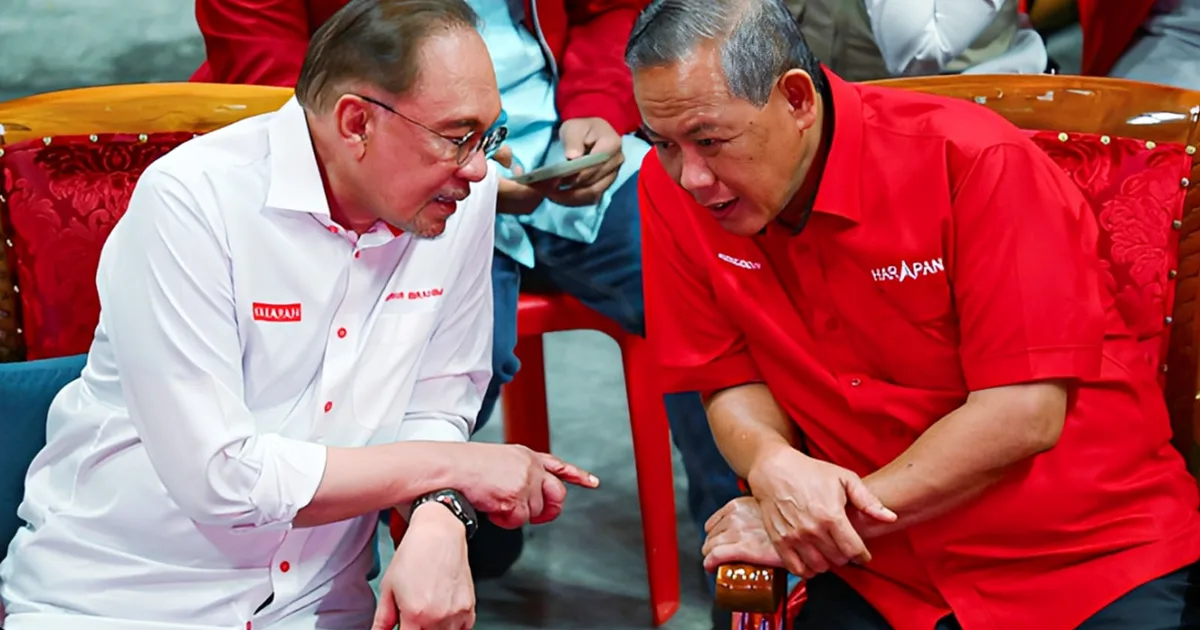
PKR president Anwar Ibrahim has underscored the continued importance of former Negeri Sembilan menteri besar Aminuddin Harun in shaping the party's future through his mentorship of younger political figures. Speaking to members of the party establishment, Anwar highlighted how Aminuddin's approach to accepting electoral defeat—marked by an absence of blame-shifting or recrimination—exemplifies the leadership qualities that PKR needs to nurture among its ascending ranks.
Anwar's remarks reflect a broader strategic consideration within the ruling coalition as it seeks to consolidate institutional strength beyond the immediate political leadership. The PKR president's emphasis on Aminuddin's developmental role suggests recognition that the stability of Malaysian politics depends on cultivating a generation of leaders who can manage disappointment and setbacks with integrity. This approach contrasts sharply with the blame-centred narratives that have historically characterised Malaysian political discourse, where electoral reversals frequently trigger internal finger-pointing and factional disputes.
Aminuddin's tenure as Negeri Sembilan's chief minister, which concluded following recent electoral outcomes, positioned him as a significant figure within PKR's power structure. His experience navigating both state administration and national party politics provides practical insights that would be difficult to replicate through theoretical instruction alone. The intergenerational transmission of such experience—particularly lessons about maintaining composure and principled conduct during moments of political vulnerability—holds particular value for parties seeking to avoid the corrosive internal conflicts that have damaged rival organisations.
The broader context of Anwar's intervention involves questions about PKR's internal cohesion and the party's ability to retain talent across political cycles. Senior figures who gracefully transition from executive positions can either become liabilities through resentful factional activity, or—as Anwar is positioning Aminuddin—become repositories of institutional memory and moral authority. By publicly affirming Aminuddin's value to the party's future, Anwar simultaneously reinforces expectations that all PKR members should approach their careers with similar equanimity regarding electoral fortune.
For Malaysian politics more broadly, the emphasis on dignified acceptance of defeat carries implications for democratic maturation. The relative stability of Southeast Asian democracies often hinges on whether established politicians demonstrate willingness to accept unfavourable outcomes without delegitimising electoral processes or fomenting internal instability. When senior figures like Anwar explicitly validate colleagues who embody such conduct, they establish normative standards that shape how wider party memberships behave during periods of electoral pressure.
Aminuddin's willingness to transition from executive office without public acrimony also reflects the particular challenges facing state-level politicians in Malaysia's federal system. Menteri besars occupy positions of significant authority but remain subordinate to federal oversight and coalition politics. Their acceptance of political setbacks without attempting to drag down party leadership or external actors demonstrates maturity in understanding these hierarchical relationships. This maturity, when demonstrated by multiple senior figures simultaneously, strengthens coalition governance by reducing the likelihood of provincial grievances destabilising national arrangements.
The mentorship function that Anwar identifies for Aminuddin also addresses a practical challenge within PKR specifically. The party has experienced significant personnel turnover in recent years, with prominent figures moving between various political formations or withdrawing from active politics. Retaining individuals like Aminuddin in advisory or developmental roles helps preserve continuity of institutional knowledge and prevents the institutional amnesia that plagues parties relying primarily on active politicians holding formal positions.
Young PKR members, particularly those ascending through state and local government structures, benefit from exposure to figures who have navigated Malaysia's complex multilevel political system. Aminuddin's experience encompasses state legislative management, coalition coordination with federal partners, and managing expectations within a party that encompasses both Islamist and secular wings. The practical lessons embedded in such experience—regarding compromise, coalition maintenance, and the distinction between principle and personality—constitute invaluable preparation for emerging leaders.
Anwar's public acknowledgment of Aminuddin's ongoing value also functions as a statement to the broader PKR membership about acceptable standards of conduct following electoral disappointment. By elevating a figure who demonstrated grace under adverse circumstances, Anwar establishes a template that other senior figures and aspiring leaders might emulate. This proactive framing of dignified defeat as a positive attribute represents a deliberate choice to normalise conduct that strengthens rather than destabilises party institutions.
The sustainability of Malaysian coalition governments, particularly arrangements involving diverse partners like PKR, Amanah, and Democratic Action Party, depends substantially on whether senior figures demonstrate capacity to absorb setbacks without resorting to factional warfare or attempts to undermine the broader coalition structure. Anwar's investment in positioning Aminuddin as a mentor figure effectively signals that PKR values such conduct and will reward it through continued party prominence and respect. This approach creates incentive structures that encourage stability-enhancing behaviour among the party's political class.
Looking forward, Aminuddin's mentorship role may prove particularly significant as PKR navigates succession planning within the national leadership. The party faces questions about how it will maintain its position within federal government structures while also managing leadership transitions at both state and national levels. Experienced figures who have successfully weathered political setbacks without becoming destabilising forces represent a crucial resource for parties seeking to manage such transitions with minimal institutional damage. Anwar's explicit recognition of this function represents strategic thinking about PKR's long-term coherence and effectiveness within Malaysia's evolving political landscape.

