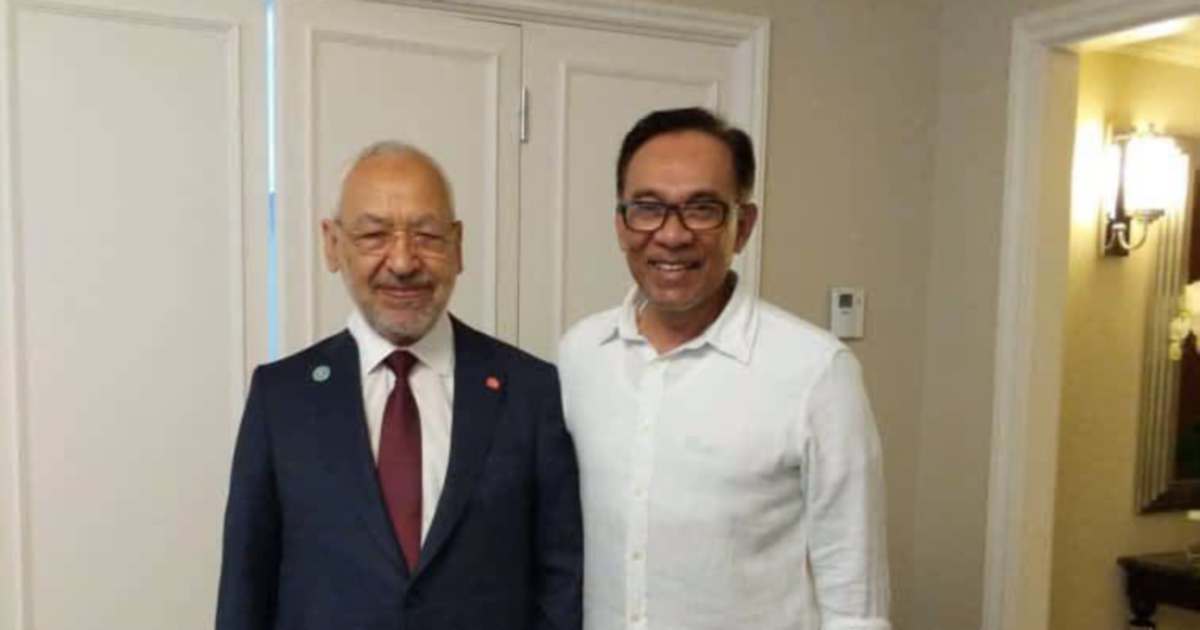
Prime Minister Datuk Seri Anwar Ibrahim has directed a formal appeal to Tunisian President Kais Saied requesting the release of Sheikh Rached Ghannouchi, the veteran Islamist political figure currently held in detention. The letter, which emphasizes humanitarian considerations, represents Malaysia's continued diplomatic engagement with Tunisia on matters involving prominent Muslim leaders and their welfare.
Sheikh Rached Ghannouchi, who founded Tunisia's largest Islamist party Ennahda and served as its leader for decades, has become a focal point of international concern following his arrest. His detention reflects broader political tensions within Tunisia, where President Saied has consolidated executive power and moved to sideline the Islamist movement that was central to the country's political evolution since the 2011 revolution. The veteran politician's incarceration exemplifies the deepening divisions within Tunisian politics.
Anwar Ibrahim's intervention signals Malaysia's position as an important Muslim-majority nation willing to advocate for political and religious figures facing detention in other countries. The Prime Minister's approach through diplomatic channels demonstrates a preference for quiet diplomacy rather than public condemnation, a strategy Malaysia has historically employed when addressing sensitive international matters involving fellow Muslim nations.
Ghannouchi's detention has drawn attention from various international human rights organizations and political observers who view his case as emblematic of Tunisia's shifting political landscape. The 82-year-old politician has faced multiple legal charges, and his continued imprisonment has become a symbol of the tensions between Saied's presidency and the Islamist-oriented political forces that shaped Tunisia's transition to democracy.
Tunisia's political trajectory over recent years has seen President Saied accumulate significant power, particularly following his suspension of parliament in July 2021 and subsequent constitutional changes that concentrated authority in the presidency. This consolidation has marginalized Ennahda and other opposition parties, with Ghannouchi's detention serving as a high-profile example of this reconfiguration. The broader context involves questions about Tunisia's commitment to democratic principles and respect for political opposition.
Malaysia's diplomatic overture reflects the country's broader foreign policy positioning within the Muslim world and its concern for the treatment of Islamic leaders and intellectuals internationally. As a nation that values both democratic principles and Islamic representation in governance, Malaysia maintains a delicate balance in its international relations, advocating for human rights while respecting national sovereignty. This approach has increasingly placed Malaysian leadership in the role of mediator and advocate on behalf of Muslim communities globally.
The appeal on humanitarian grounds carries particular weight in diplomatic correspondence between Muslim-majority nations. Humanitarian considerations transcend purely political disagreements and invoke universal principles of human dignity and health concerns, making them more palatable in bilateral relations. Anwar Ibrahim's framing of the request demonstrates awareness of the most persuasive avenue for engagement with Tunisian authorities.
Sheikh Ghannouchi's historical significance extends beyond contemporary Tunisian politics. He has long been regarded as an important intellectual within the Islamic political movement across the Middle East and North Africa, having influenced generations of activists and thinkers. His detention thus carries implications that resonate across the broader Muslim world, explaining why leaders like Anwar have deemed it worthy of direct diplomatic engagement.
The timing of Anwar's intervention occurs within a broader context of Malaysia's increased diplomatic visibility in international affairs under his leadership. Since assuming office, the Prime Minister has positioned Malaysia as an active participant in global discussions on issues ranging from climate change to geopolitical tensions, and his advocacy on behalf of detained political and religious figures aligns with this elevated profile.
Tunisia's response to the Malaysian appeal remains to be seen, though the diplomatic gesture establishes a clear record of Malaysia's position on Ghannouchi's case. Whether such representations from international figures can influence Tunisian decision-making on the matter depends on multiple factors, including the severity of the charges against Ghannouchi and the strength of Saied's political resolve on the question.
The broader significance of Anwar's letter extends to Malaysian-Tunisian relations and Malaysia's engagement with North African nations more generally. As geopolitical alignments continue to shift and Muslim-majority countries navigate complex relationships with one another, moments of diplomatic advocacy reveal both the possibilities and limitations of soft power in international affairs. This intervention underscores Malaysia's determination to remain a voice for Muslim interests on the world stage.

