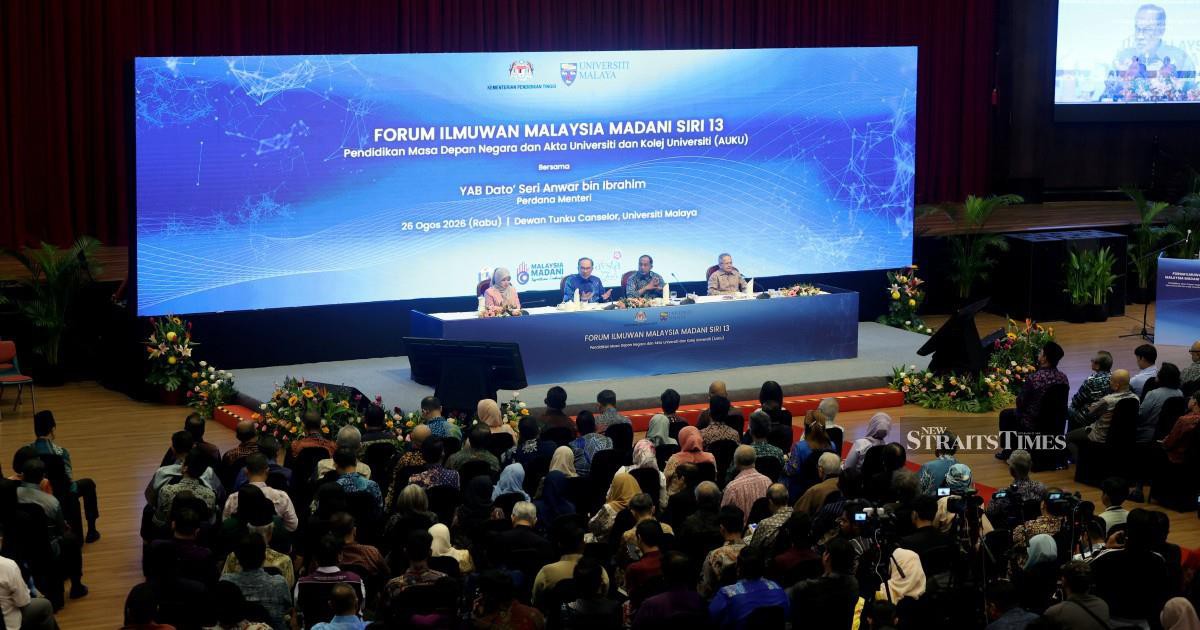
Prime Minister Datuk Seri Anwar Ibrahim is signalling a measured approach to reforming AUKU, the Universities and University Colleges Act that has long drawn criticism from student activists and civil society groups. Rather than rushing into immediate legislative changes, Anwar has asked the academic community and interested parties to have confidence in the government's intention to comprehensively overhaul the framework governing Malaysia's higher education institutions.
The AUKU legislation, enacted in 1971, imposes strict regulations on student political activity, assembly, and expression on campus grounds. These restrictions have become increasingly contentious among younger Malaysians who view them as obstacles to democratic participation and free speech. Student movements have repeatedly called for full repeal of the law, framing it as an outdated constraint that conflicts with contemporary notions of academic freedom and youth engagement.
Anwar's framing of the issue as requiring "time and space" reflects the complexity of dismantling a law that has been embedded in Malaysia's higher education governance for over five decades. Repealing or substantially amending AUKU involves more than legislative mechanics; it requires careful coordination across multiple government agencies, consultation with university administrators who operate within the current framework, and consideration of how campuses will function under new regulatory arrangements.
The appeal for patience suggests that the government recognises the frustration among student communities while simultaneously attempting to manage expectations around a lengthy reform process. This balancing act is characteristic of Malaysia's current political environment, where the administration under Anwar navigates between responding to demands from reform-minded constituencies and maintaining stability within established institutions.
University stakeholders play a crucial role in this equation. Institutional leadership, academic staff, and administrative bodies will need to adapt to any new regulatory environment. The government's comprehensive improvement measures likely encompass not only legislative changes to AUKU itself but also accompanying administrative reforms, guidelines for student engagement, and potentially new frameworks for campus governance that address historical concerns while establishing functional alternatives.
For Malaysian students, the timeline for AUKU reform carries real consequences. Young people entering university expect campus experiences that align with contemporary democratic practices in peer nations across Asia and globally. The gap between their expectations and current restrictions has fuelled student activism and broader conversations about Malaysia's commitment to youth empowerment and political participation.
Regional context matters here. Neighbouring countries like Singapore and Thailand have their own constraints on student activism, yet Malaysia's AUKU remains particularly restrictive in its scope and enforcement. Comparative pressure from the international academic community and concerns about Malaysia's competitiveness in attracting quality students and faculty add urgency to reform discussions, even as the government deliberates methodically.
The government's emphasis on "comprehensive" measures hints at an holistic rethinking rather than piecemeal amendments. This could encompass revising restrictions on student unions, modifying regulations on campus assemblies, clarifying permissible forms of political expression, and potentially establishing new grievance mechanisms for students challenging administrative decisions. Such comprehensive reform requires extensive groundwork and stakeholder consultation.
Anwar's appeal also carries implicit acknowledgment that trust between the government and student communities has been strained. By requesting that students and stakeholders place confidence in the reform process, he is attempting to rebuild that relationship and encourage engagement with government initiatives rather than confrontational activism. Whether this approach succeeds depends partly on the government demonstrating concrete progress and maintaining transparent communication about reform timelines.
The practical challenge lies in translating political commitment into legislative reality. Different government ministries, parliament, and university boards must align around reform objectives. Each institution brings its own institutional interests and concerns. Navigating these competing priorities while maintaining momentum toward meaningful change requires sophisticated political management.
For Malaysia's broader development aspirations, AUKU reform touches fundamental questions about the role of universities in society. Institutions of higher learning traditionally serve as incubators for critical thinking, civic engagement, and the development of future leaders. Laws that constrain student expression and organisation can undermine these functions, potentially limiting Malaysia's capacity to develop the skilled, engaged citizenry necessary for economic and social advancement.
The timeline for reform remains uncertain. Anwar's comments suggest the process will unfold over months rather than weeks, giving relevant parties opportunity for consultation but testing student activists' patience. How effectively the government moves forward while maintaining stakeholder support may determine whether AUKU reforms ultimately represent transformative change or incremental adjustments that leave underlying tensions unresolved.

