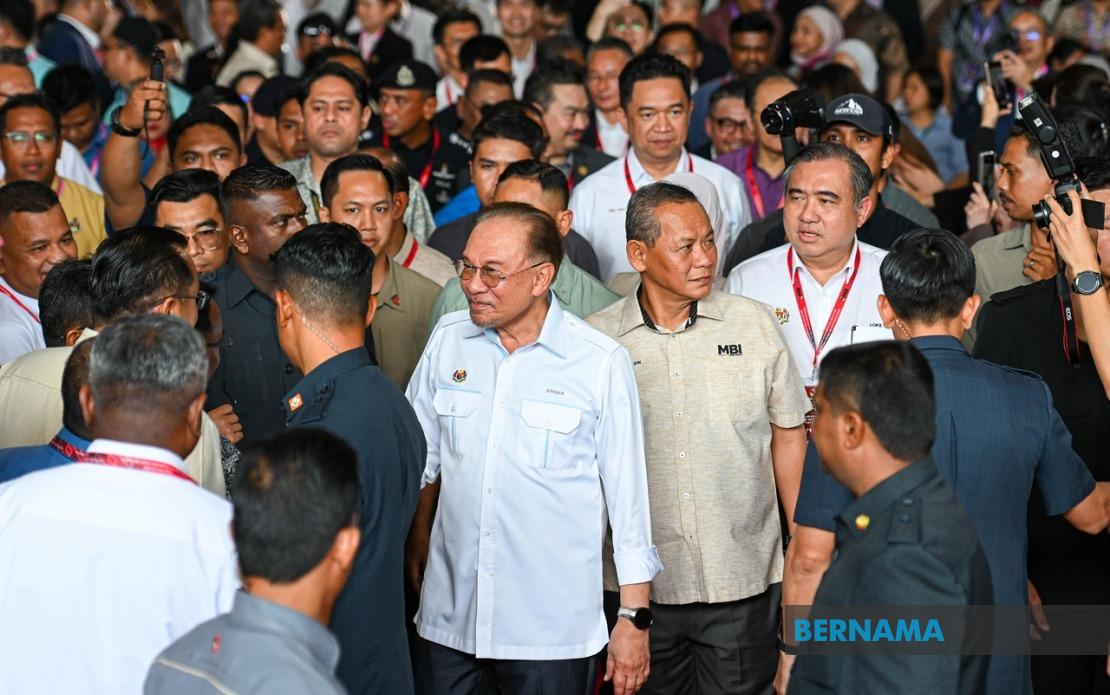
Prime Minister Datuk Seri Anwar Ibrahim has made a direct appeal to the Democratic Action Party's Melaka chapter to hold back on its decision to leave the state government, emphasizing the importance of maintaining political unity during this critical period. Speaking in Port Dickson after inaugurating an advanced container terminal facility, Anwar stressed that such internal disagreements should not overshadow the broader agenda of driving economic development and improving living standards for Melaka's population.
The DAP's sudden announcement to quit the Melaka state administration came after the Melaka State Legislative Assembly adopted constitutional amendments permitting the appointment of nominated assemblymen—a move that party leadership viewed as fundamentally incompatible with democratic principles. Melaka DAP chairman Khoo Poay Tiong justified the party's exit by characterizing the amendments as a departure from electoral legitimacy and democratic norms that the party could not endorse.
As both Prime Minister and chairman of the Pakatan Harapan coalition, Anwar indicated he has already engaged in preliminary talks with DAP secretary-general Anthony Loke and Melaka Chief Minister Datuk Seri Ab Rauf Yusoh to explore a path forward. His overture suggests a preference for negotiation over confrontation, with the goal of finding a mutually acceptable resolution that could keep the coalition intact. Anwar emphasized that ongoing dialogue should precede any final decisions, signalling his belief that compromise remains achievable if all parties approach the situation with flexibility.
The Prime Minister articulated a pragmatic philosophy about coalition governance, acknowledging that disagreements between partner parties are inevitable within any multi-party alliance. He framed these differences as manageable obstacles rather than insurmountable barriers, particularly when the fundamental priorities—economic expansion and citizen welfare—remain aligned. This framing positions the constitutional amendment controversy as a technical policy matter that should not derail the substantive work of government.
Anwar's intervention reflects the broader political arithmetic in Melaka, where the coalition's operational capacity depends on maintaining adequate parliamentary support. Losing the DAP's legislative presence would weaken the government's ability to pass legislation and implement programmes, potentially forcing early elections or creating a period of governance instability. The timing of the appeal suggests Anwar views the situation as urgent enough to warrant direct personal engagement.
The underlying tension reveals deeper fault lines within Malaysian coalition politics. The nominated assemblyman system, while common in various state contexts, represents a governance mechanism that independent parties like DAP have consistently opposed as undermining representative democracy. For DAP, which has built its political brand on clean governance and democratic accountability, participation in a system featuring appointed positions creates genuine ideological tension with its core messaging to urban voters.
For Melaka specifically, this crisis threatens continuity in the state administration at a moment when economic recovery and infrastructure development remain priorities. The container terminal project Anwar inaugurated exemplifies the kind of forward-looking initiative that could be jeopardized if political turbulence destabilizes the state government. Loss of focus during transitions often results in delayed projects and administrative inefficiencies that ultimately harm constituents.
The constitutional amendment itself reflects broader debates about federalism and state autonomy within Malaysia's constitutional framework. Melaka's use of this mechanism, whether controversial or not, underscores how different states exercise powers within their legislative competence. Resolving this particular conflict may require discussions about whether safeguards or modifications to the appointment process could address DAP's democratic concerns while preserving the mechanism for the state government.
Anwar's public appeal carries symbolic weight beyond its immediate negotiating intent. By engaging directly and respectfully with DAP's position rather than dismissing it, he signals to the coalition's broader membership that internal disputes need not trigger automatic dissolution. This approach may also appeal to voters and observers who value stability and constructive problem-solving over political theatricality.
For Pakatan Harapan as a coalition project, the Melaka episode tests the organization's capacity to absorb internal disagreements without fragmenting. The coalition's formation rested partly on shared opposition to previous governance, but sustaining unity now requires accommodating the distinct ideological commitments of constituent parties. How Anwar's intervention ultimately plays out will shape perceptions of the coalition's cohesion and maturity.
The path forward likely depends on whether creative compromises exist—perhaps modifications to how appointed assemblymen are selected, enhanced oversight mechanisms, or sunset provisions that limit the amendment's application. Such solutions would require genuine negotiation rather than simple capitulation by either side. The willingness of all parties to explore such avenues during the coming weeks will reveal whether Anwar's appeal for postponement can evolve into a genuine resolution.
The stakes extend beyond Melaka's borders. Coalition stability in the state affects investor confidence, administrative performance, and the broader narrative about how Malaysia's political system manages diversity and disagreement. In an era when governance capacity directly influences economic competitiveness, maintaining functional administrations matters significantly for regional development trajectories.

