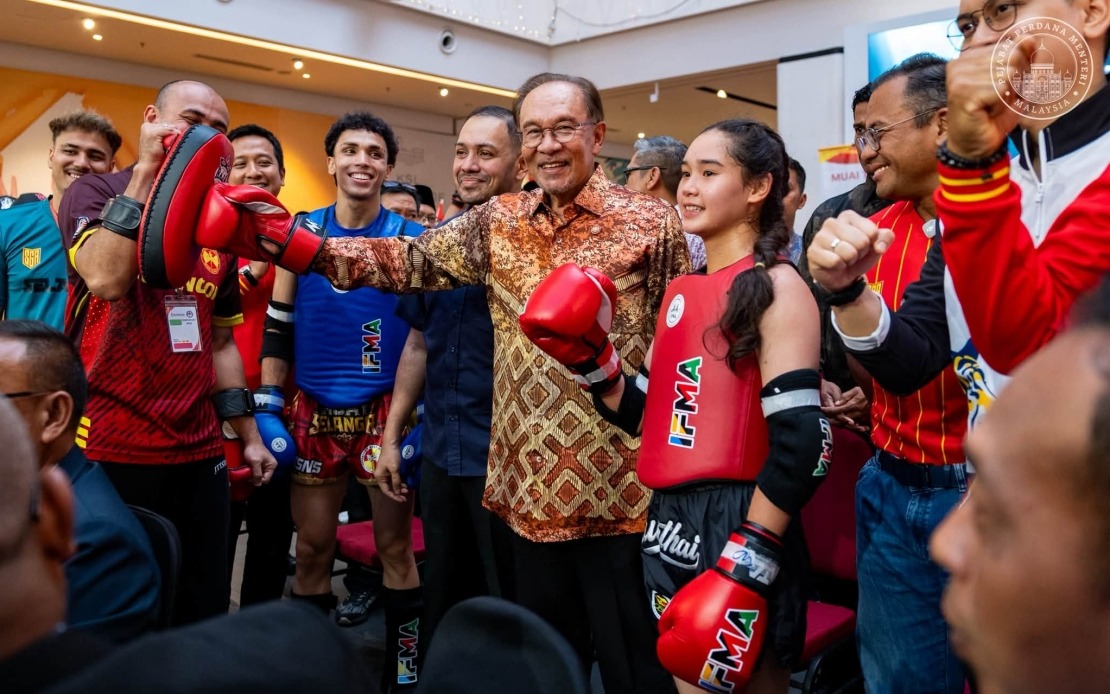
Prime Minister Datuk Seri Anwar Ibrahim has publicly commended the calibre of young athletes competing at the 2026 Selangor Malaysia Games (SUKMA), voicing optimism that many will eventually progress to represent Malaysia on the world sporting stage. Speaking through a Facebook statement on August 20, Anwar highlighted the discipline, courage and competitive spirit he witnessed when meeting athletes and observing Muay Thai competition at the ongoing biennial tournament.
The remarks underscore a broader political emphasis on developing homegrown sporting talent and investing in youth athleticism as a pathway to national pride and international standing. For Malaysian policymakers, SUKMA serves as both a grassroots talent pipeline and a vehicle for promoting regional cooperation and inter-state friendly rivalry. Anwar's public endorsement signals tacit backing for increased resources and institutional support flowing to young athletes identified through such games.
Selangor's hosting of SUKMA for the first time in 28 years has drawn more than 5,000 young competitors across 37 sports, contesting for 468 gold medals until August 24. The scale of participation reflects how deeply SUKMA has embedded itself in Malaysia's sporting culture and development framework. The concentration of talent in a single venue creates an opportunity for scouts, coaches and national body officials to identify emerging champions and pathways toward senior representation.
The Prime Minister's focus on Muay Thai, a sport gaining traction in Malaysia's competitive landscape, suggests deliberate attention to disciplines where Malaysian athletes can build competitive advantage regionally. Southeast Asia has produced several competitive Muay Thai practitioners, and developing this talent pool could yield dividends in regional and world championships, particularly as combat sports gain Olympic and commonwealth prominence.
Anwar's comments reflect a pattern of political engagement with grassroots sporting initiatives, positioning SUKMA as more than a domestic competition but as a strategic investment in national human capital. The emotional language he employed—spirit, discipline, courage—taps into aspirational narratives about young Malaysians overcoming challenges and achieving excellence, themes that resonate across the electorate and reinforce government commitment to youth development.
From a Southeast Asian perspective, Malaysia's systematic cultivation of young athletes through events like SUKMA gives it competitive advantages in regional forums. Countries like Thailand, Indonesia and Vietnam operate similar developmental systems, making SUKMA both a domestic showcase and a regional proving ground where Malaysian youth can benchmark themselves against peers from neighbouring states and, eventually, countries.
The biennial structure of SUKMA allows for continuous cycles of talent identification and progression, with athletes cycling through age categories and gaining competitive experience every two years. This creates a predictable pipeline where emerging talent can be monitored over time and channelled toward specialised national academies and international competitions. Anwar's endorsement suggests the government views this pipeline as functioning effectively and worthy of continued investment.
The Selangor edition carries additional significance as the wealthiest state in Malaysia, with capacity to invest heavily in sports infrastructure and athlete support systems. A successful 2026 games could set a benchmark for future iterations, with host states competing to provide superior facilities and programmes. This competitive dynamism helps drive up standards across Malaysia's sporting ecosystem.
For young athletes, Anwar's statement carries concrete implications beyond symbolic encouragement. Prime ministerial attention typically translates into bureaucratic prioritisation, potential increases in sponsorship attention and heightened media coverage that can accelerate pathways to elite coaching, scholarships and international exposure. The visibility that accompanies such political endorsement often opens doors that talent alone cannot unlock.
Looking ahead, the challenge for Malaysian sports administrators lies in converting SUKMA success into sustained international performance. History shows that participation in domestic championships, while necessary, frequently fails to translate into medal counts at Olympic Games or world championships without systematic follow-up investment, world-class coaching infrastructure and long-term athlete development planning. Anwar's remarks implicitly commit government to bridge this gap.
The political messaging also serves domestic audiences by framing national competitiveness as rooted in youth investment and institutional development rather than short-term initiatives. In an era of competing budgetary priorities, such positioning helps secure sustained funding for sports programmes that might otherwise face cuts. By associating SUKMA athletes with national pride and international representation, Anwar constructs a political narrative where sports investment becomes inseparable from broader nation-building objectives.

