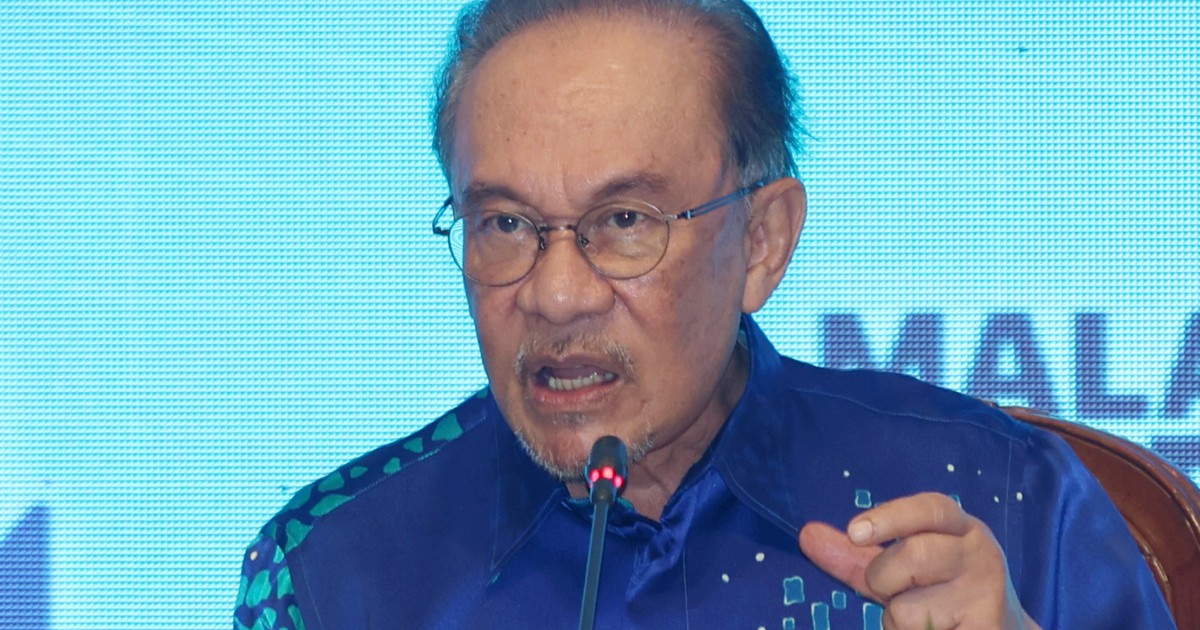
Prime Minister Datuk Seri Anwar Ibrahim has moved to justify the government's controversial decision to dramatically scale back special lottery draws from 22 to eight annually, presenting the move as consistent with his administration's broader anti-gambling stance. Speaking at Permatang Pauh, the premier framed the reduction not merely as a policy adjustment but as a reflection of principle, signalling that his cabinet remains committed to minimising opportunities for gambling within Malaysia's regulatory framework.
The slash in special draws represents one of the more visible steps the current administration has taken to tighten controls over gambling mechanisms available to the public. Special lottery draws—distinct from regular weekly or monthly draws operated by established lottery operators—have historically served as revenue-generating instruments for government and charitable purposes. By halving the frequency of these special events, the government is attempting to reduce overall gambling participation opportunities, a move that carries both symbolic weight and practical implications for revenue streams that had become accustomed to this additional income.
Anwar's defence of the decision speaks to an underlying tension within Malaysian governance: balancing fiscal needs against social concerns. Lotteries and gaming activities generate considerable revenue for federal and state governments, funding development projects and welfare initiatives. However, the psychological and social costs of gambling—including addiction, family disruption, and financial distress among lower-income communities—have prompted successive administrations to consider tighter regulations. The current government appears to be tilting the balance toward the latter consideration, even at potential cost to public finances.
The reduction from 22 to eight special draws annually is not a marginal adjustment but rather a 64 per cent cut in opportunities. This magnitude suggests the government is serious about the policy rather than merely making symbolic gestures. For operators managing lottery systems and for government departments relying on lottery revenues for specific projects, this shift requires operational and budgetary recalibration. The Malaysia Sports Toto, which manages much of the licensed lottery operations, will need to adjust its annual planning accordingly.
The context of Anwar's statement at Permatang Pauh—his own parliamentary constituency—carries particular significance. As a leader who has personally emphasised Islamic principles and ethical governance throughout his political career, his defence aligns with rhetoric around moral leadership that has featured prominently in his public messaging since assuming office. The stance resonates with constituencies that view gambling as incompatible with Islamic teaching, a perspective that holds considerable sway among both urban professionals and rural communities across Malaysia.
Beyond the simple numbers, this policy reflects broader debates about the role of government in regulating vice. Should the state view gambling as a harm to be minimised even when it generates revenue? Or should it be managed as a controlled activity generating funds for public good? Different societies answer this differently, and Malaysia's position has oscillated based on administrations' priorities. The current approach suggests a government willing to forgo immediate financial gains for perceived long-term social benefits and alignment with Islamic principles that form part of Malaysia's constitutional framework.
For regional observers, Malaysia's tightening of gambling regulations offers a contrast to other Southeast Asian jurisdictions that have embraced gaming tourism and online gambling expansion. Singapore maintains strict controls but channels significant revenue through its model, while some neighbours permit more expansive operations. Malaysia's measured but visible reduction signals a different philosophical positioning, one that prioritises social and religious considerations over maximising revenue extraction.
The announcement also carries implications for charities and organisations that have historically benefited from special draw funding. Many non-governmental organisations and sports bodies have relied on proceeds from special lottery events to finance their activities. With the frequency cut by nearly two-thirds, alternative funding mechanisms will need development, potentially placing greater burden on government allocations or requiring these bodies to pursue other revenue strategies.
Opposition figures and civil society groups focused on public health may view this as insufficient—arguing that even eight special draws annually represents unnecessary gambling promotion. Conversely, business interests and those dependent on lottery revenues could see the measure as counterproductive, reducing economic activity and government income during periods of fiscal constraint. Anwar's emphatic defence suggests the government anticipated criticism from multiple quarters and has already settled on this position as non-negotiable.
The timing of the announcement, coinciding with broader policy reviews across government departments, suggests this forms part of a larger governance philosophy. Rather than isolated regulatory tweaks, the lottery restriction exemplifies an administration attempting to reshape public-sector operations around ethical and Islamic principles, a theme that has featured in announcements regarding civil service conduct and financial management.
Moving forward, the real test of this policy will emerge in implementation and actual revenue impact. If special draw reductions translate to meaningful decreases in problem gambling without creating unsustainable fiscal holes, the government can claim policy success. Conversely, if revenue shortfalls necessitate other less palatable measures or if gambling simply migrates to unregulated channels, the strategy's effectiveness will be questioned. For now, Anwar's firm public stance indicates this particular policy hill represents something the administration is willing to defend.

