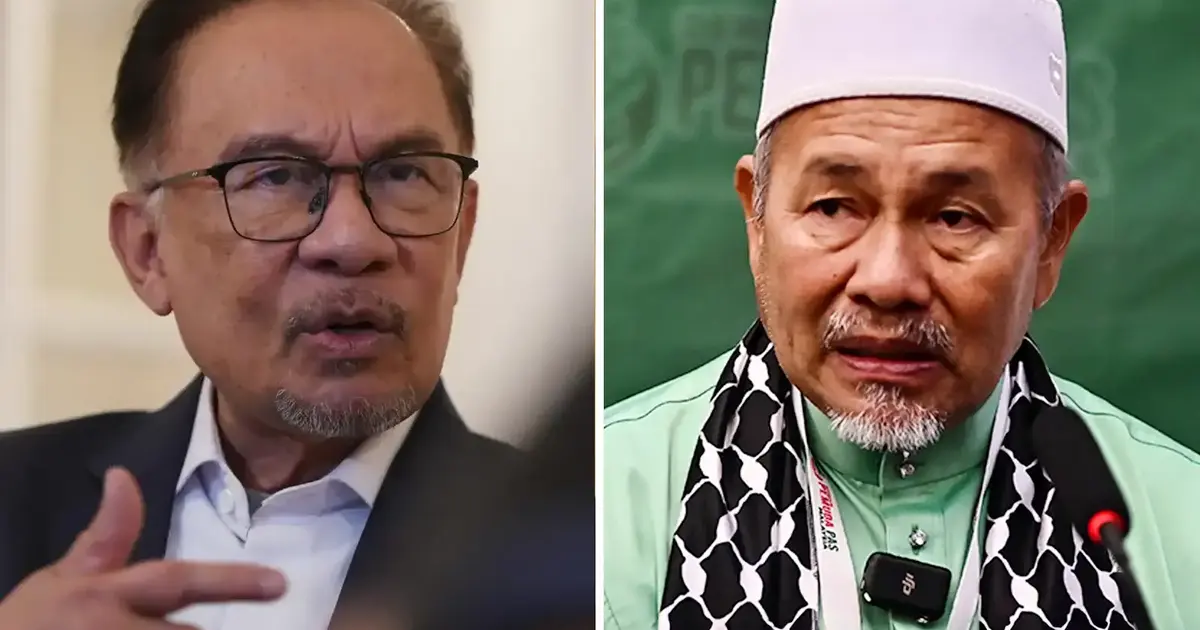
Prime Minister Anwar Ibrahim has initiated legal proceedings for defamation against PAS deputy president Tuan Ibrahim Tuan Mat, stemming from contentious statements delivered during a public speaking engagement. The suit targets remarks that allegedly cast aspersions on Anwar's conduct regarding police investigations and his purported involvement in sensitive matters concerning the Negeri Sembilan royal household.
The defamation action represents an escalation in political tensions between the leading coalition and the opposition PAS party, which has maintained a critical stance toward the federal government despite recent overtures toward political cooperation at selected state levels. The Prime Minister's decision to pursue legal remedies through the courts signals a deliberate shift from conventional parliamentary debate to formal litigation, indicating the gravity with which he views the allegations.
Tuan Ibrahim's remarks during the ceramah, a traditional form of public discourse in Malaysian political culture, reportedly suggested that Anwar had wielded undue influence over police operations within Negeri Sembilan. The statement appears to have touched upon sensitive terrain regarding the separation of powers and executive impartiality in law enforcement matters—issues that carry significant weight in Malaysia's constitutional framework and are consistently monitored by civil society watchdogs.
The invocation of the royal institution in connection with these allegations adds another layer of complexity to the dispute. Negeri Sembilan maintains a unique constitutional arrangement where authority rests with a council of rulers, making any perceived interference in palace affairs particularly sensitive. Such matters have historically proven incendiary in Malaysian political discourse, and the decision to litigate suggests Anwar views the allegations as touching upon core aspects of his integrity and governance credibility.
PAS, which governs Terengganu and Kelantan outright and holds significant influence in several other states, has maintained consistent criticism of Anwar's administration since the 2023 general election. Although the Islamic party has occasionally coordinated with the federal government on specific legislative matters, it remains ideologically distinct and politically opposed to the ruling coalition's broader agenda. This lawsuit thus unfolds against a backdrop of deeper factional divisions within the Malaysian political landscape.
The timing and nature of the legal action carries implications for Malaysian jurisprudence regarding defamation standards in political speech. Malaysian courts have historically attempted to balance protection of freedom of expression—particularly in the political domain—against individual rights to reputation. How judges ultimately assess whether Tuan Ibrahim's statements constitute protected political commentary or actionable defamation could establish precedent affecting future political discourse and litigation.
For opposition politicians and civil society observers, the case raises questions about the chilling effects of defamation suits on political participation and public criticism of government. While political leaders unquestionably possess legitimate interests in protecting their reputations, aggressive litigation strategies can potentially discourage robust democratic debate. The outcome may thus influence the willingness of opposition figures to make challenging statements regarding executive conduct in future.
The lawsuit also emerges within Malaysia's broader context of evolving political realignments. The Pakatan Harapan government's composition remains fluid, with various parties periodically reassessing their participation and collaboration. PAS's exclusion from federal power while maintaining substantial state-level influence creates inherent tensions in the political ecosystem, occasionally manifesting through sharp rhetorical exchanges precisely of the type that prompted this legal action.
From an institutional perspective, the case touches upon fundamental questions regarding police independence and royal deference. Both institutions occupy central positions in Malaysia's constitutional order, and allegations suggesting prime ministerial interference in either domain strike at core governance principles. Whether substantive evidence emerges during litigation to support or refute Tuan Ibrahim's characterizations remains to be seen, but the mere raising of such allegations in political discourse indicates persistent concerns among opposition figures regarding executive accountability.
The defamation suit follows a pattern observed in other jurisdictions where political actors leverage litigation as a strategic tool in partisan competition. While defending reputation through courts remains legitimate, critics argue that such actions by powerful government figures against less-resourced opponents can create asymmetrical power dynamics that ultimately disadvantage democratic participation. The specific facts and judicial handling of this case will consequently warrant close monitoring by those concerned with Malaysia's democratic health.
Looking forward, the litigation's trajectory will likely influence political communication dynamics across Malaysian political parties. Should courts find in Anwar's favour with substantial damages, opposition figures may exercise greater caution in public statements. Conversely, if courts reject the suit or award minimal damages, PAS and other opposition entities may feel emboldened to maintain aggressive oversight rhetoric. Either outcome carries implications extending well beyond this particular dispute into the broader texture of Malaysian democratic practice.

