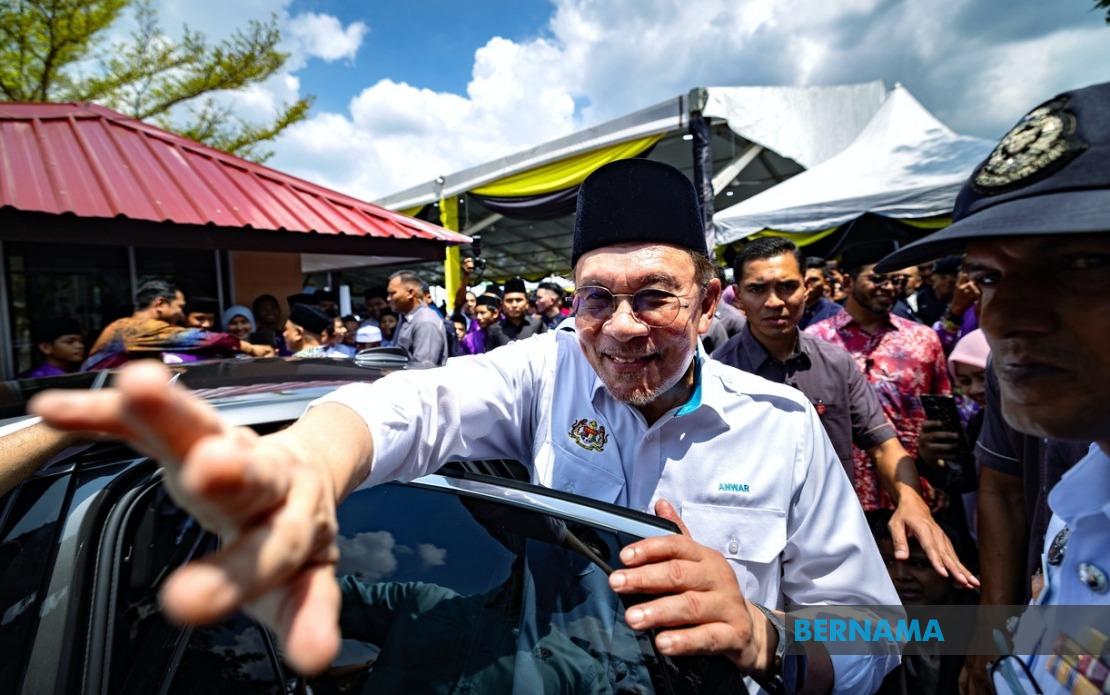
Prime Minister Datuk Seri Anwar Ibrahim has pledged to provide a comprehensive account of the Retirement Fund (Incorporated)'s failed investment in Indonesian aquaculture technology company eFishery when parliament's upper chamber convenes this week. The undertaking comes as scrutiny intensifies over the pension fund's involvement in what authorities have now confirmed was a sophisticated investment fraud, resulting in significant losses that have drawn public concern and parliamentary interest.
While serving as both premier and Finance Minister, Anwar acknowledged that although KWAP operates as an autonomous financial institution managing retirement savings and does not report directly to his ministry, he believes transparency and accountability demands a full accounting before the Dewan Negara. His stance reflects a broader commitment to addressing governance questions regardless of institutional boundaries, signalling that the government will not use KWAP's independent status as a shield from parliamentary scrutiny.
According to financial records disclosed by the Finance Ministry through parliamentary correspondence, KWAP invested approximately US$47.7 million in eFishery during July 2023. The fund's total exposure ultimately reached RM163.4 million, representing approximately 2.51 per cent of the company's shareholding. This sizeable investment was undertaken as part of KWAP's broader diversification strategy, though the decision has since become emblematic of the risks inherent in international venture capital investments, particularly in emerging technology sectors across Southeast Asia.
The investment proved catastrophic when Indonesian authorities uncovered evidence of systematic fraud within eFishery's operations. The company's management had deliberately manipulated financial statements, misleading investors about the true health and profitability of the aquaculture technology venture. This deception extended to KWAP and multiple other major institutional investors, both domestic and international, who had been attracted by the company's seemingly robust business model and growth trajectory.
The criminal dimensions of the fraud became apparent when eFishery co-founder Gibran Huzaifah faced justice in Bandung. In 2024, an Indonesian court sentenced Huzaifah to nine years imprisonment after conviction on charges of criminal breach of trust and money laundering. His prosecution underscored the deliberate nature of the misconduct and suggested that the investment losses were not mere miscalculation or market volatility but rather the result of intentional criminal conduct designed to extract funds from investors.
Meanwhile, the Malaysian Anti-Corruption Commission has mobilised resources to examine the affair comprehensively. MACC chief commissioner Datuk Seri Abdul Halim Aman confirmed that a specialised investigative team has been established to conduct a thorough review of how the investment proceeded, whether proper due diligence protocols were observed, and whether any Malaysian-based actors bore responsibility for facilitating the transaction. The investigation reflects broader official concern about whether procedural safeguards functioned as intended.
KWAP's official statement sought to contextualise the loss by emphasising its position as a minority shareholder among a broader coalition of institutional investors. The fund noted that majority stakes were held by other investors, including prominent global financial institutions that similarly suffered losses from the fraud. This characterisation, while technically accurate, does not diminish the significance of the loss relative to KWAP's asset base or the question of how investment decisions were vetted and authorised internally.
The eFishery episode carries particular resonance for Malaysian pension and investment governance given KWAP's mandate to preserve retirement savings for public sector employees. Any deterioration in fund value directly impacts the retirement security of teachers, civil servants, and other government workers who depend on KWAP for their post-employment income. The fraud therefore extends beyond a simple financial loss to touch on fundamental questions about how fiduciary responsibilities are discharged and how institutional safeguards protect beneficiaries.
For Southeast Asia more broadly, the case illustrates vulnerabilities in cross-border investment verification and the challenges that even sophisticated institutional investors encounter when evaluating opportunities in jurisdictions with less transparent regulatory frameworks. The eFishery investment gained traction during a period of intense venture capital enthusiasm for agricultural technology startups across the region, and KWAP was far from alone in identifying apparent promise in the sector. However, the incident suggests that more rigorous financial forensics and ongoing monitoring protocols may be warranted for investments of this scale and complexity.
Anwar's parliamentary commitment reflects political acknowledgment that the public and their representatives require satisfactory explanation of how pension fund assets were deployed and what, if any, recourse mechanisms exist for recovery. While KWAP's governance framework has been activated according to its internal protocols, the public dimension of the losses and their impact on pensioners warrant the political accountability that only parliament can provide. The government's willingness to engage substantively with the issue, rather than sheltering behind institutional autonomy, may help restore confidence in Malaysia's investment governance structures as the nation continues to attract regional capital.

