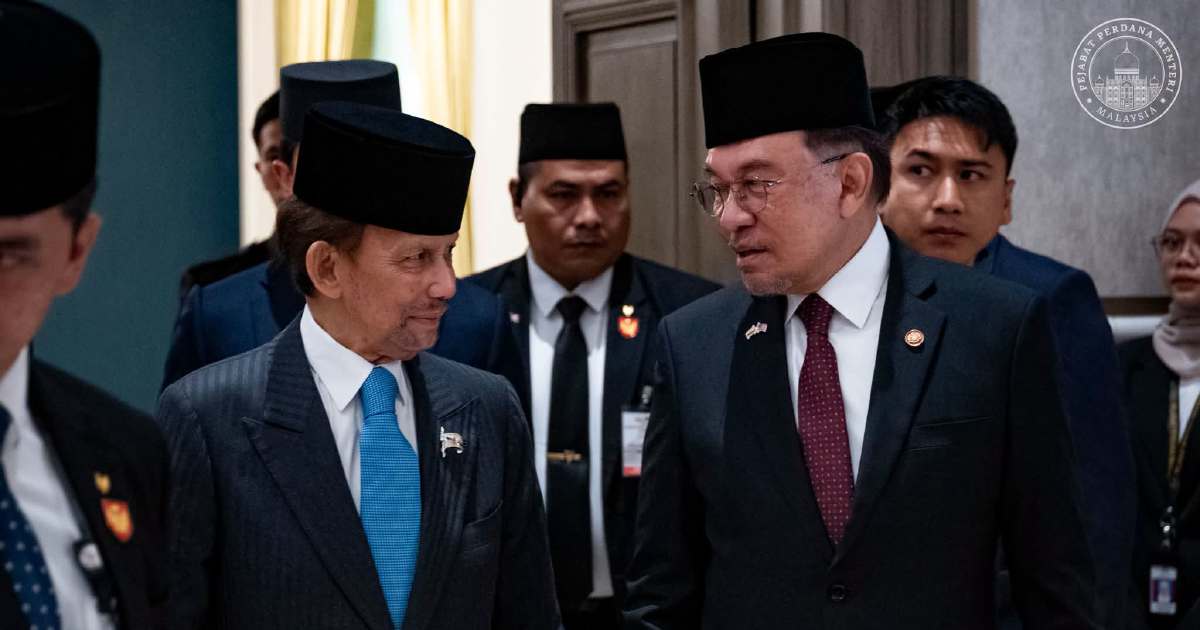
Prime Minister Datuk Seri Anwar Ibrahim will undertake a visit to Brunei next week to participate in the 27th Annual Leaders' Consultation with Sultan Hassanal Bolkiah in Bandar Seri Begawan. This meeting represents the continuation of a deeply rooted diplomatic tradition that has served both nations for over two decades, underscoring the enduring commitment between Malaysia and Brunei to maintain high-level political dialogue and strengthen bilateral relations.
The Annual Leaders' Consultation framework has become a cornerstone of Malaysia-Brunei relations, providing an institutionalised platform through which the two countries address shared concerns, align on regional strategies, and foster people-to-people connections. The regularity of these summits demonstrates the priority both governments assign to their partnership and the strategic importance of maintaining robust channels of communication at the highest echelons of power.
For Malaysia, these consultations carry particular significance given Brunei's position as a fellow member of the Association of Southeast Asian Nations (ASEAN) and its role as chair of ASEAN for 2024. The bilateral engagement with Brunei helps shape Malaysia's approach to regional diplomacy and allows for coordination on issues affecting the broader Southeast Asian community, including maritime security, economic integration, and sustainable development.
The meetings between Malaysian and Bruneian leadership typically encompass discussions on bilateral trade and investment, regional security challenges, and cooperation in areas ranging from defence to cultural exchange. As both nations navigate an increasingly complex geopolitical landscape marked by great power competition and economic pressures, these consultations provide opportunities to coordinate responses and protect mutual interests.
Brunei, whilst smaller in population and economic scale than Malaysia, holds strategic importance in the region due to its energy resources and position along crucial maritime routes. The sultanate's alignment with regional partners and international norms contributes to the stability that both nations depend upon for prosperity. Anwar's visit signals Malaysia's commitment to treating all ASEAN neighbours as valued partners, regardless of size.
The consultation format allows both leaders to discuss issues beyond the purely diplomatic—energy cooperation, particularly given Brunei's significant liquefied natural gas exports, remains an important agenda item. Educational exchanges, tourism development, and labour cooperation between the two countries also feature prominently in bilateral discussions, reflecting the multifaceted nature of modern state-to-state relations.
Regionally, the timing of this visit is noteworthy given ASEAN's current focus on the South China Sea disputes and the need for unified approaches to maritime issues. Malaysia, with its own maritime claims and interests in the region, benefits from close coordination with Brunei, which shares similar concerns about maintaining freedom of navigation and adhering to international law in contested waters.
The 27th iteration of this consultation reflects nearly three decades of institutionalised engagement. Such longevity indicates that both Malaysia and Brunei have found substantial value in maintaining this regular dialogue, suggesting that the relationship extends beyond ceremonial posturing to encompass genuine strategic coordination. The persistence of this mechanism through changes in Malaysian leadership—including Anwar's return to the office of Prime Minister—underscores its importance as a foundational element of the bilateral relationship.
For Malaysian readers, this engagement matters because it reinforces Malaysia's position as a key player in Southeast Asian diplomacy and demonstrates the government's commitment to neighbouring states. Strong relations with Brunei help create a stable subregional environment conducive to trade, investment, and security, ultimately benefiting ordinary Malaysians through economic opportunities and enhanced regional stability.
The visit also provides an opportunity for both governments to address any outstanding bilateral matters and ensure alignment on forthcoming regional initiatives. Given the complexity of modern challenges—from pandemic preparedness to climate change—the capacity to work closely with neighbouring governments through established institutional channels becomes increasingly valuable.
As Malaysia continues to assert its role in regional affairs and navigate competitive dynamics with larger powers, the cultivation and maintenance of strong bilateral relationships with all ASEAN partners, including Brunei, remains strategically essential. These regular high-level consultations serve as a mechanism through which such relationships are sustained and deepened, ensuring that ASEAN's founding principle of mutual respect and non-interference is upheld even as regional circumstances evolve.

