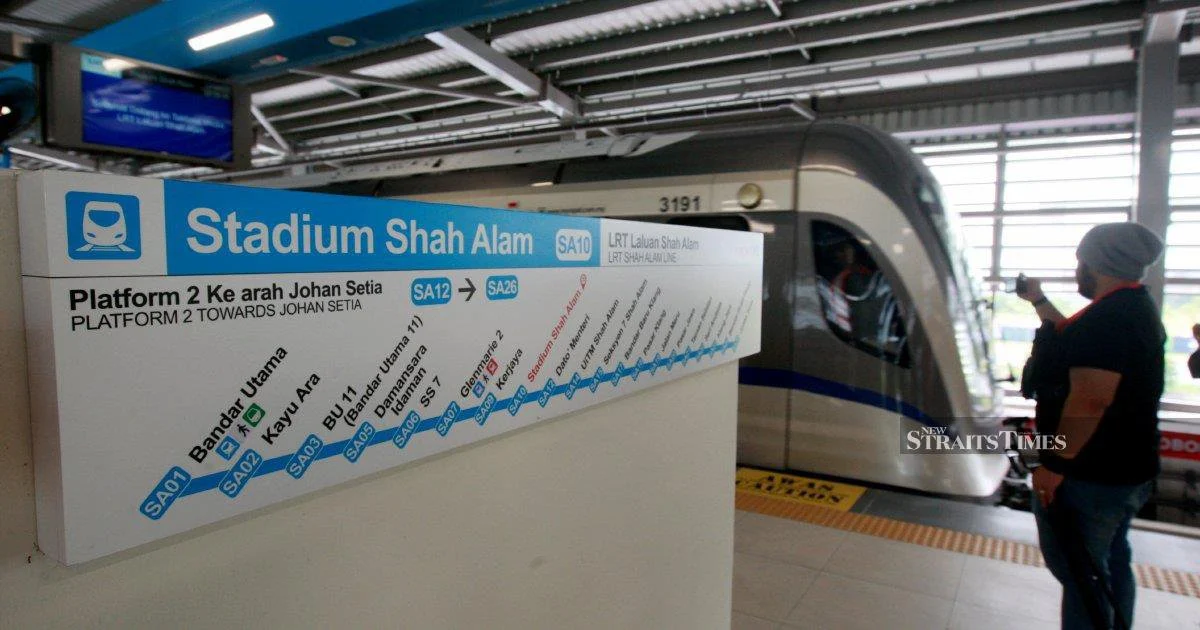
Prime Minister Datuk Seri Anwar Ibrahim is set to officially open the Light Rail Transit Line 3 (LRT3) Shah Alam line during a ceremony scheduled for Sunday, marking a significant expansion of Malaysia's rapid transit network in the Selangor region. The new line will commence regular passenger operations on Monday, connecting commuters in Shah Alam and surrounding areas to the broader Klang Valley transportation ecosystem.
The inauguration represents a major milestone for Malaysia's long-term vision of integrated public transportation across the Klang Valley, a region that has witnessed explosive urbanization and commercial growth over the past two decades. The LRT3 Shah Alam extension forms part of a broader development strategy aimed at reducing traffic congestion, lowering transportation costs for workers, and promoting sustainable urban mobility across one of Southeast Asia's most congested metropolitan areas.
The Shah Alam line extension reflects the government's commitment to advancing infrastructure development in a state that has become home to numerous manufacturing hubs, technology parks, and administrative facilities. Shah Alam's status as Selangor's capital city makes the new transit connection particularly significant for state employees, students, and commercial workers who previously relied heavily on private vehicles or conventional bus services. The new line will facilitate better accessibility to employment centers, educational institutions, and commercial districts throughout the municipality.
For Malaysian commuters familiar with the existing LRT3 network, the Shah Alam extension promises enhanced connectivity options and reduced journey times for millions of people traveling within the greater Selangor region. The expansion is particularly relevant for residents in Shah Alam, Subang, and adjacent areas who have long advocated for improved public transportation alternatives. The line's operational commencement addresses a critical gap in the region's rapid transit infrastructure that has existed for several years.
The timing of the official launch underscores the government's push to deliver tangible infrastructure projects that improve residents' quality of life and support economic competitiveness. High-quality public transportation networks are increasingly recognized as essential components of modern urban development, influencing business location decisions, property values, and workforce mobility across Southeast Asian cities. Malaysia's continued investment in LRT infrastructure positions the country more favorably in regional comparisons of urban mobility and sustainable development.
The Sunday inauguration ceremony will likely feature remarks from key government officials, transport ministry representatives, and potentially other state and federal dignitaries. Such ceremonies typically highlight the project's importance to national development objectives and provide platforms for government officials to articulate broader transportation and urban planning initiatives. The event will generate media coverage that reinforces government messaging around infrastructure delivery and commitment to modernizing the nation's public transportation framework.
Operationally, the commencement of regular service on Monday will introduce thousands of commuters to a new transit option, with initial weeks typically requiring public adjustment periods as riders familiarize themselves with station locations, operating procedures, and integration points with other transportation modes. Transport authorities generally manage launch operations carefully, monitoring passenger volumes, system performance, and safety compliance during the critical early operating period.
The Shah Alam LRT3 extension contributes to broader Malaysia Vision 2050 objectives centered on sustainable urban development and reduced transportation-related carbon emissions. As the nation navigates climate commitments and environmental sustainability imperatives, expanding rapid transit options represents a concrete policy response aligned with international climate standards and domestic environmental goals. The project demonstrates practical implementation of sustainability principles in urban planning rather than merely rhetorical commitment.
For residents and workers throughout the Klang Valley, the new line offers potential economic benefits through reduced commuting times and transportation expenses. Students attending educational institutions in Shah Alam and surrounding areas will benefit from affordable, reliable transit options that reduce dependence on expensive taxi services or private vehicle usage. Small business owners and traders operating in Shah Alam's commercial districts may experience increased customer traffic flows as transit accessibility improves.
The LRT3 Shah Alam line's opening also carries implications for future infrastructure planning across Malaysia and Southeast Asia broadly. Successful execution of major transit projects builds institutional capability and public confidence in government's capacity to deliver complex infrastructure initiatives. The project serves as both a practical service expansion and a confidence signal regarding Malaysia's development trajectory, relevant for investors, international partners, and regional observers assessing the nation's governance and developmental priorities.
Looking forward, the line's operational performance will be closely monitored as a benchmark for future LRT expansion proposals. Ridership patterns, punctuality metrics, and user satisfaction data will inform subsequent phases of public transportation development across the Klang Valley and potentially other Malaysian urban centers. Success metrics extend beyond simple operational measures to encompass broader impacts on traffic patterns, air quality, and urban livability standards.