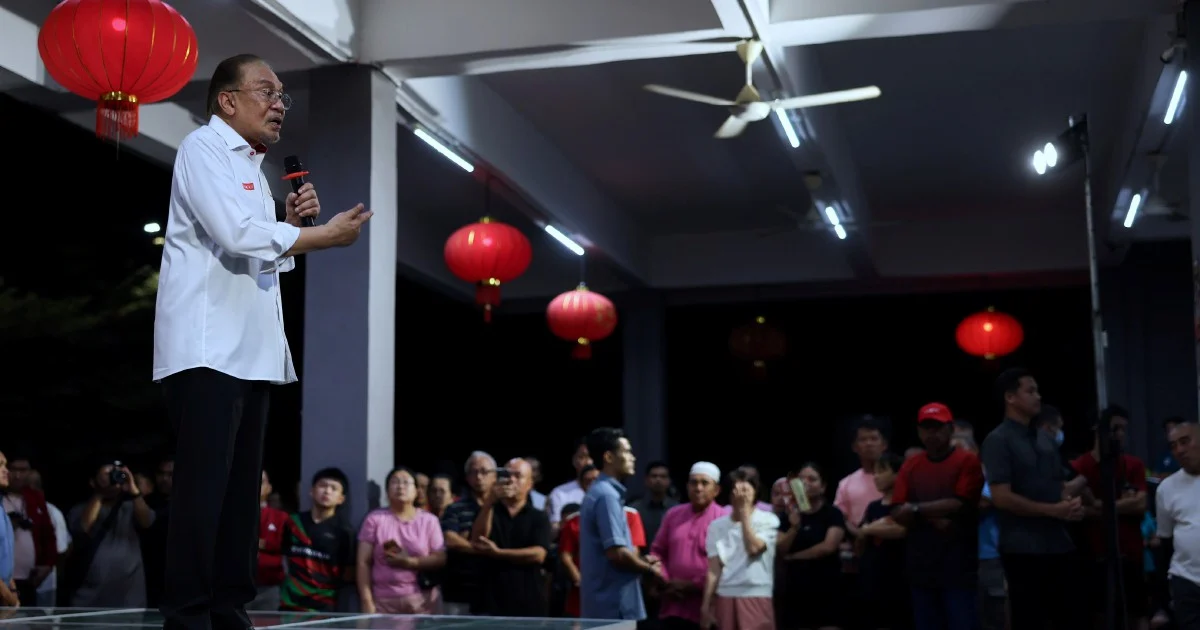
Prime Minister Datuk Seri Anwar Ibrahim has committed to placing Malaysia's struggling durian sector at the centre of high-level trade discussions when he meets Chinese Premier Li Qiang next month in Beijing. The initiative represents a direct government intervention into the crisis confronting Malaysian durian producers, who are contending with collapsing prices triggered by a severe oversupply that has devastated farm-gate economics across the nation's key growing regions.
The announcement, made during Anwar's engagement with stakeholders in Tangkak—a major durian producing area in Johor—underscores the urgency with which the federal administration is addressing what has become one of agriculture's most pressing challenges. Malaysia's durian sector, a cornerstone of regional agricultural exports and a source of considerable foreign exchange, has encountered unprecedented pressure as production volumes have swelled beyond market absorption capacity. Prices have declined dramatically from the premium levels that characterised the fruit's strong international demand in recent years, leaving growers with significantly reduced returns and threatening the viability of many farming operations.
The choice to elevate this issue during a premier-level dialogue with China reflects the strategic importance Malaysia places on recovering market access and stability. China remains the primary international customer for Malaysian durians, commanding the lion's share of export volumes and commanding prices that determine overall sector profitability. Anwar's decision to make this a centrepiece of diplomatic conversation signals that the government views China's import policies and consumer demand as instrumental to resolving the current crisis. By engaging Premier Li Qiang directly, Malaysia is seeking not merely sympathy but concrete measures that could expand Chinese market capacity or reduce trade barriers that may be constraining flows of Malaysian fruit into Chinese distribution networks.
The nationwide durian glut has emerged from a convergence of factors that have fundamentally disrupted the delicate equilibrium between supply and international demand. Expanded cultivation over preceding years, driven by the fruit's profitability and global recognition of Malaysian premium varieties, has resulted in production volumes that have outpaced international consumption growth. Simultaneously, competing suppliers in Southeast Asia have expanded their own output, intensifying competition in traditional export markets. The result has been a dramatic compression of prices that has rendered farming uneconomical for many producers, particularly smallholders who lack the storage capacity, processing infrastructure, or direct export connections of larger operators.
Malaysian durian cultivation is geographically concentrated in Peninsular Malaysia, with Johor, Pahang, and Perak accounting for substantial proportions of national output. These regions have built economies substantially dependent on durian revenues, with supporting industries including packaging, transportation, cold storage, and export logistics creating ecosystems of employment that extend well beyond farm gates. The price collapse therefore carries economic ripple effects that threaten livelihoods across rural communities where alternative income sources are limited. Local governments, agricultural organisations, and farming associations have collectively pressed the federal government for intervention strategies, which has prompted the diplomatic push now being undertaken.
China's role as the predominant export destination cannot be overstated in understanding both the cause and potential remedy for Malaysia's durian predicament. Chinese consumers, particularly in urban centres, have developed substantial appetite for premium Malaysian varieties, willing to pay prices that far exceed those available in other markets. This concentration of demand in a single buyer creates vulnerabilities—supply disruptions in China or shifts in Chinese consumer preferences can immediately destabilise Malaysian sector economics. Conversely, expansion of Chinese market absorption or the removal of non-tariff barriers that restrict imports could substantially stabilise prices and restore grower profitability.
Anwar's approach incorporates recognition that this challenge transcends domestic policy levers. While the government can implement supply management schemes, provide support to distressed growers, or encourage value-addition through processing and preservation initiatives, the fundamental resolution requires restoring international price equilibrium through expanded or stabilised export demand. This is why a premier-level discussion carries strategic significance—it positions durian support at the level of bilateral state relations rather than routine commodity trade, potentially enabling discussion of broader trade frameworks, quotas, or market access mechanisms that might not be possible through conventional agricultural negotiations.
The durian crisis also intersects with Malaysia's broader agricultural modernisation agenda and its positioning within regional value chains. The government has invested in developing Malaysia's agricultural sector as a source of value-added exports and agricultural technology leadership. The durian sector has been a centrepiece of this vision, with significant public resources directed toward research, variety development, and production enhancement. A collapse in sector economics threatens to reverse these gains and discourage further investment in agricultural innovation, potentially weakening Malaysia's competitiveness in global agricultural markets more broadly.
Beyond the immediate bilateral discussion, Anwar's initiative signals a wider policy recognition that agricultural sectors facing international market pressures require coordinated diplomatic engagement alongside domestic support mechanisms. The government appears positioned to explore whether supply management arrangements, market promotion campaigns in China, or preferential trade arrangements might be negotiated during the Beijing visit. Additionally, the visible government engagement provides psychological reassurance to farmers that their plight is being taken seriously at the highest political levels, potentially reducing the immediate pressure for more disruptive farmer protests or political demands.
The forthcoming Beijing discussions will likely explore both short-term stabilisation measures and longer-term market development strategies. Short-term initiatives might include temporary import quotas that guarantee Chinese demand at negotiated price floors, or government-to-government purchasing arrangements that reduce price volatility. Longer-term approaches could involve investment in processing infrastructure in China, direct partnerships between Malaysian export companies and Chinese distribution networks, or the development of new consumer segments beyond existing urban premium markets. These discussions will also provide opportunity to address any underlying trade impediments or regulatory barriers that might be artificially constraining Chinese imports.
For Malaysia more broadly, the durian crisis represents a test case for how the government manages commodities heavily dependent on international demand volatility. Whether Anwar's diplomatic initiative succeeds in stabilising the sector will likely influence approaches to other agricultural and resource-dependent sectors facing similar pressures. The outcome will also shape perceptions regarding government responsiveness to agricultural communities and its capacity to leverage diplomatic relationships to support domestic economic interests, factors that carry political significance given the importance of rural constituencies in Malaysian electoral politics.

