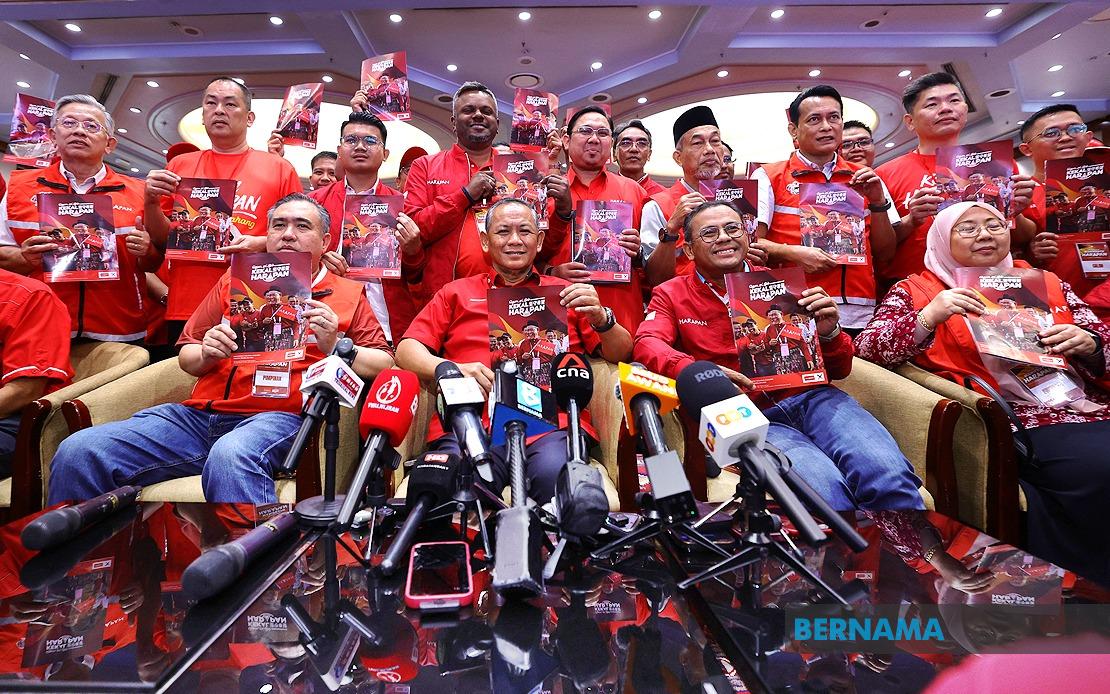
Prime Minister Datuk Seri Anwar Ibrahim will intensify his political presence in Negeri Sembilan by joining the campaign trail this Wednesday, according to Pakatan Harapan leadership coordinating the 16th state election bid. The announcement came after Anwar's notable absence from the coalition's manifesto launch event held on Sunday, raising initial questions about his participation levels in the crucial peninsular state contest.
PH Negeri Sembilan chairman Datuk Seri Aminuddin Harun confirmed that Anwar has committed to participating in a series of major campaign gatherings scheduled for Sikamat and Paroi, two strategically important constituencies where the coalition is pushing hard to consolidate support. Aminuddin, who is himself contesting the Linggi seat, sought to downplay the Prime Minister's absence from Sunday's manifesto rollout, framing it as a scheduling matter rather than a reflection of commitment to the state-level contest.
The Negeri Sembilan state election represents a significant political battleground for PH as the coalition seeks to maintain or expand its influence in state legislatures across Malaysia. Coming at a time when federal politics remains fluid and coalition dynamics continue to evolve, the state contest offers an important barometer of public sentiment towards the government's performance and policy direction. For PH, maintaining momentum in key peninsular states remains strategically vital to reinforcing its political standing ahead of any future general election.
The party's manifesto unveiled Sunday encompasses a broad policy platform addressing multiple dimensions of state governance and development. The document emphasizes administrative efficiency and institutional stability as foundational elements, reflecting broader concerns about governance quality that resonate across Malaysian electorates. Beyond administration, the manifesto commits to improving living standards for ordinary Negeri Sembilan residents through targeted welfare and economic initiatives designed to demonstrate PH's responsiveness to grassroots concerns.
Economic competitiveness features prominently in the coalition's stated priorities, suggesting recognition that Negeri Sembilan voters expect substantive plans for job creation and commercial dynamism. The manifesto framework further encompasses education enhancement, housing accessibility—perennial concerns for middle and working-class families—alongside specific attention to youth advancement and women's empowerment. These components suggest PH is attempting to construct a comprehensive platform rather than relying on narrow sectarian appeals.
Infrastructure development receives explicit attention in the manifesto, indicating the coalition's acknowledgment that physical connectivity and modern amenities significantly influence voter perceptions of government effectiveness. Tourism, customary heritage preservation, and agricultural modernization reflect attempts to address both economic development aspirations and cultural preservation sensibilities within the Negeri Sembilan electorate. The emphasis on social cohesion and interfaith harmony suggests PH remains attentive to communal dynamics that characterize Malaysian political competition.
The campaign mechanics reveal significant coordination among PH's multi-party structure, with DAP, PKR, Amanah, and other coalition members deploying senior leadership to the state. DAP secretary-general Anthony Loke, who is contesting the Chennah seat, brings the party's organizational machinery to bear on the campaign. Selangor Menteri Besar Datuk Seri Amirudin Shari, serving as PH's election director, anchors the technical campaign infrastructure, while PKR and Amanah representatives demonstrate the coalition's inclusive operational model.
The electoral timeline concentrates activity over a compressed period, with early voting on July 28 followed by general polling on August 1. This abbreviated schedule demands efficient campaign resource deployment and messaging discipline from all competing coalitions. For PH, coordinating multiple senior leaders' schedules and ensuring consistent messaging across different constituencies presents logistical and strategic challenges that Anwar's direct participation helps address.
Negeri Sembilan's electoral dynamics possess distinct characteristics that merit careful navigation. The state encompasses diverse geographic and demographic zones, from urban centers requiring infrastructure and service delivery focus to rural communities where traditional concerns about agriculture and land issues retain salience. Managing these varied constituency interests while maintaining coalition cohesion tests PH's governance maturity and campaign sophistication.
The Prime Minister's campaign involvement carries symbolic significance extending beyond mere vote mobilization. His presence signals federal government confidence in the state campaign, reassures coalition partners of center-level support, and provides opportunity for direct communication with voters regarding the national government's direction. Conversely, any perceptible limitation of his engagement could invite opposition messaging suggesting reduced federal commitment to the state.
For Malaysian political observers, state elections serve as important indicators of electoral trajectory and coalition stability between general elections. The Negeri Sembilan contest provides early data on voter sentiment towards PH's federal performance, coalition durability, and opposition strategies. Results may influence subsequent state-level contests and offer predictive signals regarding broader political realignment possibilities, making the campaign's final week crucial for all contesting forces.

