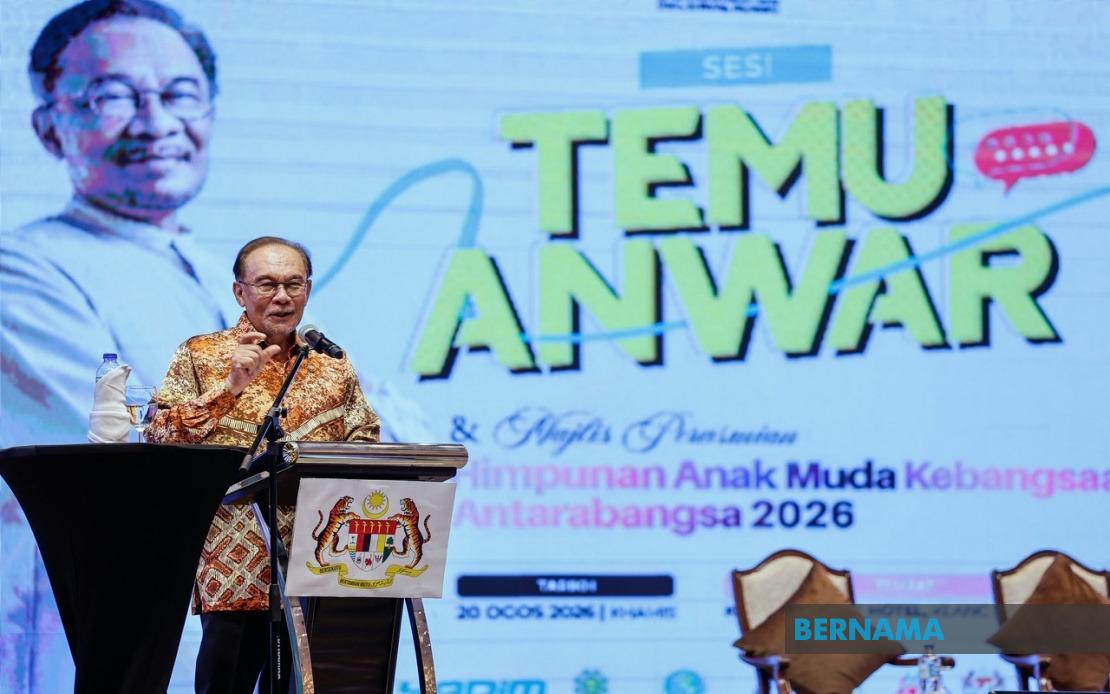
Prime Minister Datuk Seri Anwar Ibrahim has indicated that significant policy announcements are forthcoming over the coming months, with three key dates marked on the government's calendar. Speaking at a youth engagement session in Klang, the Prime Minister confirmed that declarations addressing national priorities will be unveiled on the eve of National Day on August 30, during Malaysia Day celebrations on September 16, and in early October when Parliament convenes for the Budget tabling. While he withheld specific details about the nature of these announcements, their staggered timing suggests the government is crafting a comprehensive policy rollout designed to address pressing concerns among younger voters and the broader electorate.
The Prime Minister's remarks came during an interactive session with students at the opening ceremony of Himpunan Anak Muda Antarabangsa (HAMKA) 2026, where he fielded a direct question about government initiatives to strengthen the economic position of workers engaged in the gig economy. His acknowledgement that more information would emerge by August 31 indicates the administration is finalising details on what could represent substantial shifts in how Malaysia supports its growing contingent of flexible workers. The symbolic timing—positioning announcements around National Day and Malaysia Day—underscores the government's intention to frame these policies as matters of national importance rather than narrow sectoral concerns.
The gig economy has emerged as an increasingly significant component of Malaysia's labour market, encompassing millions of ride-share drivers, delivery personnel, freelancers, and other workers operating outside traditional employment arrangements. Yet this expanding workforce often lacks the protections, benefits, and security mechanisms available to salaried employees, creating vulnerabilities that have sparked growing debate among policymakers and civil society organisations. The Prime Minister's direct engagement with youth concerns on this issue suggests the government recognises the political and social dimensions of economic insecurity among younger Malaysians, many of whom have entered the workforce through gig platforms rather than conventional corporate pathways.
To address these structural gaps, the government has already established the Malaysian Gig Economy Commission (SEGiM), positioning it as the institutional framework through which worker protections will be developed and implemented. The Commission's creation reflects recognition that ad-hoc measures and existing labour legislation designed for an earlier economic era prove insufficient for contemporary work arrangements. Accompanying this institutional development, the government is preparing new legislative proposals targeting small businesses, suggesting a coordinated approach that seeks to balance protections for workers with support for the entrepreneurs and platforms that employ them. This dual focus indicates an administration attempting to navigate competing interests rather than pursuing a purely worker-centric or business-friendly agenda.
Beyond immediate gig economy protections, the Prime Minister outlined broader government intentions to expand financing opportunities for young Malaysians pursuing entrepreneurial ventures. He referenced the National Entrepreneurial Group Economic Fund (TEKUN) as a vehicle through which graduates and other aspiring business owners can access capital, acknowledging persistent barriers that prevent many capable individuals from transitioning into enterprise. However, existing eligibility requirements demanding prior business experience represent a chicken-and-egg problem for first-time entrepreneurs without track records, a structural constraint that the Prime Minister indicated warrants reconsideration.
Anwar's commitment to review these requirements reflects pragmatic acknowledgement that rigid criteria designed in different economic circumstances may now exclude promising entrepreneurs during precisely the period when they most need institutional support. By signalling openness to policy adjustment in this domain, the government potentially removes a friction point that has historically channelled youthful entrepreneurial energy toward informal or unregulated pathways. The timing of this review, coinciding with the Budget announcement, suggests that financial implications and budgetary allocations may be necessary components of any widened access to TEKUN financing. For Malaysian youths and young graduates considering business formation, this commitment could meaningfully alter the landscape of available capital and support mechanisms.
The sequencing of announcements across August, September, and October creates a narrative arc that allows the government to maintain momentum on youth-focused policy development while avoiding announcement fatigue. By distributing significant declarations across ceremonially important dates, the administration maximises media attention and public engagement while using major national observances as platforms for articulating policy priorities. This approach also provides the government breathing room to consult with stakeholders, refine proposals, and prepare implementation frameworks without compressing the announcement cycle so tightly that details suffer or unintended consequences go unaddressed.
The Prime Minister's willingness to openly acknowledge that existing assistance packages fall short of addressing youth economic anxieties represents candid recognition of legitimate grievances within the younger demographic. Rather than dismissing concerns or offering platitudes, Anwar positioned the government as genuinely listening and exploring expanded mechanisms. This rhetorical posture, combined with concrete institutional developments like SEGiM and pending legislative initiatives, suggests the administration is treating youth economic security as a sustained policy priority rather than a temporary political concern.
For Malaysia's broader economic narrative, these announcements carry significance extending beyond youth demographics. The gig economy and entrepreneurship constitute frontiers where Malaysia's competitive positioning will increasingly be determined in coming years. As global competition intensifies for talent and investment, countries that successfully cultivate supportive ecosystems for flexible workers and new business formation gain advantages in attracting both homegrown enterprise and external capital. By signalling commitment to strengthening protections and expanding access to financing, the government positions itself as acknowledging these economic realities and responding with policy frameworks appropriate for contemporary labour and entrepreneurial dynamics.
Regional perspectives further contextualise these Malaysian developments. Neighbouring economies including Singapore and Thailand face similar gig economy challenges, creating potential for regional learning and coordination. Should Malaysia establish relatively progressive frameworks protecting gig workers while maintaining business-friendly conditions for platform operators, it could position itself as a regional model. Conversely, failure to address legitimate worker concerns while accommodating platform economies risks creating social tensions that other Southeast Asian nations successfully navigate, potentially damaging Malaysia's competitive attractiveness as a destination for digital economy investment and talent.

