%22%2F%3E%3C%2Fpattern%3E%3C%2Fdefs%3E%3Crect%20width%3D%22100%25%22%20height%3D%22100%25%22%20fill%3D%22url(%23ph4g4exg)%22%2F%3E%3Crect%20width%3D%22100%25%22%20height%3D%22100%25%22%20fill%3D%22url(%23ph4g4exp)%22%2F%3E%3Ctext%20x%3D%2250%25%22%20y%3D%2250%25%22%20text-anchor%3D%22middle%22%20dominant-baseline%3D%22central%22%20fill%3D%22rgba(255%2C255%2C255%2C0.95)%22%20font-family%3D%22Georgia%2C%20'Times%20New%20Roman'%2C%20serif%22%20font-weight%3D%22700%22%20font-size%3D%22272%22%20letter-spacing%3D%22-0.02em%22%3EAnwar%3C%2Ftext%3E%3C%2Fsvg%3E)
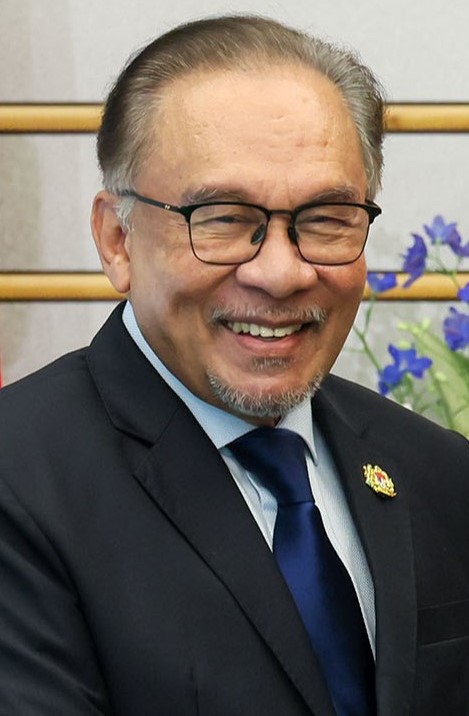
Prime Minister Datuk Seri Anwar Ibrahim has articulated a principled position on Malaysia's electoral framework, emphasizing that election contests must be confined to political parties while maintaining the constitutional integrity of the monarchy. His intervention reflects growing sensitivity around how electoral competition intersects with Malaysia's constitutional arrangements, where the king occupies a non-partisan head-of-state position.
Anwar's remarks underscore a fundamental distinction in Westminster-influenced democracies like Malaysia: the separation between executive partisan politics and the ceremonial, apolitical role of the sovereign. By drawing this line explicitly, the prime minister appears to be addressing concerns that electoral disputes or political tensions could inadvertently drag the institution of the monarchy into the fray, potentially compromising public perceptions of royal neutrality. This is particularly significant in the Malaysian context, where the monarchy commands deep public reverence and serves as a crucial symbol of national unity across diverse communities.
The timing of Anwar's statement reflects Malaysia's ongoing reflection on democratic norms following the politically turbulent years from 2018 onwards. During that period, competing claims to power and institutional conflicts tested the robustness of Malaysia's checks and balances. The prime minister's current emphasis on maintaining boundaries between parties and royalty suggests a deliberate effort to restore confidence in institutional separation of powers, a cornerstone of stable democratic governance.
From a constitutional perspective, Anwar's position aligns with established protocol. The Yang di-Pertuan Agong, while vested with significant reserve powers under the Federal Constitution, is expected to exercise these powers on advice from the prime minister and cabinet in most circumstances. Keeping the monarchy outside partisan electoral competition preserves the head of state's ability to fulfil mediatory and ceremonial functions impartially. A monarchy perceived as favoring particular political outcomes risks its credibility as a stabilizing force during political crises or constitutional disputes.
For Malaysian voters and observers, this distinction carries practical implications. When elections become contested terrain involving royal institutions, it can create confusion about where constitutional authority truly lies and undermine public confidence in the legitimacy of electoral outcomes. By asserting that elections are competitions between political entities rather than involving the crown, Anwar reinforces the principle that the people's choice through the ballot should determine government formation, not royal preference or involvement.
The statement also carries significance for regional democratic practice. As Southeast Asia navigates questions about institutional checks on executive power, Malaysia's emphasis on maintaining royal neutrality in electoral matters offers a model where the head of state operates above partisan fray. This contrasts with democracies where heads of state are directly elected and inevitably carry partisan baggage, though Malaysia's system also differs from systems where monarchies have been drawn into political disputes, as has occurred in some neighbouring countries.
Anwar's intervention may also be strategic positioning ahead of Malaysia's electoral cycle. By pre-emptively framing elections as strictly inter-party competitions, he establishes expectations that competitors should direct their campaign energies toward voters and rival parties rather than attempting to leverage crown institutions or royal connections for political advantage. This could help prevent future scenarios where losing parties challenge election results by questioning royal motives or institutional impartiality.
The broader context includes Malaysia's ongoing efforts to strengthen democratic institutions following the 2020 Sheraton Move, which saw opportunistic party-switching precipitate a change in government without fresh elections. That episode raised questions about the soundness of Malaysia's political mechanisms and the proper role of various institutional actors. Anwar's recent emphasis on clear electoral boundaries reflects lessons learned about the importance of robust democratic conventions and preventing ambiguity about who decides government formation.
Maintaining this principle becomes increasingly important as Malaysian politics adapts to multi-party coalitions and fragmented vote-sharing arrangements. When election results are ambiguous or require coalition negotiations, the temptation for losing parties to appeal to royal intervention or institutional leverage increases. By establishing clearly that elections are party-to-party competitions, Anwar seeks to constrain such temptations and ensure that post-election negotiations occur within the political realm rather than involving appeals to non-partisan institutions.
The distinction Anwar articulates also protects the monarchy itself. Royal institutions cannot effectively serve as arbiters or stabilizing forces if they become entangled in ordinary electoral disputes. The constitutional role of the Yang di-Pertuan Agong depends on maintaining sufficient distance from everyday political competition, reserving royal authority for moments of genuine constitutional necessity. Anwar's framing helps preserve this critical function by clarifying that the monarchy's role is complementary to, not intertwined with, electoral competition.
For international observers monitoring Malaysian governance, the prime minister's statement demonstrates commitment to maintaining democratic conventions even when institutional actors wield considerable power. It reflects confidence in Malaysia's electoral machinery and in the legitimacy that comes from competitive party politics. This positioning potentially strengthens Malaysia's standing among democracies concerned with institutional integrity and peaceful power transitions.
Moving forward, Anwar's principle provides a valuable touchstone for political actors. During contentious campaigns or disputed results, stakeholders can reference his clear articulation that elections are political party competitions, not matters for royal involvement. This creates a shared vocabulary and set of expectations that can help Malaysia navigate future electoral challenges while preserving both democratic legitimacy and institutional reverence for the monarchy.