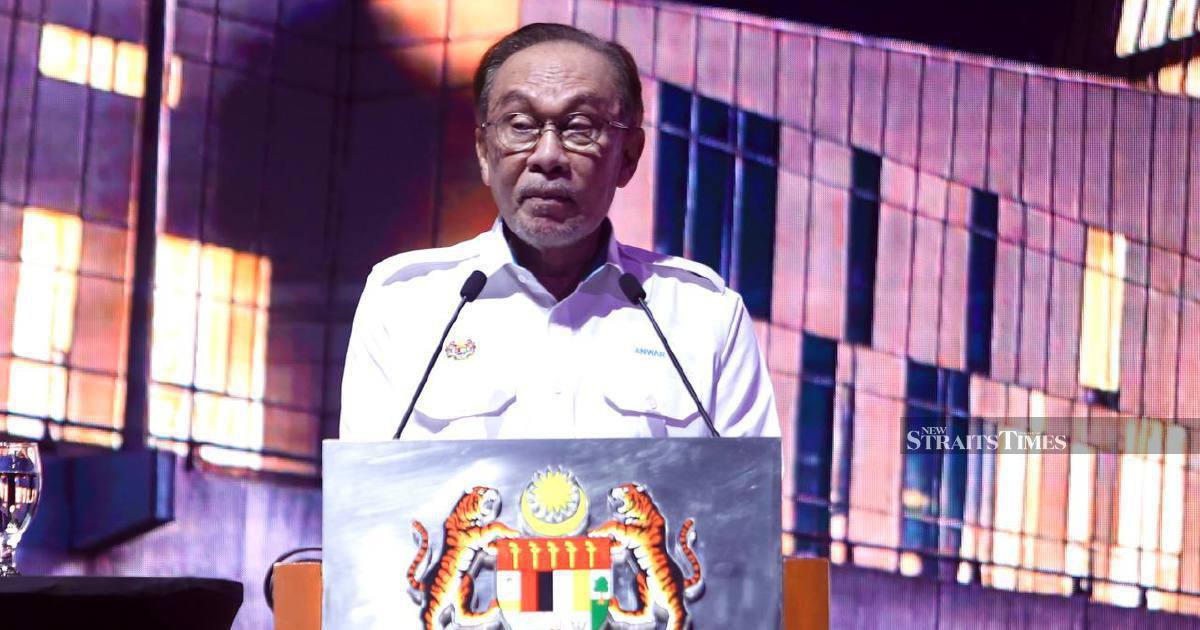
Prime Minister Datuk Seri Anwar Ibrahim has made a significant appeal for Malaysian filmmakers to operate within a framework of greater artistic latitude, though one carefully calibrated to preserve the nation's foundational cultural and moral principles. Speaking in Petaling Jaya, Anwar underscored that the creative industries, particularly cinema, require sufficient breathing space to flourish and compete on regional and global stages, yet this expansion must not come at the expense of the values that define Malaysian identity.
The Prime Minister's remarks reflect an emerging recognition within government circles that Malaysia's film sector has long struggled under restrictive regulatory environments that some industry practitioners contend have hindered its development. By contrast, regional competitors such as Thailand, Indonesia, and the Philippines have cultivated more permissive creative ecosystems, enabling their film industries to achieve greater commercial success and international recognition. Anwar's intervention suggests a recalibration of how Kuala Lumpur conceptualises the relationship between state oversight and artistic expression.
For Malaysian filmmakers, these comments represent a potential watershed moment. The local film industry has historically faced challenges securing financing, distribution, and exhibition opportunities, partly attributable to concerns that regulatory hurdles and content restrictions make production riskier and less commercially viable than alternative creative ventures. Younger directors and screenwriters have increasingly looked abroad for opportunities, contributing to a gradual brain drain in creative talent. Anwar's call for greater openness addresses this systemic disadvantage, suggesting the administration recognises that constrained creative environments ultimately damage economic competitiveness.
The Prime Minister's framing—emphasising both freedom and responsibility—reflects the delicate political calculus required when discussing cultural policy in Malaysia. Any significant loosening of content restrictions inevitably triggers concerns from religious and conservative constituencies who view stringent standards as necessary safeguards. By explicitly anchoring expanded creative liberty to Malaysian values, culture, and morality, Anwar appears to be positioning the proposal as an evolution rather than a departure from established norms. This rhetorical approach seeks to preempt potential backlash while signalling genuine intent to modify the operating environment for creators.
The practical implications of Anwar's comments remain to be seen, particularly regarding the Malaysian Film Censorship Board and other regulatory bodies that determine which films reach audiences. Whether his call translates into formal policy changes—such as revised censorship guidelines, streamlined approval processes, or clearer definitions of permissible content—will ultimately determine the initiative's effectiveness. Without concrete institutional reforms, the Prime Minister's statements risk remaining aspirational rather than transformative.
Southeast Asia's competitive landscape amplifies the urgency of this conversation. Thailand's film industry has produced internationally acclaimed works and generated substantial export revenues, whilst Indonesian cinema has similarly gained prominence through productions that balance commercial appeal with creative ambition. Malaysia's relative underperformance in these metrics suggests that regulatory constraints do impose measurable costs. Expanding creative space could enhance the nation's cultural diplomacy and soft power, attributes increasingly central to regional influence and economic diversification strategies.
Industry observers will scrutinise the government's follow-up actions closely. The Malaysian film sector has heard sympathetic rhetoric before; what distinguishes genuine policy shifts is their materialisation in revised regulations, reformed censorship procedures, and consistent application of new standards. The transition period—if Anwar's call leads to institutional changes—will likely generate controversy as conservatives and progressives debate precisely where boundaries should be redrawn.
The economic dimension of this discussion extends beyond cultural considerations. Malaysia's creative industries contribute meaningfully to the economy and employ thousands of professionals. A more attractive regulatory environment could stimulate investment, encourage feature production, and strengthen the ecosystem supporting downstream industries such as post-production facilities, equipment rental, and location services. Regional film hubs like Bangkok and Jakarta have demonstrated how supportive policies generate ripple effects throughout entire urban economies.
Anwar's intervention also acknowledges demographic realities within Malaysia. Younger audiences increasingly consume content through streaming platforms and social media, accessing international productions without gatekeeping. Maintaining relevance requires filmmakers who can speak authentically to contemporary Malaysian experiences whilst engaging with global creative trends. Overly restrictive content policies risk rendering local cinema irrelevant to domestic audiences rather than protecting them.
The challenge ahead involves operationalising Anwar's vision without triggering the cultural conflicts that often derail such initiatives. This demands sophisticated engagement with multiple stakeholders—filmmakers seeking expanded creative scope, religious and community leaders concerned about cultural preservation, and policymakers tasked with protecting public interest. Success requires establishing clearer, more transparent guidelines that provide creators with tangible certainty about permissible content rather than maintaining opacity that breeds caution and self-censorship.
Moving forward, the government's credibility depends on demonstrating that calls for creative freedom are accompanied by institutional capacity and political will to implement meaningful change. For Malaysia's film industry, these remarks signal potential opportunity, though translating possibility into reality remains the crucial test of whether Anwar's vision becomes merely another unfulfilled aspiration or a genuine turning point in how the nation approaches artistic expression.

