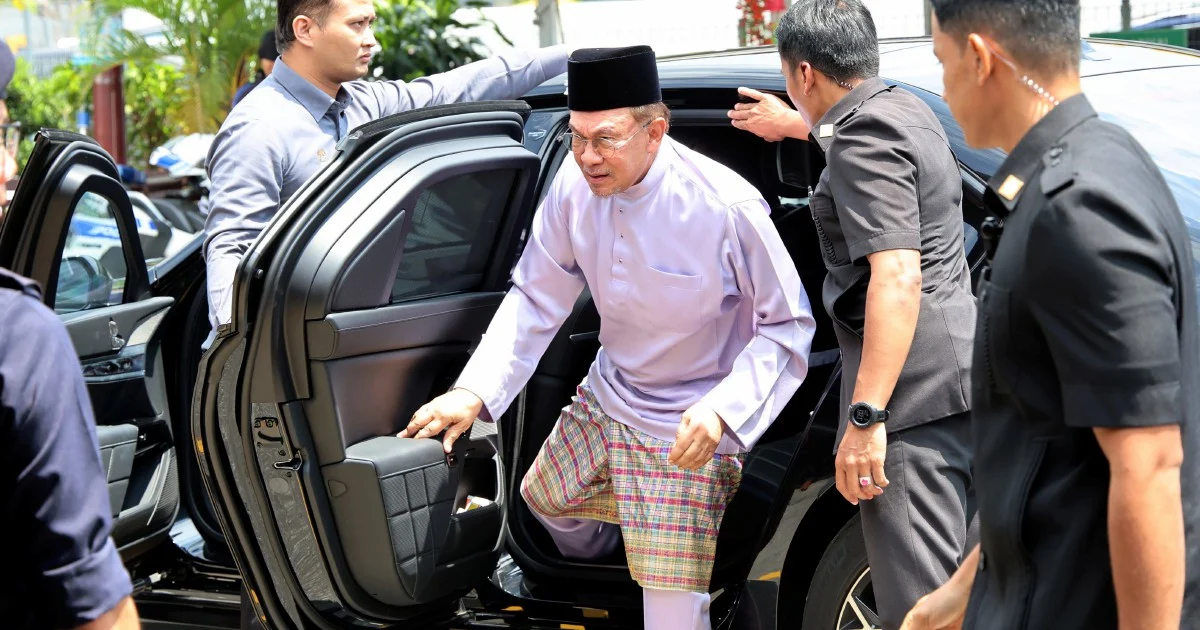
Prime Minister Datuk Seri Anwar Ibrahim has issued a direct appeal to political parties competing in the Johor state election, emphasising the importance of conducting campaigns rooted in respect, integrity and humility. Speaking in Dengkil, the premier underscored that all contenders should refrain from displays of arrogance and instead focus on advancing values that reflect the true spirit of democratic engagement.
The statement reflects growing concerns about campaign conduct as major parties gear up for the Johor election, a contest that carries significant weight in the country's broader political landscape. Johor remains a crucial battleground, with its electoral outcomes potentially shaping parliamentary dynamics and regional power structures. Anwar's reminder comes at a time when political temperatures tend to rise during campaign seasons, with the risk of inflammatory rhetoric and personal attacks escalating tensions between competing camps.
For Malaysian politics, which has experienced periods of intense polarisation in recent years, calls for measured and respectful campaign behaviour serve as important anchors for democratic discourse. The Premier's intervention suggests the federal government views civility during elections as essential for maintaining social cohesion and protecting the integrity of the democratic process. By explicitly warning against arrogance, Anwar appears to be signalling that electoral competition, whilst legitimate and necessary, must remain bounded by shared ethical standards.
The emphasis on upholding good values carries particular resonance in the Malaysian context, where voters have increasingly demanded that politicians conduct themselves with a degree of decorum befitting public office. Successive surveys have shown that Malaysians prize integrity, consistency and respectful debate as critical qualities in their leaders. When campaigns devolve into personal mudslinging or dismissive behaviour toward opponents, public trust in the political system itself tends to erode, creating disillusionment that can linger well beyond election day.
Anwar's appeal also reflects a pragmatic recognition that campaign excesses can generate unintended consequences. When politicians employ aggressive tactics or belittle their opponents, they risk alienating moderate voters who might otherwise support their candidates. In closely contested elections like those expected in Johor, the swing voters in the centre remain crucial to determining outcomes. By advocating for respect, the Prime Minister may be subtly encouraging parties to compete on substantive policy grounds rather than through character assassinations or inflammatory rhetoric that could backfire.
The Johor election carries heightened significance given the state's historical importance in national politics and economics. The state generates substantial federal revenue through its port operations and manufacturing sectors, making its governance consequential for national development. An election campaign marred by rancour and disrespect risks distracting from policy discussions about how Johor's resources should be deployed, how its infrastructure should be developed, and how its diverse population can be better served. Anwar's emphasis on dignity essentially redirects the focus toward governance substance.
From a regional perspective, Malaysia's election practices are watched closely by other Southeast Asian democracies. Neighbouring countries grappling with their own political transitions and democratic consolidation often reference Malaysian precedents. Campaigns characterised by restraint and respect help project Malaysia as a maturing democracy where competitive politics does not translate into social fragmentation. Conversely, campaigns marked by arrogance and disregard for opponents risk reinforcing international perceptions that Malaysian democracy remains volatile.
The Premier's exhortation suggests awareness that political parties themselves have significant responsibility for shaping campaign culture. Party leaders set the tone through their own conduct and messaging strategies. When senior figures model respectful engagement, their lower-level campaigners and supporters tend to follow suit. Conversely, when party elites engage in public contempt or dismissive rhetoric toward rivals, they implicitly license their rank-and-file to adopt similarly aggressive stances. By framing restraint and dignity as values to be championed, Anwar is essentially appealing to party leaders to exercise moral leadership within their own organisations.
The timing of this appeal matters as well. Elections demand momentum and energy from campaigning parties, and there exists a fine line between passionate advocacy and arrogant contempt. Candidates and campaigners must generate enthusiasm among their supporters whilst simultaneously respecting the intelligence and dignity of voters who may not yet have decided how they will cast their ballots. Anwar's message essentially reminds all players that generating political energy need not require sacrificing courtesy or dignity.
Moving forward, the challenge will be whether all competing parties internalise and operationalise these principles throughout the election cycle. Campaign discipline remains notoriously difficult to maintain, particularly when parties sense momentum or when their opponents engage in provocative conduct. However, Anwar's public statement establishes a benchmark against which subsequent campaign behaviour can be measured and evaluated by voters, media observers and civil society groups. This creates accountability structures that may encourage greater moderation across the board.
The broader implication extends beyond any single election. Malaysian democracy benefits when all stakeholders—politicians, media, civil society and voters themselves—maintain commitment to respectful engagement even amid vigorous competition. Anwar's reminder, articulated from the office of Prime Minister, carries authority that can help reinforce these shared democratic norms at a moment when they merit reinforcement.

