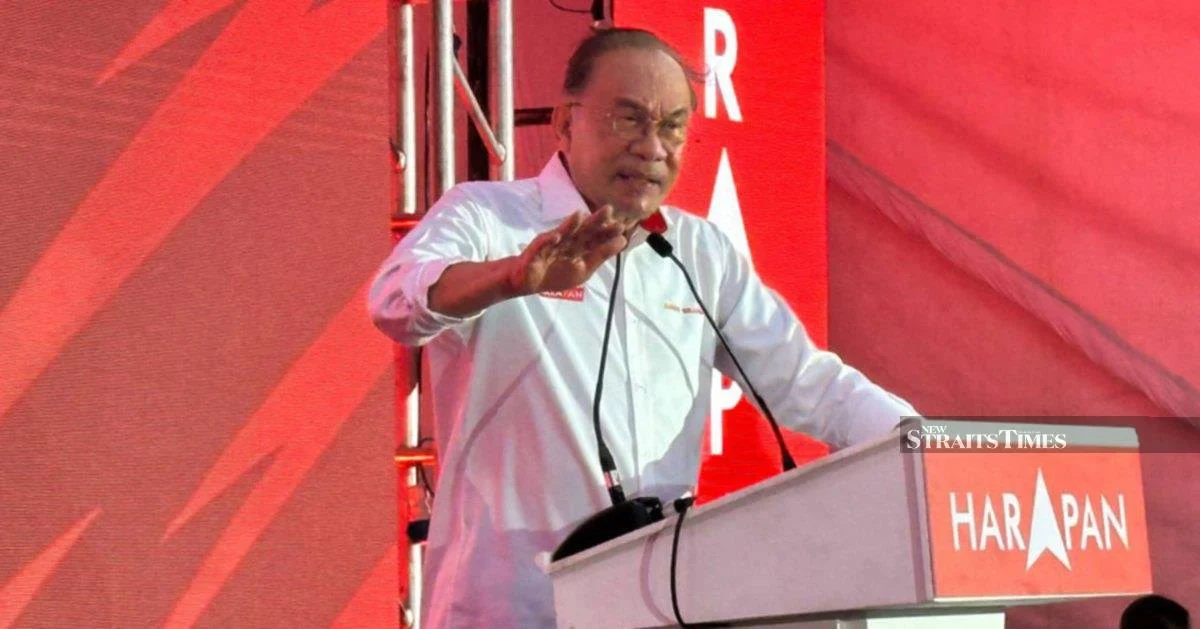
Pakatan Harapan chairman Datuk Seri Anwar Ibrahim has issued a direct appeal to the coalition's organizational structure and senior figures in Johor, emphasising the importance of maintaining internal discipline and avoiding unnecessary conflict with component parties of the federal government administration. Speaking to party officials gathered in Tangkak, Anwar underscored the need for a focused approach that prioritises productive engagement over public disputes that could undermine the coalition's broader political positioning.
The call for restraint reflects growing concerns within Pakatan Harapan's leadership about the nature and frequency of public disagreements between coalition components and government partners. In a political landscape where alliances remain fluid and electoral calculations are constantly recalibrated, such conflicts risk damaging the coherence of the coalition whilst simultaneously providing ammunition to opposition forces seeking to exploit divisions. Anwar's intervention suggests that internal party machinery, particularly at state level, may have been engaging in tit-for-tat exchanges that higher leadership views as counterproductive to broader strategic objectives.
Johor represents a particularly sensitive terrain for such dynamics. The state has long been a crucial battleground in Malaysian electoral contests, with its substantial parliamentary representation and historical significance as a political stronghold. The local Pakatan Harapan apparatus in Johor comprises multiple parties with distinct ideological orientations and organizational cultures, making coordination and message discipline inherently challenging. Public bickering between these components and federal government partners could fracture the coalition's appeal to Johor voters who increasingly expect pragmatic governance rather than partisan theatre.
Anwar's emphasis on hard work alongside diplomatic restraint carries a specific tactical message. The instruction to maintain focus on substantive party activities—groundwork, community engagement, policy development, organizational strengthening—positions Pakatan Harapan as the serious alternative to what it characterises as a government coalition lacking cohesion. By contrast, engaging in public disputes with federal partners risks presenting the coalition as equally fractious and preoccupied with factional politics rather than citizen interests.
The broader context of federal coalition governance has become increasingly unstable in recent years. The Pakatan Harapan-led government formed in 2018 collapsed within two years, and subsequent administrations have relied on shifting parliamentary majorities and informal arrangements with various political actors. This instability creates incentives for different political actors to differentiate themselves publicly, but it also generates real friction between parties nominally committed to the same government. Anwar's instruction to his Johor teams suggests he views such public expressions of frustration as luxury the coalition cannot afford during opposition positioning.
For Johor specifically, the instruction carries implications for how local party operatives engage with Umno, Bersatu, and other parties holding federal ministerial positions or government-linked responsibilities. Rather than highlighting policy disagreements or competing for credit in state-level initiatives, Pakatan machinery is being directed toward constructive engagement that maintains the facade of government stability whilst simultaneously building alternative credibility. This is a delicate balance, requiring sophisticated political messaging and organizational discipline.
Anwar's intervention also reflects the particular challenges of managing a multi-party coalition where component parties—primarily Democratic Action Party, Amanah, and PKR—have distinct constituencies, organisational structures, and leadership personalities. State-level coordinators often face pressure from their own party cadres to articulate distinctive positions and protect party interests, making instructions from federal headquarters difficult to enforce. By appealing directly to Johor leadership and emphasising work discipline, Anwar is attempting to assert clear direction from the coalition's central command.
The timing of this call for internal discipline may also signal preparedness for electoral competition. Whether through state elections or parliamentary dissolution, Johor will be a critical arena for demonstrating that Pakatan Harapan represents a more stable, focused, and voter-oriented alternative to the current federal government. Internal bickering undermines that narrative, whilst demonstrated unity and focused community engagement reinforces it. Anwar's message suggests the coalition's national leadership believes electoral opportunity may emerge relatively soon.
From a Southeast Asian perspective, Malaysia's coalition politics continue to struggle with the tension between maintaining alliance coherence and allowing component parties sufficient autonomy to maintain their distinct identities and support bases. Anwar's intervention represents a leadership response to this structural challenge, attempting to subordinate short-term factional impulses to longer-term coalition positioning. Whether Johor's party machinery can sustain such discipline over extended periods remains an open question, particularly given the personal and organizational stakes involved in state-level politics.
The broader implication extends to how opposition coalitions across Southeast Asia manage internal diversity whilst projecting voter appeal. Pakatan Harapan's capacity to maintain public unity despite genuine ideological and organizational differences will significantly influence its electoral prospects. Anwar's instruction to focus on hard work rather than public disputation represents an attempt to shift coalition culture toward institutional discipline and strategic patience, qualities that distinguishing effective opposition movements from fractious collections of competing interests.