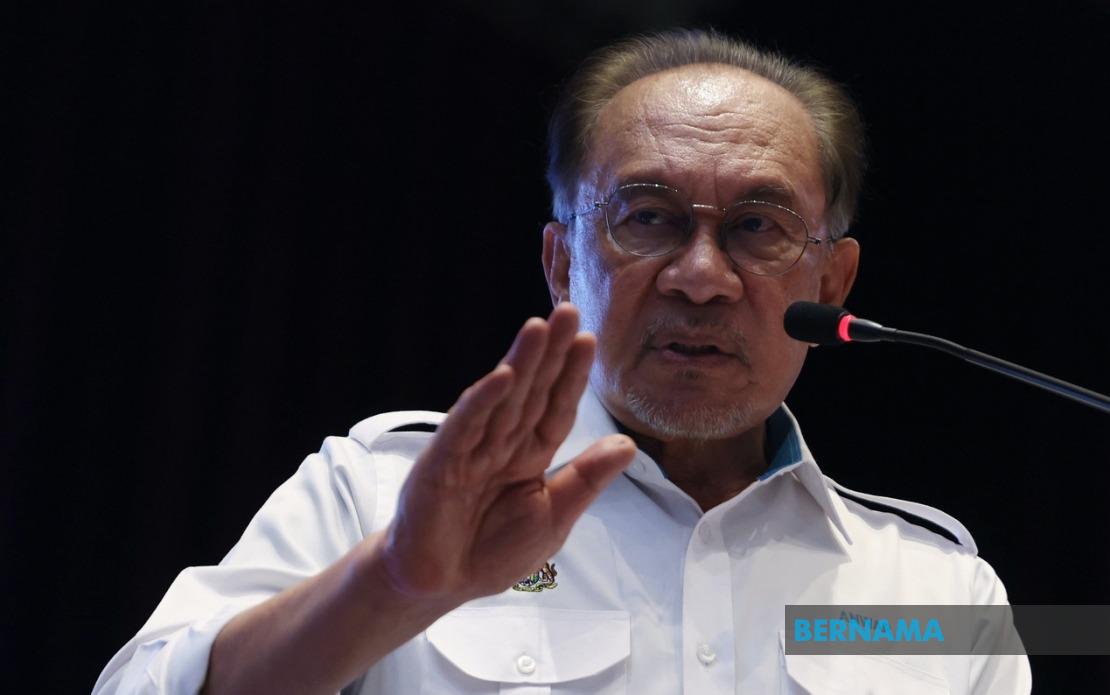
Prime Minister Datuk Seri Anwar Ibrahim has issued a forceful reminder to Malaysia's political establishment that the nation's revered royal institutions must remain insulated from partisan conflicts, particularly during election campaigns. Speaking to reporters in Alor Gajah on June 24, Anwar struck a cautionary tone as tensions threatened to escalate following remarks at a Pakatan Harapan candidate announcement event in Johor, which observers interpreted as directed toward the monarchy.
The Prime Minister's intervention signals growing concern within government circles about the boundaries between legitimate political competition and potential breaches of respect toward constitutional institutions that command deep reverence across Malaysian society. His statement carries particular weight given the sensitive nature of any discourse touching the institution of the Malay Rulers, which occupies a constitutionally protected position in Malaysia's political architecture.
Anwar articulated a clear philosophical distinction between acceptable electoral debate and what he views as destructive politicisation of institutions designed to remain above partisan fray. He framed his comments in language suggesting resignation about the rough-and-tumble nature of election campaigns, yet held firm that certain boundaries must remain respected. His insistence that "those involved engage in politics" reflects acceptance of vigorous political competition, but his equally firm warning against dragging "the sacred institution of the Malay Rulers into it" establishes a clear red line.
The immediate catalyst for Anwar's remarks appears linked to statements from Amanah president Datuk Seri Mohamad Sabu during Pakatan Harapan's campaign activities. Without detailing the specific content of Mohamad Sabu's remarks, the Prime Minister's intervention suggests they were sufficiently controversial to warrant public clarification from the country's highest elected official. This dynamic underscores how sensitive Malaysia's political ecosystem remains regarding comments that could be construed as challenging or questioning royal prerogatives.
For Malaysian readers, this statement reflects ongoing tensions within the ruling coalition regarding rhetorical boundaries during electoral periods. The presence of Melaka Chief Minister Datuk Seri Ab Rauf Yusoh and Deputy Higher Education Minister Adam Adli Abd Halim at the CREaTE event indicates coordination across government and state levels on messaging discipline. The involvement of these officials at a civil service engagement event, coupled with the Prime Minister's public remarks, suggests an orchestrated effort to reinforce institutional norms during an election cycle.
Understanding the context requires appreciating how Malaysia's constitutional settlement treats the institution of the Malay Rulers differently from elected political institutions. While prime ministers and cabinet ministers face legitimate public scrutiny and criticism as part of democratic processes, the monarchy operates within a different framework. This distinction has historically been respected across the political spectrum, though the boundaries occasionally become contested during particularly charged electoral moments.
The broader implications extend beyond immediate campaign concerns. Anwar's intervention serves as a stabilising force in Malaysian politics by reaffirming that despite fierce competition between parties, fundamental respect for constitutional institutions transcends electoral calculation. This principle gains importance in multiethnic Malaysia, where the constitutional position of the Malay Rulers intertwines with social contract elements that undergird the nation's stability.
Regional observers frequently note that Southeast Asia's democracies navigate unique challenges balancing electoral freedom with institutional protection. Malaysia's approach, as reiterated by Anwar, reflects a mature recognition that unbridled criticism of certain institutions could destabilise democratic systems themselves. The Prime Minister's framing thus protects not merely the monarchy but the entire constitutional framework of which it forms a cornerstone.
The timing of this statement also carries significance for assessing political momentum within the ruling coalition. That Anwar felt compelled to issue this reminder publicly suggests discomfort within PKR and its allies regarding how coalition partners have conducted themselves during campaign season. The intervention may reflect efforts to contain potential damage from rhetorical overreach while also signalling to other coalition components the importance of maintaining disciplinary standards.
For civil servants attending the CREaTE event alongside the Prime Minister, his message communicated that government expects consistent messaging regarding institutional respect across all levels of administration. This administrative emphasis complements his political messaging, creating coherence between elected leadership and bureaucratic structures regarding how state institutions should be discussed.
Moving forward, Anwar's statement establishes a marker against which subsequent political conduct will be measured. Should other parties or leaders continue making statements perceived as questioning or criticising royal institutions, they risk appearing to defy the Prime Minister's clear guidance. This effectively raises the reputational cost of crossing the boundary he has articulated, potentially constraining inflammatory rhetoric regardless of underlying political disagreements.
The statement ultimately reflects Malaysia's mature democratic tradition of accommodating vigorous political competition within agreed constitutional parameters. Anwar's reminder serves less as a novel principle than as necessary periodic reinforcement that Malaysia's stability depends upon all participants respecting institutional foundations that transcend particular governments or electoral cycles. In an election period characterised by intense competition and high stakes, such institutional safeguards prove particularly valuable.

