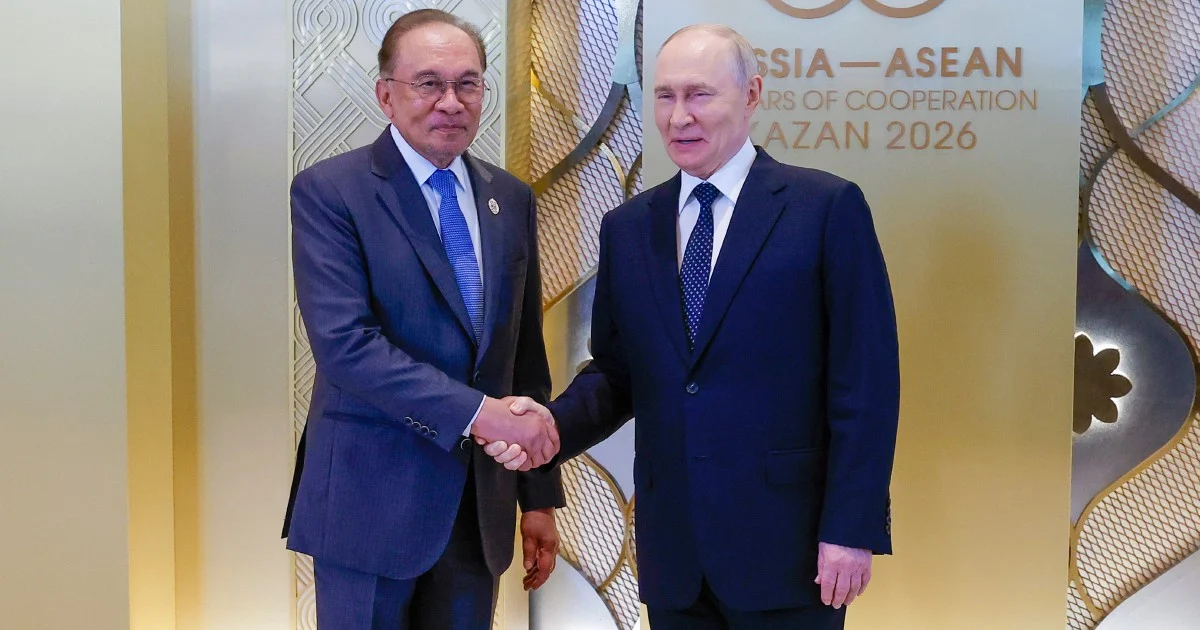
Prime Minister Datuk Seri Anwar Ibrahim's recent official visits to Russia and Turkmenistan represent a strategic reassessment of Malaysia's energy portfolio, with both nations offering alternative suppliers at a critical juncture for Southeast Asian energy security. BRICS International Malaysia has highlighted the diplomatic visits as instrumental in safeguarding the country's medium and long-term hydrocarbon requirements, reflecting Kuala Lumpur's determination to reduce dependency on traditional suppliers in the Middle East and South China Sea.
The engagement with Russia marks a significant diplomatic maneuver at a time when Western nations have imposed sanctions following geopolitical tensions, yet Malaysia maintains its pragmatic foreign policy orientation. Moscow has positioned itself as a reliable energy exporter capable of supplying crude oil and liquefied natural gas to Asian markets, a proposition that carries both commercial appeal and strategic implications for regional stability. The visit underscores how Malaysian policymakers are balancing relationships across competing spheres of influence, neither fully aligning with Western positions nor isolating themselves from major global powers.
Turkmenistan's inclusion in the prime ministerial itinerary extends Malaysia's reach into Central Asia's substantial hydrocarbon reserves, a region historically less accessible to Southeast Asian economies. The energy-rich nation bordering the Caspian Sea commands vast natural gas deposits that remain largely underexploited for Asian markets, presenting untapped commercial opportunities. By establishing stronger governmental and commercial channels with Ashgabat, Malaysia gains leverage in negotiations and expands its supplier network into geographies that complement existing partnerships.
For Malaysia, energy security transcends mere fuel availability; it fundamentally determines industrial competitiveness and economic growth trajectories. The nation's petrochemical industries, power generation sector, and manufacturing base all depend on stable, reasonably priced hydrocarbon inputs. Diversification across multiple supplier nations and geographic regions mitigates risks associated with single-source dependency, geopolitical disruptions, or price volatility that can devastate downstream industries. Recent global energy crises have vindicated governments pursuing multi-sourced procurement strategies.
The visits also carry implications for Malaysia's standing within ASEAN and broader Indo-Pacific geopolitics. As regional powers reassess their energy independence, Malaysia's proactive engagement signals that Southeast Asian nations will not passively accept energy constraints imposed by external powers. The diplomatic messaging reinforces that ASEAN members reserve the right to cultivate relationships serving their national interests, irrespective of pressure from competing spheres.
Oil and gas cooperation frameworks established during such visits typically extend beyond immediate transactions. They encompass joint exploration ventures, technology transfer arrangements, capacity-building initiatives, and downstream investment opportunities. When Russia and Turkmenistan commit to sustained energy exports toward Malaysia, they implicitly invest in long-term commercial relationships that require infrastructure development, supply-chain integration, and institutional coordination. These deeper connections create mutual economic interests that can stabilize diplomatic relations across decades.
The timing of these visits reflects Malaysia's recognition that energy transitions remain incomplete globally. Despite accelerating renewable energy adoption and decarbonization commitments, hydrocarbon demand will persist for decades in developing economies and energy-intensive industries. Rather than pretending fossil fuels will vanish imminently, Malaysian policymakers have pragmatically secured supplies while maintaining climate commitments and renewable investments in parallel.
Turkmenistan's pivotal position between Russia, Iran, Afghanistan, and China adds geopolitical weight to the partnership. The nation controls access corridors to Central Asian resources and serves as a natural buffer zone in a strategically contested region. Malaysian engagement with Turkmenistan positions the country within emerging Eurasian trade and energy networks that may gain prominence as global commerce reshuffles in coming decades.
For BRICS International Malaysia and other observers, these visits demonstrate that Middle Power diplomacy remains effective when pursued with clarity and consistency. Malaysia, neither a superpower nor a marginal player, leverages its strategic location, economic significance, and diplomatic experience to negotiate favorable terms with multiple partners. This approach generates returns precisely because Malaysia offers something valuable—a substantial, growing market with purchasing power and stability that major exporters seek.
The commercial negotiations accompanying such visits typically remain confidential, yet the underlying principles are transparent. Malaysia seeks long-term supply agreements with favorable pricing mechanisms, investment guarantees protecting both parties, and contractual flexibility accommodating evolving market conditions. Suppliers from Russia and Turkmenistan similarly seek predictable demand, stable payment arrangements, and market access extending beyond individual transactions.
Within Southeast Asia, Malaysia's energy diplomacy carries spillover effects. Other ASEAN members monitoring these developments recognize that diversification remains achievable and beneficial, potentially encouraging similar initiatives across the region. Collective ASEAN engagement with Central Asian suppliers could eventually reshape regional energy architecture, though such coordination requires consensus building and aligned interests.
Looking forward, the foundation established through Prime Minister Anwar Ibrahim's visits requires follow-up through institutional mechanisms, commercial contracts, and technical collaborations. These diplomatic overtures must translate into tangible energy flows, investment flows, and economic benefits justifying the political capital expended. Malaysian ministries responsible for energy, commerce, and foreign affairs will determine whether these visits catalyze meaningful transformation or remain symbolic gestures.