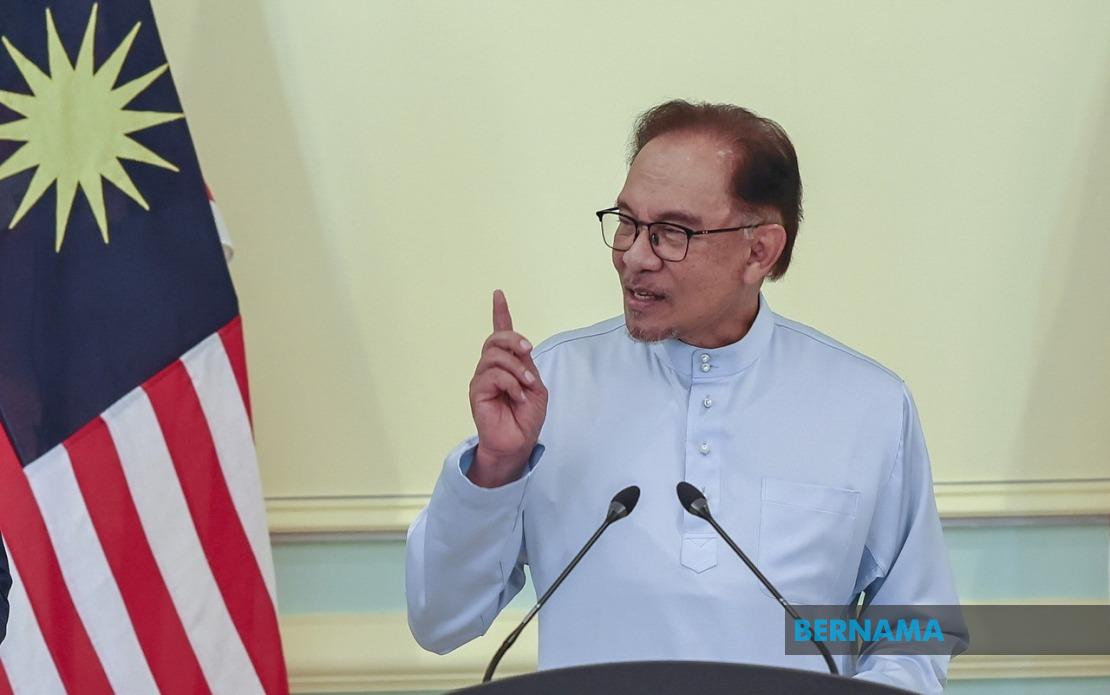
Prime Minister Datuk Seri Anwar Ibrahim's handling of the Gaza humanitarian catastrophe warrants recognition for its coherent integration of moral conviction, legally sound argumentation, sustained diplomatic engagement and tangible relief efforts, according to Dr Mizan Aslam, Honorary Professor at Universiti Pertahanan Nasional Malaysia. The scholar's assessment underscores how Malaysia's position transcends routine political condemnation, instead demonstrating a comprehensive strategy anchored in international legal frameworks and humanitarian obligations.
The Gaza crisis has evolved far beyond a bilateral Israeli-Palestinian dispute, Dr Mizan contended, now functioning as a barometer of international law's credibility, institutional inadequacies at the global level, and the profound limitations facing powerful nations in safeguarding non-combatants. This reframing matters for understanding why middle powers such as Malaysia must pursue principled positions alongside institutional activism. The stakes are no longer merely political but existential for the principles underpinning the post-World War II international order.
The human toll remains staggering as the conflict surpasses the thousand-day threshold. Official figures document 73,066 deaths overall, with 21,730 being children, alongside 173,514 injured persons and 5,400 individuals sustaining permanent disabilities or amputations. The civilian impact extends to 8,922 families experiencing direct attack consequences. Beyond mortality, 59,054 children have become orphans while 45,113 sustained injuries, painting a generational wound that will shape Palestinian society for decades. These statistics underpin the urgency animating Malaysia's diplomatic posture.
Physical devastation has rendered Gaza uninhabitable at scale. More than nine-tenths of infrastructure lies destroyed or severely compromised, with residential structures accounting for 92 percent of damage. Water and sanitation systems have deteriorated to barely functional states, affecting 91 percent of households facing acute shortages. This infrastructural collapse transforms the conflict narrative from military engagement into a humanitarian emergency encompassing disease vectors, contamination risks and public health catastrophe. The destruction is comprehensive rather than targeted, suggesting systematic dismantlement of civilian life support systems.
Malaysia's diplomatic posture extends beyond rhetorical solidarity into institutional mechanisms, most notably through supporting South Africa's case before the International Court of Justice against allegations of genocide convention violations. This legal engagement demonstrates that Kuala Lumpur views accountability not as aspirational sentiment but as enforceable responsibility. By backing ICJ proceedings, Malaysia signals that international law must produce consequences rather than serving as symbolic reference points that major powers ignore with impunity.
Anwar has also mobilised multilateral channels, including the Arab-Islamic Extraordinary Summit, to mobilise collective pressure for ceasefire implementation, strengthened United Nations Relief and Works Agency for Palestine Refugees in the Near East (UNRWA) funding, and restrictions on weapons transfers sustaining the conflict. This multilayered diplomatic architecture recognises that Malaysia's individual voice, while morally significant, derives actual influence through coordinated action with aligned nations. The strategy acknowledges regional dynamics while appealing to universal humanitarian principles.
Concrete financial commitment accompanies diplomatic activity. Malaysia's initial RM100 million humanitarian allocation addresses immediate survival needs at a moment when 1.97 million gazans confront acute food insecurity, including 641,000 facing famine-level deprivation. Malnutrition presents a parallel catastrophe, with 17,800 child cases documented in 2025 and 68,996 severe malnutrition cases among under-fives by mid-2026. These figures reveal that conflict's aftermath will include long-term developmental stunting and cognitive impairment affecting surviving populations. Malaysia's funding, while modest against overall need, demonstrates that humanitarian rhetoric translates into measurable resource allocation.
Gaza's health infrastructure requires particular attention. Deliberate targeting or incidental destruction has damaged 40 hospitals and 158 primary health facilities, generating 825 documented healthcare facility attacks. These assaults have killed 1,723 medical workers while 362 remain detained, effectively decapitating professional capacity to treat injuries and disease. The destruction of health systems ensures that injuries proving survivable in functioning environments become fatal, extending conflict consequences far beyond active combat zones and into medical negligence territories.
Anwar's positioning transcends demanding immediate ceasefires by insisting on comprehensive political resolution through Palestinian state establishment. This emphasis on sustainable sovereign structures rather than temporary truces reflects understanding that without institutional capacity and territorial control, Palestinians cannot escape cyclical violence. The approach aligns with Malaysia's historical "active non-alignment" doctrine, enabling positions grounded in principle rather than great power alignment.
This diplomatic framework channels Malaysia's middle-power influence through institutional channels rather than military capacity. While Kuala Lumpur cannot independently resolve the Gaza crisis, it can ensure persistent international visibility through judicial proceedings, diplomatic forums, and moral witness. The approach translates solidarity from sentiment into actionable advocacy supported by legal accountability mechanisms. Dr Mizan characterised this orientation as essential diplomacy for nations lacking military dominance but possessing moral authority and institutional engagement capacity.

