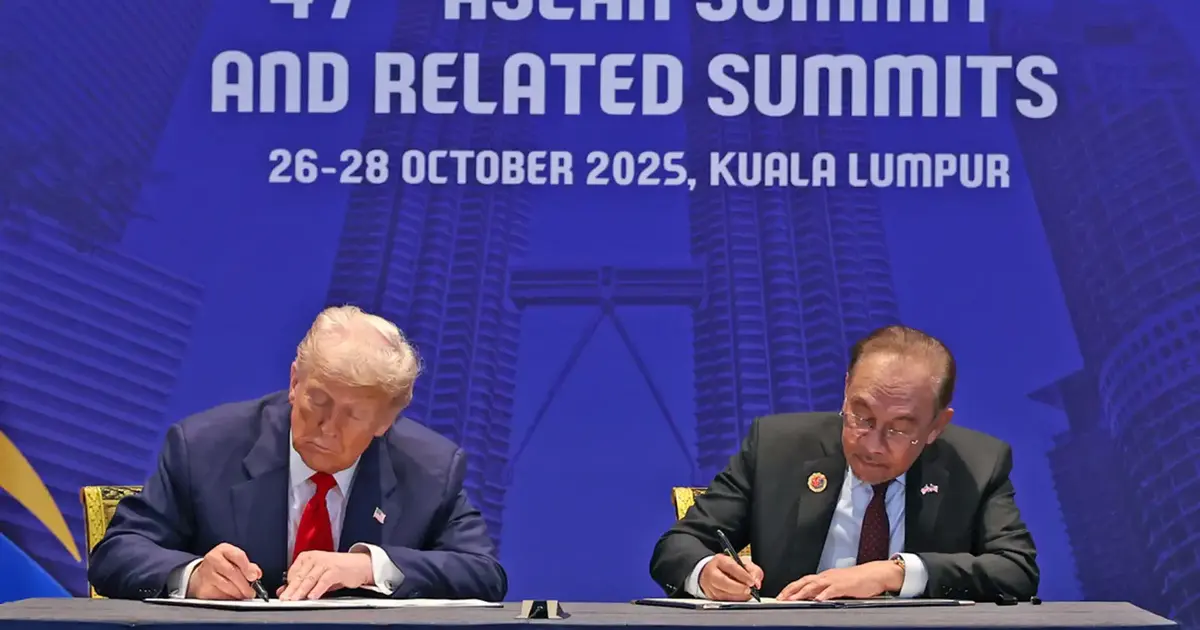
Prime Minister Anwar Ibrahim's administration has moved to dismiss a legal challenge brought by opposition Members of Parliament against the reciprocal trade agreement between Malaysia and the United States. The government's application seeks to have the case struck out in its entirety, signalling an aggressive defensive posture in what has become a significant constitutional dispute over the nation's trade obligations and parliamentary authority.
The opposition MPs initiated their lawsuit questioning the legitimacy and procedural validity of the trade deal, raising concerns about whether the agreement was properly ratified and whether it infringes upon parliamentary powers. This legal manoeuvre represents a broader parliamentary confrontation about the executive's autonomy in negotiating international trade agreements without explicit legislative approval or detailed parliamentary scrutiny. The challenge strikes at the heart of Malaysia's constitutional balance between executive action and legislative oversight in matters of national economic policy.
In response to the government's motion to strike out, the opposition has filed a counter-application seeking referral of constitutional questions directly to the Federal Court. This strategy bypasses the lower courts and seeks the highest judicial authority's interpretation of critical constitutional provisions governing trade agreements, treaty ratification, and parliamentary supremacy. Such referrals are typically used when fundamental constitutional issues are at stake and require definitive judicial guidance that will bind future government action.
The constitutional questions being raised likely concern the extent of the Prime Minister and Cabinet's authority to bind Malaysia to international trade commitments, whether such agreements constitute treaties requiring legislative approval under the Constitution, and what role Parliament must play in trade negotiations that affect Malaysia's sovereignty and economic interests. These questions have significant implications beyond this single transaction, potentially affecting how future administrations approach international agreements with major trading partners.
The Malaysia-US reciprocal trade agreement represents part of broader economic engagement between Kuala Lumpur and Washington, occurring within the context of regional geopolitical competition and changing global trade dynamics. For Malaysia, deepening commercial ties with the United States carries both opportunities for market access and potential vulnerabilities related to trade dependencies and compliance with American regulatory standards. The opposition's legal challenge reflects legitimate parliamentary concerns about transparency and democratic accountability in trade policy.
The timing of this legal dispute coincides with Malaysia's efforts to balance its international trade relationships across multiple partners including China, ASEAN nations, and traditional Western trading partners. The government's decision to aggressively pursue striking out the case suggests confidence in its legal position but also awareness that allowing the constitutional questions to proceed could establish unfavourable precedent. However, this approach risks appearing dismissive of legitimate parliamentary oversight concerns among Malaysian voters.
Constitutional scholars have long debated the appropriate division of authority between the executive and legislative branches regarding international treaties and trade agreements. Malaysia's Constitution contains provisions addressing treaty-making power, but the application of these provisions to modern reciprocal trade agreements has not been definitively settled through case law. This litigation may force Malaysian courts to provide clarity on questions that have remained ambiguous for decades, potentially reshaping the relationship between Parliament and the executive in external economic affairs.
For Malaysian businesses engaged in US trade, the legal uncertainty surrounding the agreement's status creates operational and planning complications. Companies relying on the agreement's preferential terms face potential disruption if courts ultimately void or significantly modify its application. Conversely, businesses concerned about compliance costs associated with the deal have an interest in its invalidation. The extended legal proceedings thus impose real economic costs on Malaysia's trading community independent of the ultimate judicial outcome.
The opposition's decision to pursue both the striking-out motion and the Federal Court referral reflects sophisticated litigation strategy. By filing the referral application, the opposition maintains its case in the court system even if the striking-out motion succeeds at the lower court level. This dual approach maximises the chances of achieving ultimate success and ensures that constitutional questions receive judicial attention regardless of procedural technicalities. It also signals to supporters that the opposition is mounting a vigorous institutional challenge rather than accepting executive dominance.
The government's defence strategy appears focused on procedural and jurisdictional arguments that would eliminate the case without requiring substantive judicial examination of the agreement's merits or constitutionality. This approach works in the short term if successful but foregoes the opportunity to obtain judicial validation of its trade policy authority. The political costs of appearing evasive may ultimately outweigh procedural advantages, particularly if courts determine that the opposition's constitutional questions merit serious consideration.
The Federal Court's eventual involvement, should it accept the constitutional referral, will likely produce landmark rulings affecting Malaysia's constitutional law regarding executive power, international agreements, and parliamentary authority. These decisions will shape how future administrations negotiate trade deals and what level of parliamentary involvement becomes constitutionally required. For Malaysian citizens and businesses, the outcome determines whether trade policy remains primarily an executive function or requires greater legislative participation and transparency.
This dispute exemplifies broader global tensions between executive efficiency in international negotiations and democratic accountability through parliamentary oversight. Malaysia's resolution of these competing values through its courts will influence how the nation balances rapid engagement with global trade dynamics against protection of constitutional checks and balances. The case thus carries significance extending well beyond the specific US trade agreement to fundamental questions about how Malaysia's government should function.