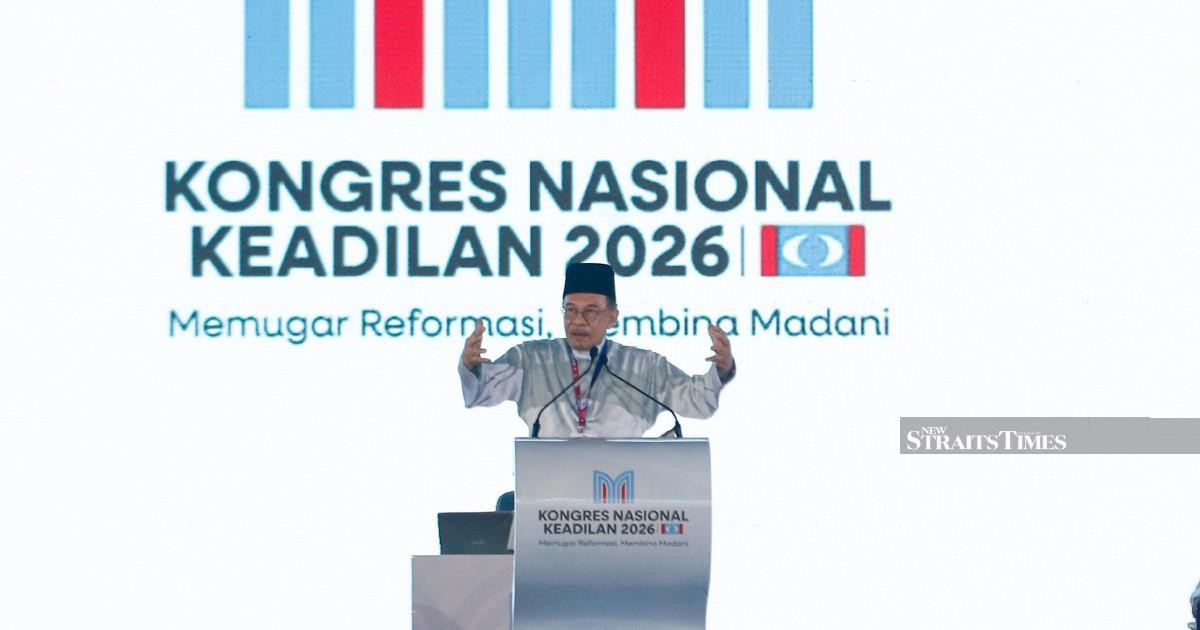
Prime Minister Datuk Seri Anwar Ibrahim declared at Ayer Keroh today that his administration plans to repeal the Universities and University Colleges Act 1971, a foundational piece of legislation that has governed Malaysia's higher education sector for more than five decades. The announcement signals a fundamental reimagining of how the government intends to structure its relationship with the nation's university system going forward.
The Universities and University Colleges Act 1971, commonly referred to as Act 30, has served as the primary regulatory framework establishing the legal foundation for Malaysia's public universities. The legislation has long been regarded as one of the most significant pieces of tertiary education policy in the country's post-independence era. By moving to abolish it entirely rather than amend or modernise selected provisions, the government is signalling that it seeks not merely incremental change but a wholesale restructuring of higher education governance.
This development carries substantial implications for Malaysia's entire university ecosystem. The 1971 Act has been instrumental in shaping institutional structures, defining the powers and responsibilities of university authorities, and establishing the relationship between these institutions and the federal government. Over the decades, it has remained largely consistent in form, even as the higher education landscape globally has undergone profound transformation. Universities worldwide have shifted towards greater autonomy, entrepreneurial engagement, and accountability mechanisms that the current Malaysian legislative framework has struggled to accommodate.
For Malaysian stakeholders in the higher education sector, including university administrators, academic staff, and students, the announcement prompts questions about what legislative regime would replace Act 30. The government has not yet detailed a comprehensive alternative framework. Observers in the education policy space will be looking closely at how the new system might address accountability, quality assurance, financial management, and the balance between institutional autonomy and public oversight—all matters that have generated considerable debate within Malaysian universities in recent years.
The timing of this announcement reflects broader policy shifts undertaken by the Anwar Ibrahim administration since taking office. The government has positioned itself as favouring modernisation and liberalisation across multiple sectors. In the education domain particularly, there has been growing recognition of the need to enhance Malaysia's competitiveness in global research rankings and student recruitment. Many economists and education specialists have argued that the existing regulatory environment imposes constraints that limit Malaysian universities' ability to function as world-class research institutions.
Regionally, Malaysia's decision to reconsider its foundational higher education legislation places it within a broader conversation across Southeast Asia about how governments can support university excellence while maintaining public accountability. Neighbouring countries including Singapore and Thailand have undertaken their own reviews of higher education governance in recent years, though with different emphases and outcomes. Malaysia's move could influence or be influenced by these regional precedents and comparative studies of what works in diverse institutional contexts.
For students and young Malaysians, the implications of this legislative change remain to be clarified. Those currently enrolled at public universities will want to understand whether changes to the governing Act might affect their academic experience, student fees, or campus governance structures. Prospective tertiary students considering whether to pursue higher education domestically or abroad will monitor how Malaysia's universities evolve under any new legislative framework. The government will need to ensure that the transition process does not create uncertainty that deters either domestic or international student recruitment.
International institutions and foreign universities operating in Malaysia through collaboration arrangements or branch campuses may also be affected by legislative change. The current Act establishes clear parameters for what foreign institutions can and cannot do within the Malaysian context. Any replacement legislation would need to address international academic partnerships in ways that enhance cross-border research collaboration while protecting the interests of Malaysian institutions.
The announcement at Ayer Keroh underscores the government's intention to place university governance reform among its priority policy initiatives. Whether this will translate into swift legislative action or extended consultation remains to be seen. Historically, changes to fundamental education legislation in Malaysia have involved extensive stakeholder engagement, including discussions with university councils, academic unions, and student representatives. The government will likely need to build consensus around what should replace Act 30 before proceeding.
For Malaysia's position as a regional higher education hub, this legislative shift could prove significant. The country has invested substantially in attracting international students and positioning its universities as gateways to Asian education. A modernised legal framework that enhances institutional flexibility and research capacity could strengthen that competitive position. Conversely, if the transition creates extended uncertainty or if the replacement framework proves less enabling than anticipated, Malaysia could lose ground to regional competitors.
The Prime Minister's announcement also reflects acknowledgment that the 1971 Act, while once progressive, has become increasingly misaligned with contemporary higher education realities. Global best practices now emphasise institutional autonomy, merit-based advancement, greater transparency in operations, and stronger links between universities and industry. These principles may struggle to flourish within legislative structures designed for an earlier era of higher education.
As details of any replacement legislation emerge through parliamentary processes and public consultation, Malaysian universities and the broader education sector will face both opportunities and challenges. The potential for enhanced autonomy and modernised governance structures is balanced against risks of extended uncertainty during transition periods. The government's next steps in articulating a concrete alternative framework will be closely watched by all stakeholders with investment in Malaysia's higher education future.

