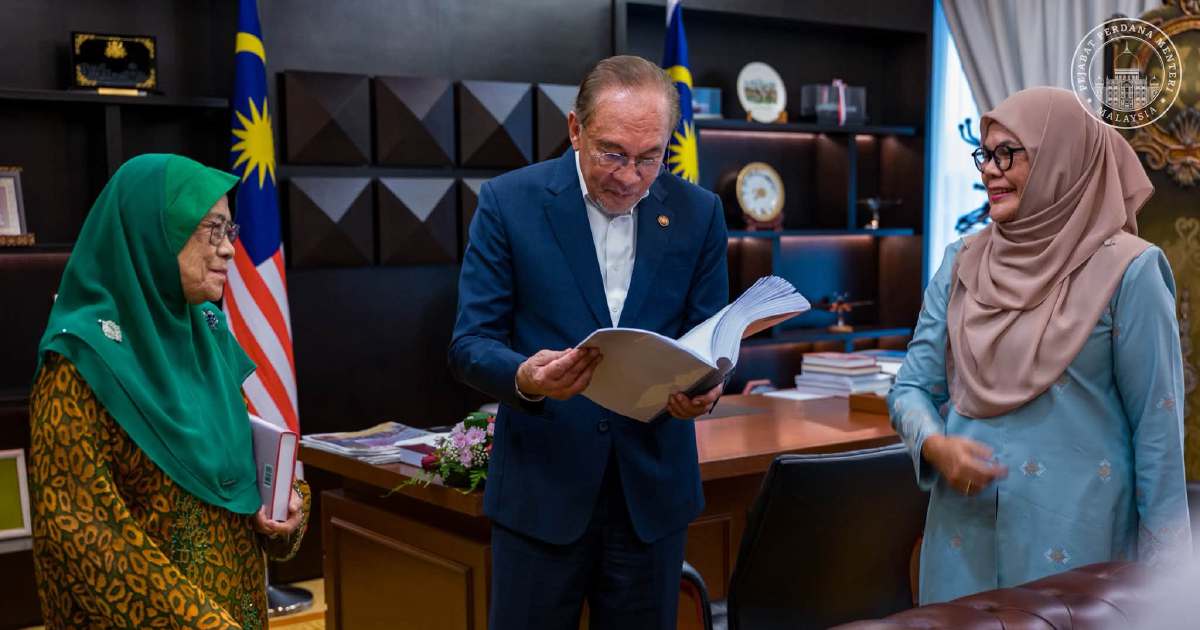
Prime Minister Datuk Seri Anwar Ibrahim is banking on his newly compiled book to become a lasting intellectual resource for Malaysia's leaders and citizens in the decades ahead. The publication, bearing the title Gagasan Anwar Ibrahim Dalam Peradaban Budaya Bangsa, represents a deliberate attempt to crystallise the premier's political thought, personal philosophy and decades of accumulated experience into a single authoritative text. By doing so, Anwar hopes to establish a conceptual foundation upon which future policymakers, activists and scholars can build their own understanding of national development and social cohesion.
The timing of such a publication carries particular significance for Malaysia's current political trajectory. After a career spanning multiple decades marked by periods in and out of power, imprisonment, exile and eventual return to the highest office, Anwar's decision to formally document his worldview suggests a recognition that the lessons learned throughout these tumultuous chapters merit preservation. Rather than allowing his ideas to dissipate into historical fragments or become subject to competing interpretations, the book aims to provide a definitive account directly from the source.
At its core, the work purports to address two interconnected themes that have consistently preoccupied Anwar throughout his public life: the mechanics of effective nation-building and the cultivation of strong national character. These twin concerns reflect broader questions that Malaysia has grappled with since independence—how to construct a cohesive society from diverse ethnic, religious and cultural components, and how to nurture citizenship qualities that transcend communal boundaries. By packaging these reflections systematically, the book potentially offers contemporary readers insight into how one of Malaysia's most influential contemporary figures approached these perennial challenges.
The choice to document his ideas in this manner also serves a secondary purpose: it positions Anwar's intellectual legacy as worthy of scholarly attention and institutional study. In many democracies, the published works and documented philosophies of major political figures become fodder for academic analysis, policy debate and educational curricula. By facilitating such engagement with his ideas, Anwar creates space for constructive critique, dialogue and evolution of the concepts therein. This approach differs markedly from allowing one's influence to rest solely on institutional power or parliamentary authority.
For Malaysian readers seeking to understand the ideological moorings beneath recent policy directions, the book offers potential illumination. It may explain the rationale behind specific administrative decisions, legislative priorities or diplomatic stances that have characterised Anwar's tenure as premier. The connection between lived experience and political conviction becomes especially important in Anwar's case, given that his trajectory has included dramatic reversals of fortune and lengthy periods of enforced reflection outside formal power structures.
The emphasis on cultural civilisation as a framework—evident in the book's title with its reference to Peradaban Budaya Bangsa—suggests Anwar views nation-building as fundamentally rooted in cultural and civilisational foundations rather than purely institutional or technocratic solutions. This perspective carries implications for how Malaysia might approach challenges ranging from education policy to social integration to international relations. The civilisational lens offers an alternative to purely Western or secular frameworks, potentially resonating with readers across Malaysia's diverse demographic landscape.
For Southeast Asian observers, the publication warrants attention as well. Malaysia's approach to multicultural governance has long attracted regional interest, with neighbouring countries grappling with similar tensions between diversity and unity. Should Anwar's documented philosophy prove influential within Malaysian institutions and educational frameworks, it may eventually shape regional thinking about inclusive development models and character formation in plural societies.
The book's potential effectiveness as a reference text will ultimately depend on its accessibility, depth of argument and practical applicability. Academic or policy communities will judge whether the ideas presented offer sufficient specificity and nuance to guide action, or whether they remain at the level of broad principle. Distribution channels and institutional adoption will likewise determine how widely the work circulates beyond the initial wave of political and media attention.
Anwar's hope that this compilation will serve future generations reflects both confidence in the enduring relevance of his ideas and an acknowledgement that political power, by its nature, is temporary. By committing his thought to permanent written form, he seeks a form of legacy that transcends his tenure in office. Whether the book achieves its intended purpose will become clearer as Malaysian institutions, educational bodies and civic organisations engage with and apply—or critique and refine—the ideas it contains. The publication thus represents not merely a historical document but potentially a launching point for ongoing national conversation about development, character and identity.

