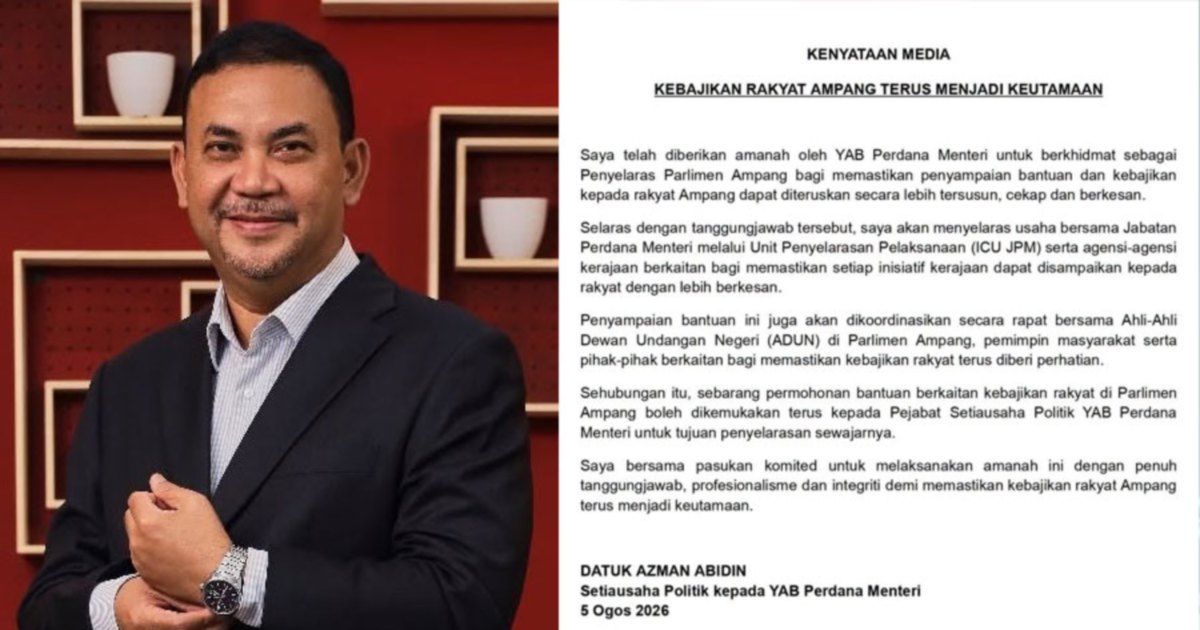
One of Prime Minister Datuk Seri Anwar Ibrahim's senior political secretaries has taken on the role of Ampang parliamentary coordinator, a move that follows the suspension of PKR lawmaker Rodziah Ismail's access to the MyKhas constituency allocation system. The appointment underscores evolving dynamics within PKR's parliamentary leadership and raises questions about the mechanisms governing the distribution of constituency development funds to elected representatives.
The MyKhas system, which stands for Malaysian Keluarga, Harapan, Aspirasi Sejahteraan, represents the government's digital platform for managing constituency-level allocations that fund local development projects and community initiatives. Access to this system is typically a crucial component of a parliamentarian's ability to deliver on election promises and maintain constituency support. The suspension of such access is an extraordinary measure that signals serious concerns about either fund management practices or broader political disagreements within the ruling coalition.
Rodziah Ismail, who has represented Ampang in parliament, has seen her access to these allocated funds curtailed at a time when constituency work constitutes a critical element of parliamentary representation in Malaysia. The timing and circumstances surrounding this suspension remain significant, as it reflects tensions that occasionally emerge between established MPs and the central party apparatus, particularly within the PKR structure where younger, more centrally-aligned figures have increasingly influential positions.
The appointment of Anwar's political secretary to serve as parliamentary coordinator suggests that Prime Minister's office officials are taking more direct operational control over specific constituency matters. This move consolidates central authority over fund disbursement and suggests a more interventionist approach to managing parliamentary resources, potentially aimed at ensuring alignment between local constituency priorities and broader government or party objectives. Such arrangements are not unprecedented in Malaysian politics, though they do represent a notable concentration of oversight from the Prime Minister's personal political machinery.
For Malaysian readers and observers of political governance, this development highlights the ongoing tension between centralised control and distributed parliamentary authority. While the MyKhas system was designed to streamline fund allocation and reduce bureaucratic delay, its digital nature also enables rapid suspension and access restrictions when political circumstances warrant. This capability has profound implications for how elected representatives can serve their constituents and maintain political viability at the grassroots level.
The suspension of Rodziah Ismail's fund access raises broader questions about the criteria for such disciplinary measures and the transparency surrounding their application. In Malaysian parliamentary practice, such steps are typically reserved for situations involving financial impropriety, serious breaches of party discipline, or significant misalignment with government policy directions. The lack of public clarity about the specific reasoning behind this suspension leaves room for speculation about whether this reflects internal PKR power dynamics, concerns about constituency fund management, or political recalibration within the coalition government.
Within the context of Malaysian politics, where constituency relationships remain fundamental to electoral success, restricting a MP's access to development funds represents a powerful tool of political leverage. Ampang, as a significant urban constituency in the Klang Valley with diverse demographic and economic interests, is particularly sensitive to the visibility and effectiveness of parliamentary representation in delivering tangible benefits to residents. The coordination of these functions through Anwar's office represents a direct line from the Prime Minister's personal political circle to local constituency management.
The broader implications for Southeast Asian political observers relate to how elected governments manage internal party discipline and fund allocation in competitive coalition environments. Malaysia's government structure, with its emphasis on coalition management and the need to balance different party interests, creates situations where centralized control over resources becomes a tool for maintaining political cohesion and ensuring policy alignment. The appointment of Prime Minister's office personnel to coordinate parliamentary functions exemplifies this tension between democratic representation and executive authority.
For other opposition MPs and political figures watching developments within PKR, this appointment serves as a reminder of the capacity of the Prime Minister's office to directly intervene in parliamentary operations when circumstances demand. The willingness to suspend fund access and install alternative coordination mechanisms suggests that central authority remains paramount when political circumstances dictate such action, regardless of the complications this may create for parliamentary-level representation.
Moving forward, this arrangement will likely prompt discussions among parliamentarians about fund governance, the criteria for suspension of MyKhas access, and the balance between central accountability and constituency autonomy. The precedent set by appointing a political secretary to coordinate constituency functions may influence how similar situations are handled in future political transitions or when internal party tensions surface. For Ampang residents, the practical implications centre on whether constituency development work continues unimpeded or faces delays while new coordination arrangements become operational.

