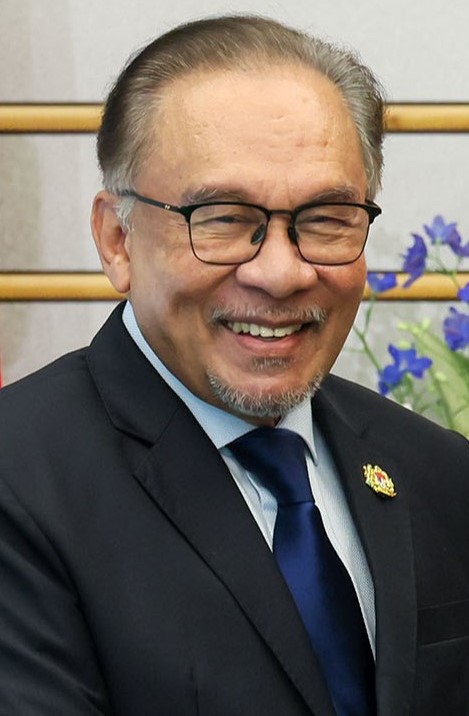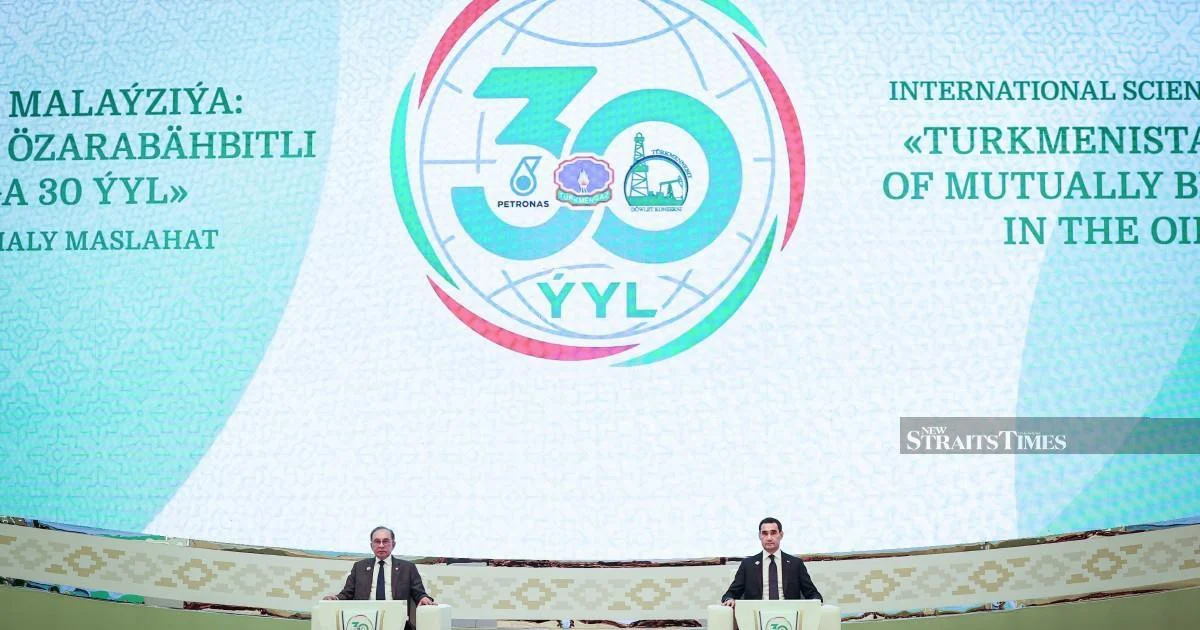
Prime Minister Datuk Seri Anwar Ibrahim's recent tour through Russia and Turkmenistan represents a watershed moment for Malaysia's energy diplomacy, yielding tangible breakthroughs that could reshape the nation's hydrocarbon sourcing strategy for the coming decade. The successful engagement with two major energy producers underscores Kuala Lumpur's determination to secure long-term fuel supplies while simultaneously expanding its geopolitical influence in Central Asia and beyond.
Malaysia's energy sector faces persistent challenges rooted in declining domestic reserves and growing domestic consumption. While the country remains one of Southeast Asia's petroleum producers, its proven crude oil reserves have contracted significantly, with current estimates suggesting depletion within the next fifteen to twenty years at present extraction rates. By pursuing partnerships with Russia and Turkmenistan, both possessing substantially larger reserves and surplus production capacity, Anwar's administration signals a pragmatic approach to national energy security that transcends traditional supply relationships.
The Russian leg of the diplomatic journey carries particular significance given geopolitical complexities surrounding Moscow's international standing. Despite Western sanctions related to the Ukraine conflict, Russia continues operating as a global energy superpower with vast petroleum and liquefied natural gas resources. Malaysian engagement at this juncture demonstrates Kuala Lumpur's commitment to maintaining multi-directional foreign policy relationships, refusing to align automatically with Western positions on energy procurement. This independence has become increasingly valuable as nations worldwide seek alternatives to suppliers dependent on Western approval.
Turkmenistan's inclusion in Anwar's itinerary reflects recognition of Central Asia's emerging prominence in global energy markets. The nation sits atop some of the world's largest natural gas reserves, with production capabilities exceeding current export infrastructure. Malaysian expertise in liquefaction technology and downstream operations could complement Turkmen resource wealth, creating mutual opportunities for infrastructure development and technology transfer. Such complementarity forms the foundation for sustainable long-term partnerships.
The timing of these engagements coincides with volatile global energy markets responding to supply disruptions, geopolitical tensions, and the accelerating energy transition. Malaysian policymakers recognize that securing diversified supply channels now provides insulation against future price shocks and supply interruptions. Overreliance on any single source or region creates vulnerability, particularly for an import-dependent economy sensitive to external commodity price fluctuations.
Beyond immediate energy procurement, these partnerships facilitate broader economic cooperation spanning infrastructure, technology, and finance sectors. Petronas, Malaysia's national oil company, possesses technological capabilities in exploration, production, and liquefaction that command respect globally. Russian and Turkmen counterparts can benefit from this expertise while Malaysian companies gain access to resource-rich operating environments. Such reciprocal arrangements typically generate employment, capital inflows, and knowledge transfer benefiting both economies.
The energy deals also carry strategic implications for Malaysia's positioning within ASEAN and the broader Indo-Pacific region. As nations compete for resource security and geopolitical influence, bilateral energy partnerships become instruments of statecraft. By establishing direct relationships with major Central Asian and Russian energy producers, Malaysia enhances its negotiating capacity in regional forums and diversifies its diplomatic leverage. Smaller Southeast Asian nations benefit from cultivating relationships across multiple great power spheres.
Domestically, securing diverse energy supplies supports Malaysia's continued economic development while managing the transition toward renewable sources. The nation's manufacturing sectors, particularly petrochemicals and downstream industries, depend on stable hydrocarbon availability. Lock-in agreements with Russian and Turkmen producers provide predictability for industrial planning, attracting investment in energy-intensive manufacturing and enabling competitive pricing in regional markets.
These partnerships also reflect evolving global energy markets increasingly characterized by regionalization rather than complete globalization. Traditional patterns of Middle Eastern dominance in Asian energy markets face challenge from diversifying suppliers and shifting geopolitical alignments. Malaysia's engagement with Central Asian producers aligns with this broader reconfiguration, positioning the nation ahead of potential future supply disruptions or political shifts affecting traditional suppliers.
For Southeast Asia more broadly, Malaysia's energy diplomacy carries implications for regional stability and prosperity. A Malaysia secure in its energy supply becomes a more stable, predictable partner within ASEAN, better positioned to contribute to collective regional initiatives. Energy security translates into economic security, which strengthens democratic institutions and reduces vulnerability to external economic coercion.
The diplomatic success also demonstrates that Malaysian foreign policy can navigate contemporary geopolitical complexity through pragmatism rather than ideological alignment. While maintaining commitments to existing partnerships and international obligations, Kuala Lumpur pursues its national interest through multiple channels simultaneously. This balanced approach, embodied in Anwar's Russia and Turkmenistan visits, reflects mature statecraft suited to a multipolar world.
Looking forward, the real test lies in translating diplomatic breakthroughs into operational reality. Finalizing contractual agreements, establishing logistics infrastructure, and managing payment mechanisms across sanctioned and non-sanctioned entities presents complex technical and legal challenges requiring sustained attention. Nevertheless, the groundwork established through Anwar's recent visit provides solid foundation for Malaysia's next chapter in energy security.